


Oracle Corporation (ORCL) fell 4.42% after reporting a major round of layoffs and elevated restructuring costs. The downward move is reinforced by the stock's position below both its 50-day and 200-day moving averages, indicating the longer-term trend remains bearish.
 125.76
130.76
Highlights
- Oracle cut about 21,000 jobs in the past year, reducing headcount to 141,000 as of May 2026.
- Restructuring and severance expenses increased to $1.8 billion, with additional cost reductions possible next quarter.
- Shares of Oracle trade between $141.86 and $156.81 with buying momentum but remain under selling pressure after a sharp session decline.
Cost surge and workforce cuts persist as AI investments continue
Oracle Corporation reduced its workforce by about 21,000 employees over the past year, bringing total headcount to around 141,000 as of May 2026. The company reported $1.8 billion in restructuring and severance expenses, substantially higher than the previous year, with further cuts possible before the next fiscal quarter. Large-scale investments in AI, cloud infrastructure, and an expanded partnership with Amazon Web Services continued alongside these actions, though price action has remained under broader selling pressure.
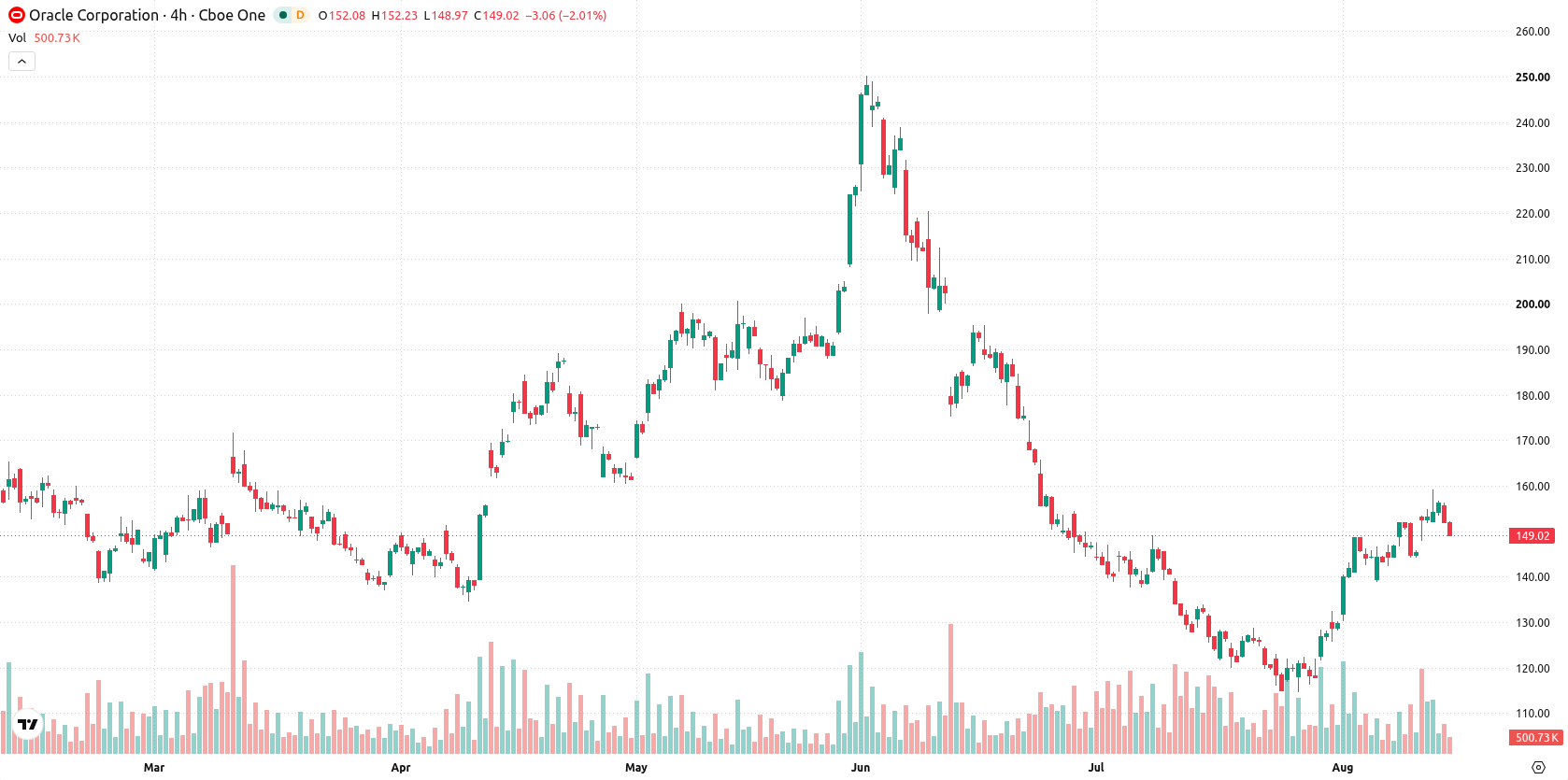
Near-term bullish signals emerge amid entrenched longer-term selling
Oracle is trading above its 20-day moving average ($133.96) but remains below the 50-day ($153.93) and 200-day ($176.77) moving averages, showing near-term strength against a backdrop of sustained longer-term seller pressure. The immediate resistance level is $153.9, and support is seen at $149.18. The 50-day and 200-day moving average alignment confirms a bearish structure. Momentum indicators are mixed: MACD is neutral, ADX and RSI indicate buying conditions, but Stochastic RSI, CCI, and BBP are deeply overbought, with BBP confirming buyer-dominated intraday momentum. The Awesome Oscillator aligns with a buy bias, but the session saw the stock drop $6.9, opening with a pronounced downside gap of about $3.14 (2.01%) and trading near session lows amid intraday volatility of 3.16%. Despite positive momentum signals, sellers controlled the tone after the open.
Earlier, analysts noted that Oracle was consolidating as it advanced cloud partnerships and restructured to bolster innovation, while cautioning that near-term volatility and cost-cutting could shape its price direction. The latest sharp drop and continued bearish technical structure underscore the importance of monitoring $153.9 as a critical breakout level, with a sustained move above this threshold needed to signal a shift from the prevailing sideways-to-downward risk.










-
 Afghanistan
-
 Albania
-
 Algeria
-
 Angola
-
 Argentina
-
 Armenia
-
 Australia
-
 Austria
-
 Azerbaijan
-
 Bahamas
-
 Bahrain
-
 Bangladesh
-
 Belarus
-
 Belgium
-
 Bolivia
-
 Botswana
-
 Brazil
-
 Brunei
-
 Bulgaria
-
 Cambodia
-
 Cameroon
-
 Canada
-
 Chile
-
 China
-
 Colombia
-
 Congo
-
 Costa Rica
-
 Cote d'Ivoire
-
 Croatia
-
 Cuba
-
 Cyprus
-
 Czechia
-
 DR Congo
-
 Denmark
-
 Dominican Republic
-
 Ecuador
-
 Egypt
-
 El Salvador
-
 Estonia
-
 Eswatini
-
 Ethiopia
-
 Finland
-
 France
-
 Georgia
-
 Germany
-
 Ghana
-
 Greece
-
 Haiti
-
 Hong Kong
-
 Hungary
-
 India
-
 Indonesia
-
 Iran, Islamic republic
-
 Iraq
-
 Ireland
-
 Israel
-
 Italy
-
 Jamaica
-
 Japan
-
 Jordan
-
 Kazakhstan
-
 Kenya
-
 Korea
-
 Kuwait
-
 Kyrgyzstan
-
 Laos
-
 Latvia
-
 Lebanon
-
 Lesotho
-
 Libya
-
 Lithuania
-
 Luxembourg
-
 Madagascar
-
 Malaysia
-
 Malta
-
 Mauritius
-
 Mexico
-
 Moldova
-
 Mongolia
-
 Montenegro
-
 Morocco
-
 Mozambique
-
 Myanmar
-
 Namibia
-
 Nepal
-
 Netherlands
-
 New Zealand
-
 Nigeria
-
 North Macedonia
-
 Norway
-
 Oman
-
 Pakistan
-
 Palestine
-
 Panama
-
 Papua New Guinea
-
 Paraguay
-
 Peru
-
 Philippines
-
 Poland
-
 Portugal
-
 Puerto Rico
-
 Qatar
-
 Reunion
-
 Romania
-
 Rwanda
-
 Saudi Arabia
-
 Serbia
-
 Singapore
-
 Slovakia
-
 Slovenia
-
 Somalia
-
 South Africa
-
 Spain
-
 Sri Lanka
-
 Sweden
-
 Switzerland
-
 Syria
-
 Taiwan
-
 Tajikistan
-
 Tanzania
-
 Thailand
-
 Trinidad and Tobago
-
 Tunisia
-
 Turkey
-
 UAE
-
 Uganda
-
 Ukraine
-
 United Kingdom
-
United States
-
 Uruguay
-
 Uzbekistan
-
 Venezuela
-
 Vietnam
-
 Yemen
-
 Zambia
-
 Zimbabwe
- Forex
- Crypto












