The tweet was deleted by the author.
But we saved everything 🙂.


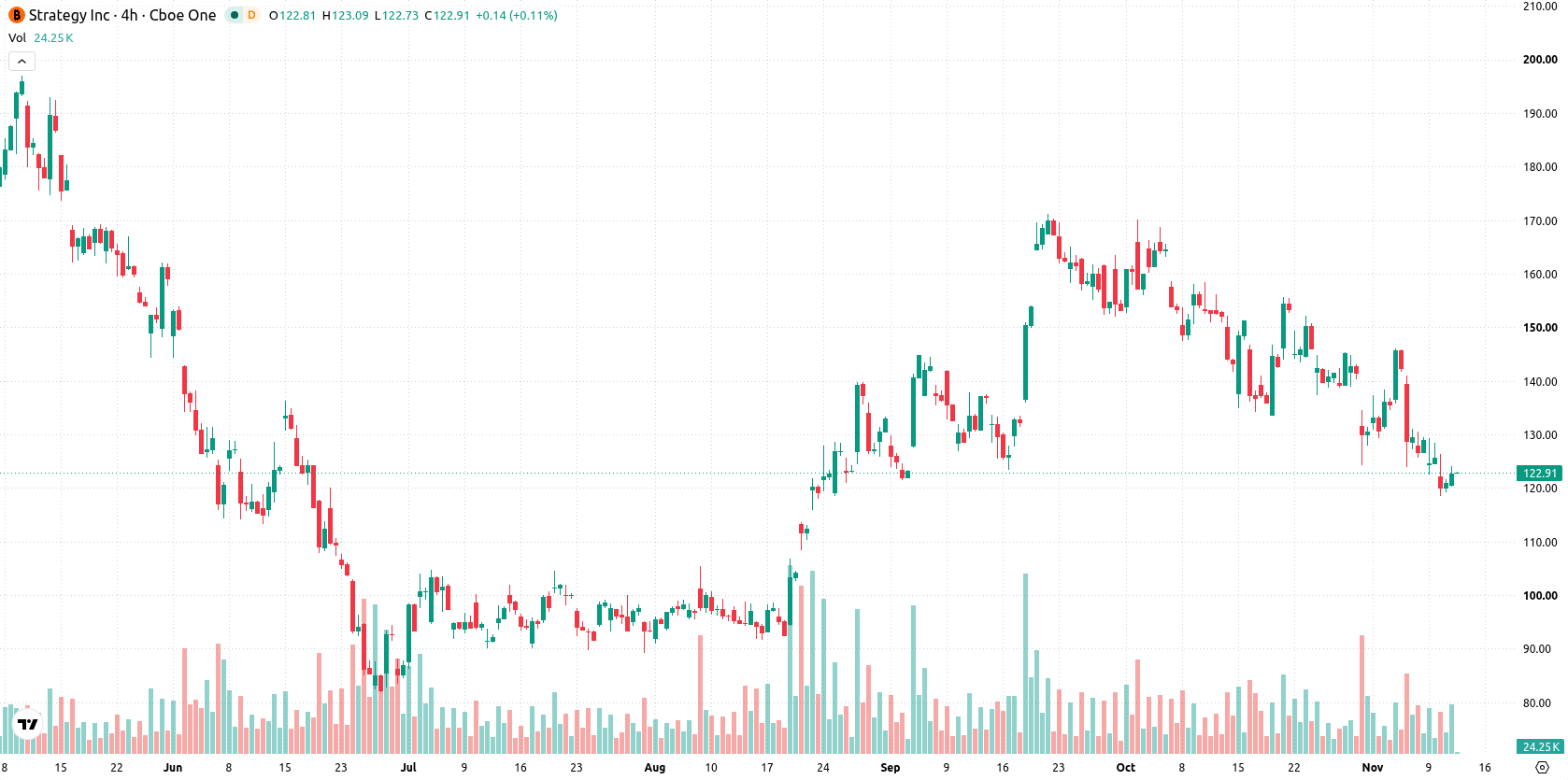
Strategy (MSTR, formerly MicroStrategy) is trading at $122.87, up modestly since yesterday's close. The intraday move has been neutral, with the price fluctuating in a moderate range for a gain that leaves MSTR nearly unchanged after the open. Today's rebound is primarily driven by oversold technical indicators rather than fundamental news, while positive statements from Michael Saylor offer supportive sentiment but have not produced decisive upward momentum.
 113.08
129.14
Michael Saylor stated, 'Bitcoin is Digital Capital. Strategy transforms it into Digital Credit and Digital Equity. Bringing $STRC and $MSTR onchain is another step toward capital markets that never close.' This message is positive for MSTR, as it highlights a vision for enhanced adoption and liquidity through onchain integration, which could strengthen market sentiment. However, the market remains cautious, prioritizing near-term concerns such as persistent technical weakness and company-specific events over the optimistic outlook from Saylor. Meanwhile, the company has recently raised $284 million via equity sales, repurchased STRC preferred shares, and added to its Bitcoin holdings, further reinforcing its pivot toward Bitcoin treasury management.
View post on X Loading...
MSTR trades below its MA-20 ($138.30), MA-50 ($144.11), and MA-200 ($133.35), indicating sustained selling pressure across all key timeframes. Immediate resistance stands at $143.57, while short-term support is near round-number levels just below the current price, with momentum signals such as MACD, RSI, and Stochastic RSI pointing to ongoing bearishness and oversold conditions. A realistic 5-day trading range is between $118 and $127, with sideways action expected unless $118 or $143.57 are breached. The tweet's bullish signal has not been validated by price action, which adds caution to the near-term forecast.
Previously it was reported that Strategy faced potential billions in forced institutional share sales if removed from MSCI equity indexes due to new eligibility rules. The current article adds a new dimension by examining how recent developments may affect the company’s capital access, with investors advised to monitor upcoming portfolio rebalancing dates as a key risk indicator.



 Afghanistan
 Albania
 Algeria
 Angola
 Argentina
 Armenia
 Australia
 Austria
 Azerbaijan
 Bahamas
 Bahrain
 Bangladesh
 Belarus
 Belgium
 Bolivia
 Botswana
 Brazil
 Brunei
 Bulgaria
 Cambodia
 Cameroon
 Canada
 Chile
 China
 Colombia
 Congo
 Costa Rica
 Cote d'Ivoire
 Croatia
 Cuba
 Cyprus
 Czechia
 DR Congo
 Denmark
 Dominican Republic
 Ecuador
 Egypt
 El Salvador
 Estonia
 Eswatini
 Ethiopia
 Finland
 France
 Georgia
 Germany
 Ghana
 Greece
 Haiti
 Hong Kong
 Hungary
 India
 Indonesia
 Iran, Islamic republic
 Iraq
 Ireland
 Israel
 Italy
 Jamaica
 Japan
 Jordan
 Kazakhstan
 Kenya
 Korea
 Kuwait
 Kyrgyzstan
 Laos
 Latvia
 Lebanon
 Lesotho
 Libya
 Lithuania
 Luxembourg
 Madagascar
 Malaysia
 Malta
 Mauritius
 Mexico
 Moldova
 Mongolia
 Montenegro
 Morocco
 Mozambique
 Myanmar
 Namibia
 Nepal
 Netherlands
 New Zealand
 Nigeria
 North Macedonia
 Norway
 Oman
 Pakistan
 Palestine
 Panama
 Papua New Guinea
 Paraguay
 Peru
 Philippines
 Poland
 Portugal
 Puerto Rico
 Qatar
 Reunion
 Romania
 Rwanda
 Saudi Arabia
 Serbia
 Singapore
 Slovakia
 Slovenia
 Somalia
 South Africa
 Spain
 Sri Lanka
 Sweden
 Switzerland
 Syria
 Taiwan
 Tajikistan
 Tanzania
 Thailand
 Trinidad and Tobago
 Tunisia
 Turkey
 UAE
 Uganda
 Ukraine
 United Kingdom
United States
 Uruguay
 Uzbekistan
 Venezuela
 Vietnam
 Yemen
 Zambia
 Zimbabwe