

AMD gains as Anthropic demo raises switching risk for Nvidia AI chips

New questions are emerging around Nvidia's grip on the artificial intelligence chip market as software barriers that long protected its pricing power show signs of weakening. A presentation tied to Anthropic's IPO roadshow suggests AI can sharply reduce the time needed to adapt workloads for rival chips, potentially improving AMD's competitive position.
Highlights
- Anthropic demonstrated migrating its Claude Mythos model to AMD MI355X AI chips in three days with minimal human intervention, highlighting reduced software switching costs from Nvidia CUDA.
- Nvidia faces added uncertainty as U.S. scrutiny of its Singapore business could impact sales visibility, while AMD reported Q3 revenue up 45% to $13.4 billion and adjusted earnings rising 74% to $2.09 per share.
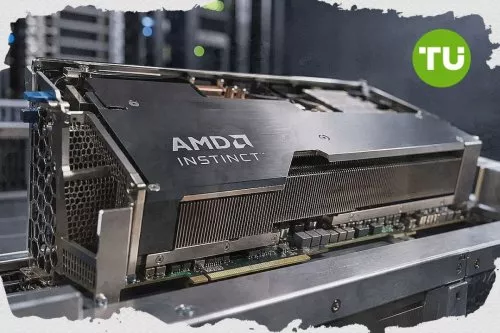
- Nvidia B200 accelerators are estimated at $35,000–$42,000 with 180–192 GB memory, while AMD's $30,000–$35,000 MI355X offers 288 GB, increasing AMD's price/performance appeal if migration barriers drop.
Anthropic demo highlights software migration risk
As reported by Weiss Ratings, a key concern for Nvidia centers on Anthropic's statement during its Nov. 10 IPO roadshow that its Claude Mythos model got software running on Advanced Micro Devices AI chips in three days, with almost no human intervention. Anthropic says the model wrote or adapted nearly all of the specialized kernel instructions needed for prompt processing on AMD's MI355X chips.That matters because Nvidia's competitive edge has rested not only on its hardware but also on CUDA, the software platform it introduced in 2006 to make GPU computing easier for scientific and AI workloads. Over time, companies, universities and researchers built systems around CUDA, making any shift to alternative chip suppliers costly and disruptive even when competing hardware was available.
The Anthropic example does not cover a full migration of its computing estate, and CUDA still holds advantages in optimization, reliability and its broad developer ecosystem. Still, the demonstration suggests AI may now be able to handle much of the complex code conversion work that previously took engineering teams months, which could weaken one of Nvidia's strongest defenses against price competition.
Pricing pressure could support AMD growth
Nvidia also faces uncertainty around its Singapore business after previously reporting that the market accounted for about 22% of revenue last year before ceasing that specific disclosure, according to the commentary. The text says further scrutiny by U.S. authorities could weigh on sales visibility and add to investor concern, although the extent of any commercial impact remains unclear.For AMD, the potential opening comes as its AI hardware business is already expanding rapidly. The text says AMD reported third-quarter revenue of $13.4 billion, up 45% year over year, while adjusted earnings rose 74% to $2.09 a share and data-center revenue climbed 97% to $8.5 billion, driven by EPYC processors and Instinct accelerators.
Price and memory specifications are part of the argument for a stronger AMD position. Market estimates cited in the text place Nvidia's B200 accelerators at roughly $35,000 to $42,000 each, versus about $30,000 to $35,000 for AMD's MI355X, while AMD's chip is said to offer 288 gigabytes of high-speed memory compared with 180 gigabytes to 192 gigabytes for Nvidia's B200. If software switching costs fall materially, those hardware differences could give customers more leverage in negotiations and help AMD win a larger share of AI infrastructure spending.
We recently wrote about Nasdaq 100 volatility driven by AI supply chain concerns and rising financing costs in tech.










-
 Afghanistan
-
 Albania
-
 Algeria
-
 Angola
-
 Argentina
-
 Armenia
-
 Australia
-
 Austria
-
 Azerbaijan
-
 Bahamas
-
 Bahrain
-
 Bangladesh
-
 Belarus
-
 Belgium
-
 Bolivia
-
 Botswana
-
 Brazil
-
 Brunei
-
 Bulgaria
-
 Cambodia
-
 Cameroon
-
 Canada
-
 Chile
-
 China
-
 Colombia
-
 Congo
-
 Costa Rica
-
 Cote d'Ivoire
-
 Croatia
-
 Cuba
-
 Cyprus
-
 Czechia
-
 DR Congo
-
 Denmark
-
 Dominican Republic
-
 Ecuador
-
 Egypt
-
 El Salvador
-
 Estonia
-
 Eswatini
-
 Ethiopia
-
 Finland
-
 France
-
 Georgia
-
 Germany
-
 Ghana
-
 Greece
-
 Haiti
-
 Hong Kong
-
 Hungary
-
 India
-
 Indonesia
-
 Iran, Islamic republic
-
 Iraq
-
 Ireland
-
 Israel
-
 Italy
-
 Jamaica
-
 Japan
-
 Jordan
-
 Kazakhstan
-
 Kenya
-
 Korea
-
 Kuwait
-
 Kyrgyzstan
-
 Laos
-
 Latvia
-
 Lebanon
-
 Lesotho
-
 Libya
-
 Lithuania
-
 Luxembourg
-
 Madagascar
-
 Malaysia
-
 Malta
-
 Mauritius
-
 Mexico
-
 Moldova
-
 Mongolia
-
 Montenegro
-
 Morocco
-
 Mozambique
-
 Myanmar
-
 Namibia
-
 Nepal
-
 Netherlands
-
 New Zealand
-
 Nigeria
-
 North Macedonia
-
 Norway
-
 Oman
-
 Pakistan
-
 Palestine
-
 Panama
-
 Papua New Guinea
-
 Paraguay
-
 Peru
-
 Philippines
-
 Poland
-
 Portugal
-
 Puerto Rico
-
 Qatar
-
 Reunion
-
 Romania
-
 Rwanda
-
 Saudi Arabia
-
 Serbia
-
 Singapore
-
 Slovakia
-
 Slovenia
-
 Somalia
-
 South Africa
-
 Spain
-
 Sri Lanka
-
 Sweden
-
 Switzerland
-
 Syria
-
 Taiwan
-
 Tajikistan
-
 Tanzania
-
 Thailand
-
 Trinidad and Tobago
-
 Tunisia
-
 Turkey
-
 UAE
-
 Uganda
-
 Ukraine
-
 United Kingdom
-
United States
-
 Uruguay
-
 Uzbekistan
-
 Venezuela
-
 Vietnam
-
 Yemen
-
 Zambia
-
 Zimbabwe
- Forex
- Crypto












