

Apple climbs as inflation surprise raises bond yields and weighs on tech valuations

Apple (AAPL) stock is trading higher, with recent price action moving up as of November 13, 2026. The main driver is increased US inflation reported on November 10, which boosted bond yields and raised expectations for further Federal Reserve rate hikes, raising financing costs for major technology stocks. Traders are watching upcoming US inflation data and any new Federal Reserve guidance that could affect equity valuations and capital flows to AAPL.
 360.34
Highlights
- US inflation data released November 10, 2026, surpassed expectations, driving bond yields higher and raising odds of further Federal Reserve rate hikes.
- Rising yields have increased financing costs and pressured valuations for large technology stocks including AAPL, introducing new macro risk.
- AAPL stock holds above $342 technical support with mixed momentum signals; direction now depends on upcoming economic releases and bond yield stability.
US inflation surprise impacts tech sector outlook
According to Reuters, unexpectedly high US inflation data released on November 10, 2026, led to a sharp increase in bond yields and heightened expectations for further Federal Reserve interest rate hikes, pulling down valuations across US stocks including the technology sector.
Elevated yields following the inflation surprise have raised financing costs for large technology companies, directly pressuring equity valuations such as those for AAPL. This macroeconomic development introduces a risk channel to capital flows and price support for the stock.
Although this creates a challenging environment for technology equities, AAPL price action has moved higher in the latest session, suggesting that investors may be positioning ahead of further macro data or reassessing policy risk in the near term.
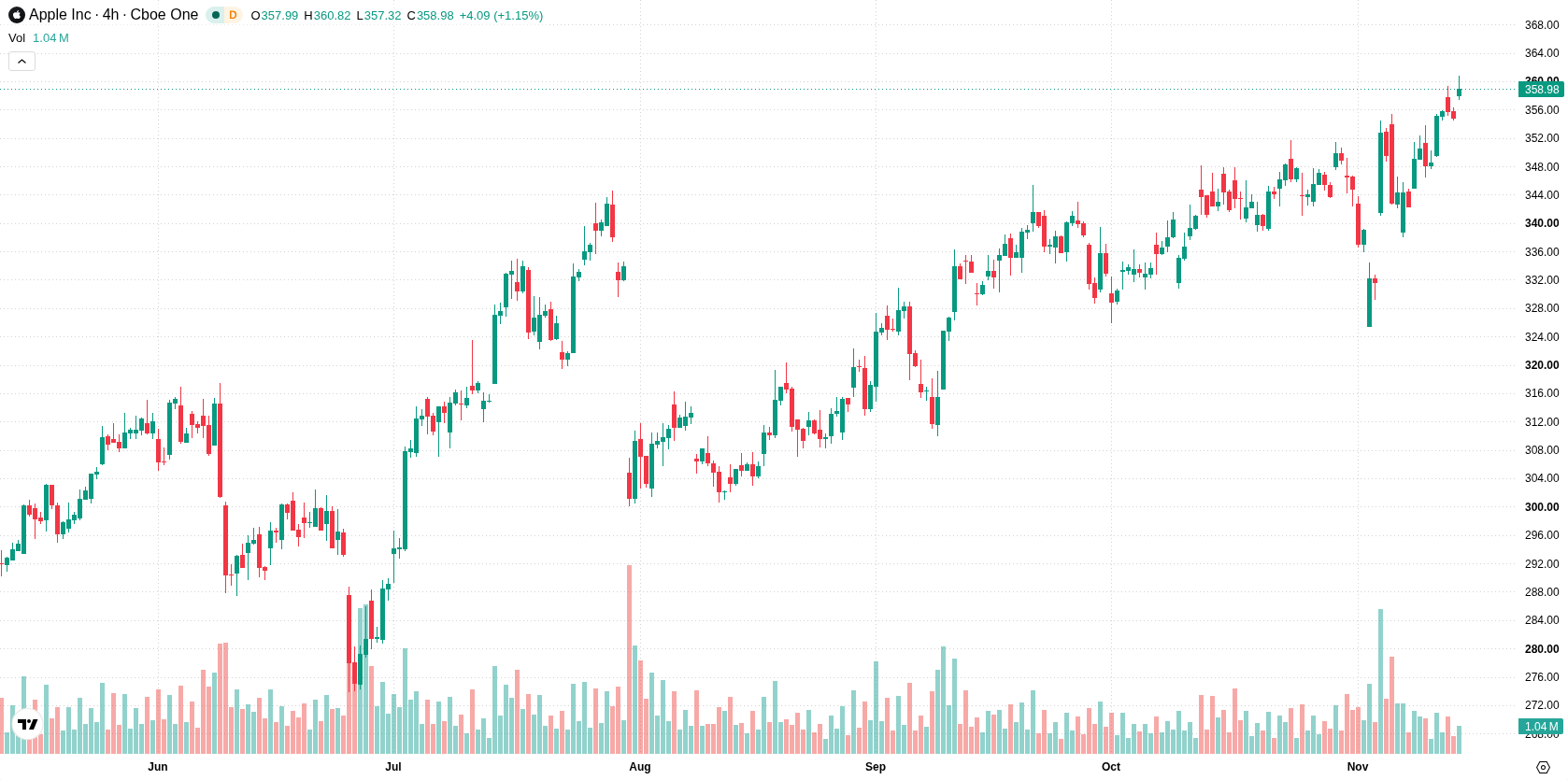
Macro risk and yield pressure reflected in AAPL 4H technical structure
On the 4H chart for AAPL, technical signals show the current price is above its D1 50-period and 200-period SMAs, reflecting strength relative to the longer-term trend backdrop. The H4 Kijun sits below price action and acts as nearby support.
Momentum evidence is mixed, with MACD in a buy zone while ADX reads neutral, signaling a lack of strong trend strength despite the bullish medium-term price structure. Immediate focus is on whether the support near $342 holds against this macro risk backdrop.
AAPL direction tied to inflation data and support near $342
The outlook hinges on the path of US inflation and Federal Reserve policy, with any further upside contingent on stable yields and supportive macro conditions. Holding above support around $342 could help maintain positive momentum for AAPL. A breakdown below this level would undermine the current bullish structure and increase downside risk. Monitoring upcoming US economic data is essential for gauging further direction.
Previously it was reported that Apple’s stock maintained a bullish structure, supported by robust derivatives activity and substantial ETF inflows. The current analysis adds the impact of rising U.S. inflation and Federal Reserve policy as a key macroeconomic factor to monitor, with future direction likely determined by upcoming economic data and its effect on yields.






Latest Apple News




-
 Afghanistan
-
 Albania
-
 Algeria
-
 Angola
-
 Argentina
-
 Armenia
-
 Australia
-
 Austria
-
 Azerbaijan
-
 Bahamas
-
 Bahrain
-
 Bangladesh
-
 Belarus
-
 Belgium
-
 Bolivia
-
 Botswana
-
 Brazil
-
 Brunei
-
 Bulgaria
-
 Cambodia
-
 Cameroon
-
 Canada
-
 Chile
-
 China
-
 Colombia
-
 Congo
-
 Costa Rica
-
 Cote d'Ivoire
-
 Croatia
-
 Cuba
-
 Cyprus
-
 Czechia
-
 DR Congo
-
 Denmark
-
 Dominican Republic
-
 Ecuador
-
 Egypt
-
 El Salvador
-
 Estonia
-
 Eswatini
-
 Ethiopia
-
 Finland
-
 France
-
 Georgia
-
 Germany
-
 Ghana
-
 Greece
-
 Haiti
-
 Hong Kong
-
 Hungary
-
 India
-
 Indonesia
-
 Iran, Islamic republic
-
 Iraq
-
 Ireland
-
 Israel
-
 Italy
-
 Jamaica
-
 Japan
-
 Jordan
-
 Kazakhstan
-
 Kenya
-
 Korea
-
 Kuwait
-
 Kyrgyzstan
-
 Laos
-
 Latvia
-
 Lebanon
-
 Lesotho
-
 Libya
-
 Lithuania
-
 Luxembourg
-
 Madagascar
-
 Malaysia
-
 Malta
-
 Mauritius
-
 Mexico
-
 Moldova
-
 Mongolia
-
 Montenegro
-
 Morocco
-
 Mozambique
-
 Myanmar
-
 Namibia
-
 Nepal
-
 Netherlands
-
 New Zealand
-
 Nigeria
-
 North Macedonia
-
 Norway
-
 Oman
-
 Pakistan
-
 Palestine
-
 Panama
-
 Papua New Guinea
-
 Paraguay
-
 Peru
-
 Philippines
-
 Poland
-
 Portugal
-
 Puerto Rico
-
 Qatar
-
 Reunion
-
 Romania
-
 Rwanda
-
 Saudi Arabia
-
 Serbia
-
 Singapore
-
 Slovakia
-
 Slovenia
-
 Somalia
-
 South Africa
-
 Spain
-
 Sri Lanka
-
 Sweden
-
 Switzerland
-
 Syria
-
 Taiwan
-
 Tajikistan
-
 Tanzania
-
 Thailand
-
 Trinidad and Tobago
-
 Tunisia
-
 Turkey
-
 UAE
-
 Uganda
-
 Ukraine
-
 United Kingdom
-
United States
-
 Uruguay
-
 Uzbekistan
-
 Venezuela
-
 Vietnam
-
 Yemen
-
 Zambia
-
 Zimbabwe
- Forex
- Crypto












