

Surge in producer inflation deepens risk-off mood for Tesla in volatile tech sector trading

Tesla (TSLA) stock is trading lower after a sharp increase in U.S. producer prices on November 13, 2026, sparked renewed concerns about inflationary pressures. This development has led traders to watch for further U.S. inflation data and interest rate decisions that could impact technology and growth stock valuations.
 404.40
Highlights
- Shares of Tesla fell as U.S. producer prices recorded their biggest annual increase since November 2022, causing pressure across technology stocks.
- Concerns over persistent inflation have increased expectations that the Federal Reserve could sustain or raise interest rates, making growth stocks more vulnerable.
- Technical signals for TSLA are mixed with neutral momentum indicators; key support zones lie at $383 and $376.19, which may determine the next directional move.
U.S. producer price jump pressures technology stocks
According to Ibtimes Com, on November 13, 2026, Tesla shares declined after U.S. producer prices posted their largest annual increase since November 2022, which contributed to a broader sell-off in technology stocks.
The jump in wholesale inflation has raised fears that the Federal Reserve may face pressure to maintain or even tighten interest rates. Higher borrowing costs can reduce liquidity for growth-oriented sectors, making technology stocks like TSLA more vulnerable to selling.
This sensitivity to U.S. inflation and monetary policy has outweighed company-specific drivers for TSLA, as investors recalibrated risk in the face of changing macroeconomic conditions.
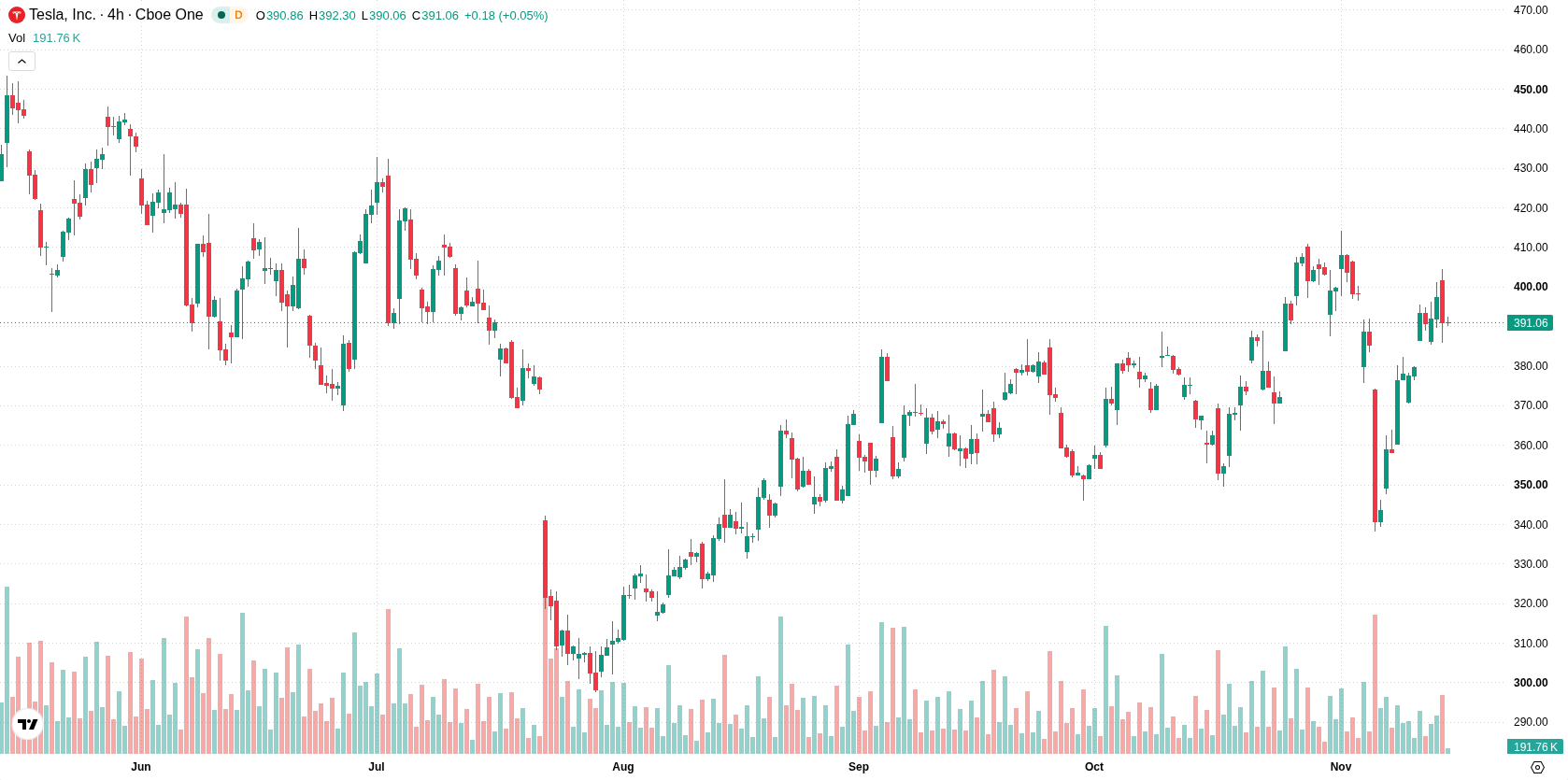
U.S. inflation risk reflected on TSLA 4H technical picture
On the 4H chart, TSLA remains positioned above its daily moving averages, with price above both the 50-day and 200-day SMAs. However, the primary trend is tempered by a bearish daily alignment, suggesting caution is warranted for traders navigating short-term volatility.
The MACD and ADX both register as neutral, indicating a balance between buying and selling momentum despite recent weakness. The H4 Kijun support at $376.19 remains an area to watch if downward pressure persists.
U.S. policy decisions drive the next direction for TSLA
Ongoing U.S. inflation and interest rate decisions will remain key risk factors for TSLA valuations. Technical focus lies on the support area around the D1 MA-200 at $383 and the H4 Kijun near $376.19. A breakout below these levels could accelerate downside momentum, while stabilization above them may limit further weakness in the near term.
Earlier, analysts noted that Tesla’s long-term prospects were seen as favorable due to merger talks and ongoing regulatory progress, with technical conditions previously supporting a bullish outlook. The current article adds a new dimension, as near-term direction now hinges on U.S. inflation trends and subsequent monetary policy decisions, which overshadow firm-specific factors and remain the primary drivers to watch.






Latest Tesla News





-
 Afghanistan
-
 Albania
-
 Algeria
-
 Angola
-
 Argentina
-
 Armenia
-
 Australia
-
 Austria
-
 Azerbaijan
-
 Bahamas
-
 Bahrain
-
 Bangladesh
-
 Belarus
-
 Belgium
-
 Bolivia
-
 Botswana
-
 Brazil
-
 Brunei
-
 Bulgaria
-
 Cambodia
-
 Cameroon
-
 Canada
-
 Chile
-
 China
-
 Colombia
-
 Congo
-
 Costa Rica
-
 Cote d'Ivoire
-
 Croatia
-
 Cuba
-
 Cyprus
-
 Czechia
-
 DR Congo
-
 Denmark
-
 Dominican Republic
-
 Ecuador
-
 Egypt
-
 El Salvador
-
 Estonia
-
 Eswatini
-
 Ethiopia
-
 Finland
-
 France
-
 Georgia
-
 Germany
-
 Ghana
-
 Greece
-
 Haiti
-
 Hong Kong
-
 Hungary
-
 India
-
 Indonesia
-
 Iran, Islamic republic
-
 Iraq
-
 Ireland
-
 Israel
-
 Italy
-
 Jamaica
-
 Japan
-
 Jordan
-
 Kazakhstan
-
 Kenya
-
 Korea
-
 Kuwait
-
 Kyrgyzstan
-
 Laos
-
 Latvia
-
 Lebanon
-
 Lesotho
-
 Libya
-
 Lithuania
-
 Luxembourg
-
 Madagascar
-
 Malaysia
-
 Malta
-
 Mauritius
-
 Mexico
-
 Moldova
-
 Mongolia
-
 Montenegro
-
 Morocco
-
 Mozambique
-
 Myanmar
-
 Namibia
-
 Nepal
-
 Netherlands
-
 New Zealand
-
 Nigeria
-
 North Macedonia
-
 Norway
-
 Oman
-
 Pakistan
-
 Palestine
-
 Panama
-
 Papua New Guinea
-
 Paraguay
-
 Peru
-
 Philippines
-
 Poland
-
 Portugal
-
 Puerto Rico
-
 Qatar
-
 Reunion
-
 Romania
-
 Rwanda
-
 Saudi Arabia
-
 Serbia
-
 Singapore
-
 Slovakia
-
 Slovenia
-
 Somalia
-
 South Africa
-
 Spain
-
 Sri Lanka
-
 Sweden
-
 Switzerland
-
 Syria
-
 Taiwan
-
 Tajikistan
-
 Tanzania
-
 Thailand
-
 Trinidad and Tobago
-
 Tunisia
-
 Turkey
-
 UAE
-
 Uganda
-
 Ukraine
-
 United Kingdom
-
United States
-
 Uruguay
-
 Uzbekistan
-
 Venezuela
-
 Vietnam
-
 Yemen
-
 Zambia
-
 Zimbabwe
- Forex
- Crypto












