

S&P 500 volatility punishes market-timing strategies as tariff headlines jolt trading

Wild swings in U.S. equities are underscoring the cost of trying to sidestep short-term losses during abrupt market selloffs. The latest moves show how quickly sentiment can reverse, with sharp gains and losses driven by company news and tariff developments rather than broader fundamentals.
Highlights
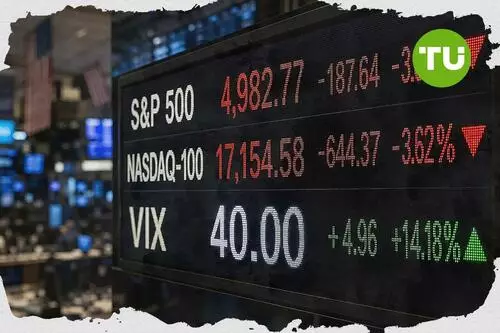
- Nasdaq 100 plunged 5.6% on Friday but surged 6.7% Monday after Nvidia Corp.'s Jensen Huang was reinstated as CEO, marking a rare 40-year reversal.
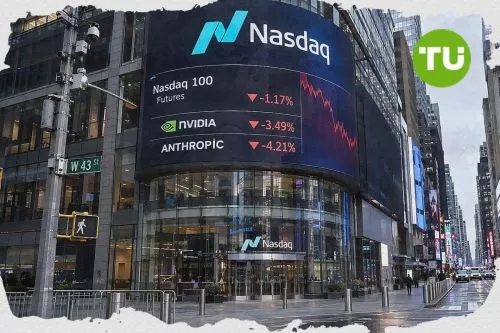
- Futures tied to the Nasdaq 100 slid 2.4% Tuesday after Wall Street Journal reported the U.S. plans to raise tariffs on China.
- High volatility from abrupt policy and corporate headlines punishes market-timing strategies as dramatic reversals make tactical exits riskier for investors.
Sharp reversals reshape short-term trading bets
As reported by Bloomberg, recent trading sessions are illustrating how efforts to avoid down days can backfire when markets rebound just as suddenly as they fall.Timing the market is difficult in ordinary conditions, and even more so when trillions of dollars in value are erased and then restored by headlines that are only loosely connected to the fundamental backdrop. After falling 5.6% on Friday, the Nasdaq 100 jumps 6.7% on Monday after Nvidia Corp.'s board reinstates Jensen Huang as the company's chief executive officer, marking one of the sharpest reversals seen over the past 40 years.
That rebound proves short-lived. Futures tied to the gauge lose 2.4% on Tuesday after the Wall Street Journal says the U.S. is preparing to raise tariffs on China.
Volatility raises risks for equity investors
The sequence reinforces a long-standing lesson for investors, avoiding the market's worst days can also mean missing its biggest single-session gains. Those who move to the sidelines after last week's drop in U.S. equities are quickly confronted with how fast losses can be recouped during headline-driven trading.For portfolio managers and retail investors alike, the swings highlight how policy signals and corporate developments are driving short-term pricing across major indexes. In that environment, tactical exits become harder to execute successfully, especially when reversals unfold before the fundamental picture materially changes.
This adds to earlier discussion around Nvidia options volume, which surged to a single-day record after Jensen Huang’s return.






Latest S&P 500 News



-
 Afghanistan
-
 Albania
-
 Algeria
-
 Angola
-
 Argentina
-
 Armenia
-
 Australia
-
 Austria
-
 Azerbaijan
-
 Bahamas
-
 Bahrain
-
 Bangladesh
-
 Belarus
-
 Belgium
-
 Bolivia
-
 Botswana
-
 Brazil
-
 Brunei
-
 Bulgaria
-
 Cambodia
-
 Cameroon
-
 Canada
-
 Chile
-
 China
-
 Colombia
-
 Congo
-
 Costa Rica
-
 Cote d'Ivoire
-
 Croatia
-
 Cuba
-
 Cyprus
-
 Czechia
-
 DR Congo
-
 Denmark
-
 Dominican Republic
-
 Ecuador
-
 Egypt
-
 El Salvador
-
 Estonia
-
 Eswatini
-
 Ethiopia
-
 Finland
-
 France
-
 Georgia
-
 Germany
-
 Ghana
-
 Greece
-
 Haiti
-
 Hong Kong
-
 Hungary
-
 India
-
 Indonesia
-
 Iran, Islamic republic
-
 Iraq
-
 Ireland
-
 Israel
-
 Italy
-
 Jamaica
-
 Japan
-
 Jordan
-
 Kazakhstan
-
 Kenya
-
 Korea
-
 Kuwait
-
 Kyrgyzstan
-
 Laos
-
 Latvia
-
 Lebanon
-
 Lesotho
-
 Libya
-
 Lithuania
-
 Luxembourg
-
 Madagascar
-
 Malaysia
-
 Malta
-
 Mauritius
-
 Mexico
-
 Moldova
-
 Mongolia
-
 Montenegro
-
 Morocco
-
 Mozambique
-
 Myanmar
-
 Namibia
-
 Nepal
-
 Netherlands
-
 New Zealand
-
 Nigeria
-
 North Macedonia
-
 Norway
-
 Oman
-
 Pakistan
-
 Palestine
-
 Panama
-
 Papua New Guinea
-
 Paraguay
-
 Peru
-
 Philippines
-
 Poland
-
 Portugal
-
 Puerto Rico
-
 Qatar
-
 Reunion
-
 Romania
-
 Rwanda
-
 Saudi Arabia
-
 Serbia
-
 Singapore
-
 Slovakia
-
 Slovenia
-
 Somalia
-
 South Africa
-
 Spain
-
 Sri Lanka
-
 Sweden
-
 Switzerland
-
 Syria
-
 Taiwan
-
 Tajikistan
-
 Tanzania
-
 Thailand
-
 Trinidad and Tobago
-
 Tunisia
-
 Turkey
-
 UAE
-
 Uganda
-
 Ukraine
-
 United Kingdom
-
United States
-
 Uruguay
-
 Uzbekistan
-
 Venezuela
-
 Vietnam
-
 Yemen
-
 Zambia
-
 Zimbabwe
- Forex
- Crypto












