

Cloud infrastructure overhaul supports Microsoft amid enterprise trust concerns

Microsoft (MSFT) stock is trading higher in a subdued session, with attention focused on operational risk management following a recent overhaul of crisis protocols. The asset remains below key longer-term moving averages, and traders are monitoring for further developments in cloud infrastructure reliability.
 501.67
526.49
Highlights
- Microsoft initiated a comprehensive overhaul of engineering and crisis protocols after a 24-hour outage exposed cloud infrastructure vulnerabilities.
- Ongoing operational risks and the recent service interruption have raised concerns among enterprise clients about long-term cloud reliability.
- Microsoft stock is trading between support at $444 and resistance at $519, with momentum indicators showing limited upside due to persistent operational concerns.
Microsoft's post-outage overhaul and cloud risk channel
According to Investing.com, earlier in November 2026, Microsoft launched an internal 'Code Red' process to revise its engineering protocols and crisis response following a 24-hour outage that affected its enterprise cloud infrastructure.
This action highlighted potential vulnerabilities in Microsoft's cloud offerings and prompted internal changes aimed at reducing the risk of further large-scale service interruptions. Operational risks of this kind can influence enterprise demand and impact sentiment around the company's position in the competitive cloud market.
While the overhaul may reassure some clients about improved crisis readiness, the incident has raised questions about long-term reliability that could continue to shape perceptions until more evidence of stability emerges.
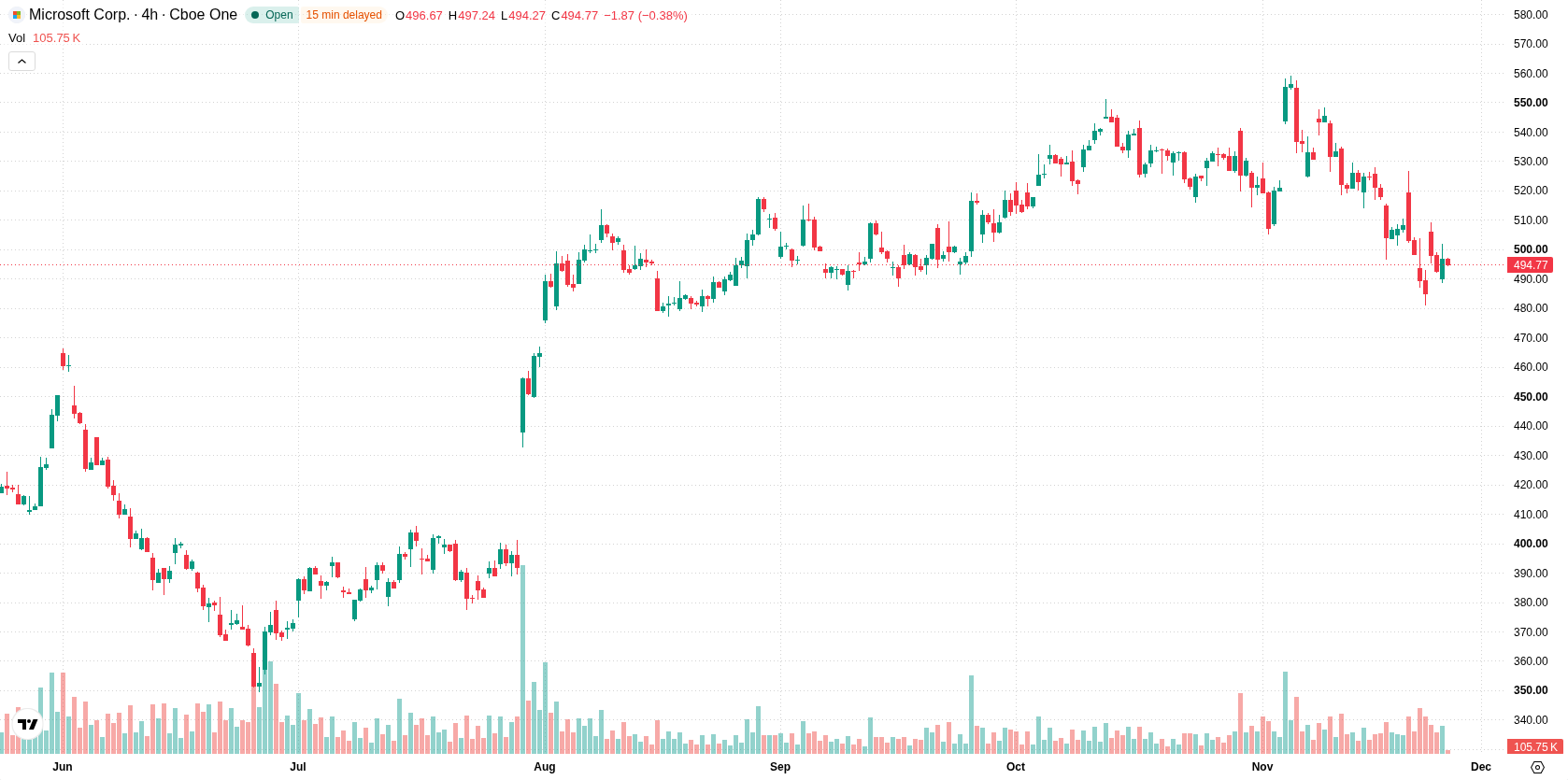
MSFT faces resistance on the 4H chart amid operational uncertainty
On the technical chart, MSFT is trading below the D1 SMA-50 at $519.76, while holding above the D1 SMA-200 at $444.08. This points to a market that is anchored by medium-term support but constrained by upper resistance, reflecting a wait-and-see stance amid uncertainty over operational risks.
Shorter-term momentum remains limited, with the H4 SMA-20 at $511.87 acting as a nearby ceiling. Both MACD and ADX suggest leaning toward selling pressure, adding to the view of restricted upside without a clear momentum catalyst.
Cloud disruption risk and confirmation around $444–$519
Further operational disruptions or evidence of sustained improvements in cloud reliability could dictate the next direction. Key levels to watch include support around $444 and resistance near $519; a confirmed move beyond these zones would clarify the trend. Market focus will likely remain on Microsoft's ongoing updates to infrastructure management and their impact on enterprise client confidence.
Previously it was reported that Microsoft undertook an urgent internal review and overhaul of its cloud infrastructure protocols in response to a widespread service outage. The current analysis adds that ongoing improvements in operational risk management will be closely watched by the market, with particular attention on whether these measures can deliver measurable gains in reliability that influence the next move.











-
 Afghanistan
-
 Albania
-
 Algeria
-
 Angola
-
 Argentina
-
 Armenia
-
 Australia
-
 Austria
-
 Azerbaijan
-
 Bahamas
-
 Bahrain
-
 Bangladesh
-
 Belarus
-
 Belgium
-
 Bolivia
-
 Botswana
-
 Brazil
-
 Brunei
-
 Bulgaria
-
 Cambodia
-
 Cameroon
-
 Canada
-
 Chile
-
 China
-
 Colombia
-
 Congo
-
 Costa Rica
-
 Cote d'Ivoire
-
 Croatia
-
 Cuba
-
 Cyprus
-
 Czechia
-
 DR Congo
-
 Denmark
-
 Dominican Republic
-
 Ecuador
-
 Egypt
-
 El Salvador
-
 Estonia
-
 Eswatini
-
 Ethiopia
-
 Finland
-
 France
-
 Georgia
-
 Germany
-
 Ghana
-
 Greece
-
 Haiti
-
 Hong Kong
-
 Hungary
-
 India
-
 Indonesia
-
 Iran, Islamic republic
-
 Iraq
-
 Ireland
-
 Israel
-
 Italy
-
 Jamaica
-
 Japan
-
 Jordan
-
 Kazakhstan
-
 Kenya
-
 Korea
-
 Kuwait
-
 Kyrgyzstan
-
 Laos
-
 Latvia
-
 Lebanon
-
 Lesotho
-
 Libya
-
 Lithuania
-
 Luxembourg
-
 Madagascar
-
 Malaysia
-
 Malta
-
 Mauritius
-
 Mexico
-
 Moldova
-
 Mongolia
-
 Montenegro
-
 Morocco
-
 Mozambique
-
 Myanmar
-
 Namibia
-
 Nepal
-
 Netherlands
-
 New Zealand
-
 Nigeria
-
 North Macedonia
-
 Norway
-
 Oman
-
 Pakistan
-
 Palestine
-
 Panama
-
 Papua New Guinea
-
 Paraguay
-
 Peru
-
 Philippines
-
 Poland
-
 Portugal
-
 Puerto Rico
-
 Qatar
-
 Reunion
-
 Romania
-
 Rwanda
-
 Saudi Arabia
-
 Serbia
-
 Singapore
-
 Slovakia
-
 Slovenia
-
 Somalia
-
 South Africa
-
 Spain
-
 Sri Lanka
-
 Sweden
-
 Switzerland
-
 Syria
-
 Taiwan
-
 Tajikistan
-
 Tanzania
-
 Thailand
-
 Trinidad and Tobago
-
 Tunisia
-
 Turkey
-
 UAE
-
 Uganda
-
 Ukraine
-
 United Kingdom
-
United States
-
 Uruguay
-
 Uzbekistan
-
 Venezuela
-
 Vietnam
-
 Yemen
-
 Zambia
-
 Zimbabwe
- Forex
- Crypto












