
Why Is Bitcoin Dropping


Editorial Note: While we adhere to strict Editorial Integrity, this post may contain references to products from our partners. Here's an explanation for How We Make Money. None of the data and information on this webpage constitutes investment advice according to our Disclaimer.
The crypto market crash was closely tied to Trump's renewed trade war. As tariffs hit global markets, investors initially flocked to the U.S. dollar as a safe-haven asset, leading to massive sell-offs in riskier investments like crypto. Higher interest rates, driven by inflation concerns from rising tariffs, further squeezed liquidity, forcing leveraged traders into liquidations. However, the market sentiment has begun shifting as investors spot buying opportunities following the steep correction.
The cryptocurrency market has witnessed a staggering collapse, with billions wiped out in mere hours. Analysts point to Donald Trump’s renewed trade tensions with major economies like Canada, Mexico, and China as a primary catalyst. These geopolitical counters have triggered a rush to the US dollar, a traditional safe-haven asset, prompting investors to unload riskier holdings, including cryptocurrencies.
Rising interest rates, fueled by inflation fears tied to escalating tariffs, have further drained market liquidity. This squeeze has left leveraged traders exposed, causing a wave of forced liquidations. As the dollar strengthens and institutional investors retreat, the sell-off has only intensified.
The fallout has hit major cryptocurrencies like Bitcoin, Ethereum, and Solana, along with meme coins such as Dogecoin and Shiba Inu, leading to over $2.2 billion in liquidations within a single day. As the dust settles and fears surrounding the trade war begin to ease, investors are gradually returning to crypto markets. Many see the recent downturn as a buying opportunity, with Bitcoin, Ethereum, and other major assets rebounding from their lows. Additionally, with expectations that central banks may slow down rate hikes and the dollar showing signs of stabilization, liquidity is beginning to return to the market. This renewed optimism has led to a surge in accumulation, suggesting that crypto could be on the path to recovery despite lingering volatility.
Impact of the Trump War on the crypto market

In a recent market analysis shared on Telegram, crypto analyst Kara Crypto Ideas highlighted the sharp decline in cryptocurrency prices following renewed trade war tensions sparked by former U.S. President Donald Trump’s announcement of new tariffs. This development triggered widespread panic in the market, leading to a massive sell-off across major cryptocurrencies, including Bitcoin, Ethereum, Solana, and meme coins like Dogecoin and Shiba Inu.
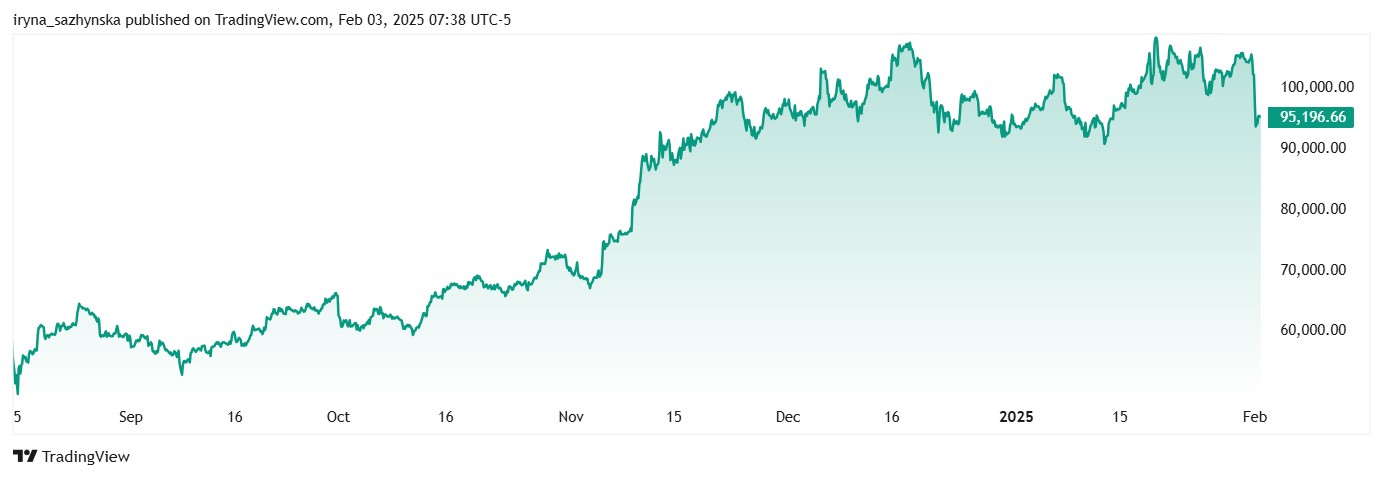
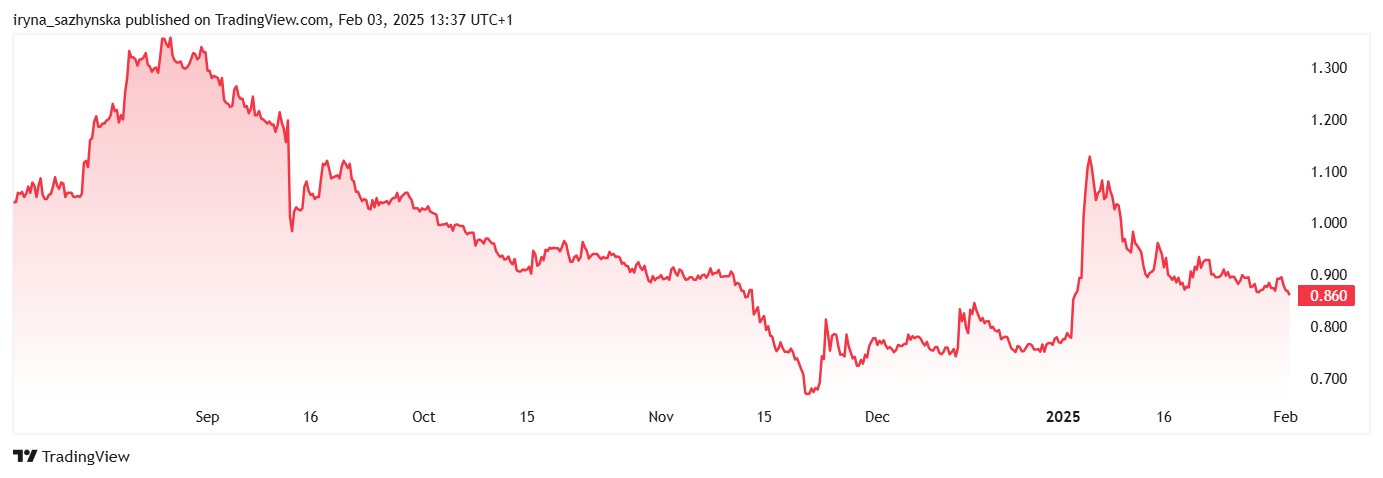
According to Kara Crypto Ideas, Bitcoin plummeted to a three-week low of approximately $91,200 before rebounding to around $95,300, reflecting a 7% drop in just a short period. Ethereum took a more severe hit, dropping 26% to about $2,130 before recovering to $2,600. This highlights the extreme volatility and fragile investor sentiment in the current crypto market.
The analysis suggests that Trump’s tariff announcement, which targeted imports from Mexico, Canada, and China, spooked investors and raised fears of a broader global trade war. This uncertainty led to a shift away from riskier assets like cryptocurrencies, as investors flocked to the U.S. dollar as a safer alternative. The liquidation crisis intensified as over $2 billion was wiped out in 24 hours, with Ethereum holders bearing the brunt — derivative markets alone saw over $1 billion in long positions getting liquidated.
The market shock underscores how macro-level geopolitical factors can exert immense pressure on digital assets, reinforcing the need for risk management and diversification in crypto trading strategies. Let’s take a look at how major cryptocurrencies fared during this liquidation frenzy:
Bitcoin (BTC)
Bitcoin tested the $90,000 level before slightly recovering. The fear of economic instability has caused investors to liquidate their holdings rapidly. The tightening of global economic conditions and the temporary strengthening of the U.S. dollar have exacerbated Bitcoin's decline.
Ethereum (ETH)
Ethereum experienced a dramatic drop of up to 30% at one point, marking one of its steepest declines in recent history. Concerns about regulatory changes and global financial uncertainty have contributed to this plunge, with many DeFi projects facing liquidity issues.
Latest Ethereum (ETH) News

Ethereum declines amid cancelled testnet gas limit increase and ongoing technical risks

-1.09% for Ethereum as Ethereum ETF outflows reduce institutional demand

Ethereum technical analysis: Downward move signals vulnerability with $2,352 support in focus

Ethereum price prediction: $2,316 support in focus? ETH drops 1.40%

What's behind Ethereum's latest 5.2% price pullback?

Uniswap integrates Curve and PancakeSwap liquidity across three blockchains
Solana (SOL)
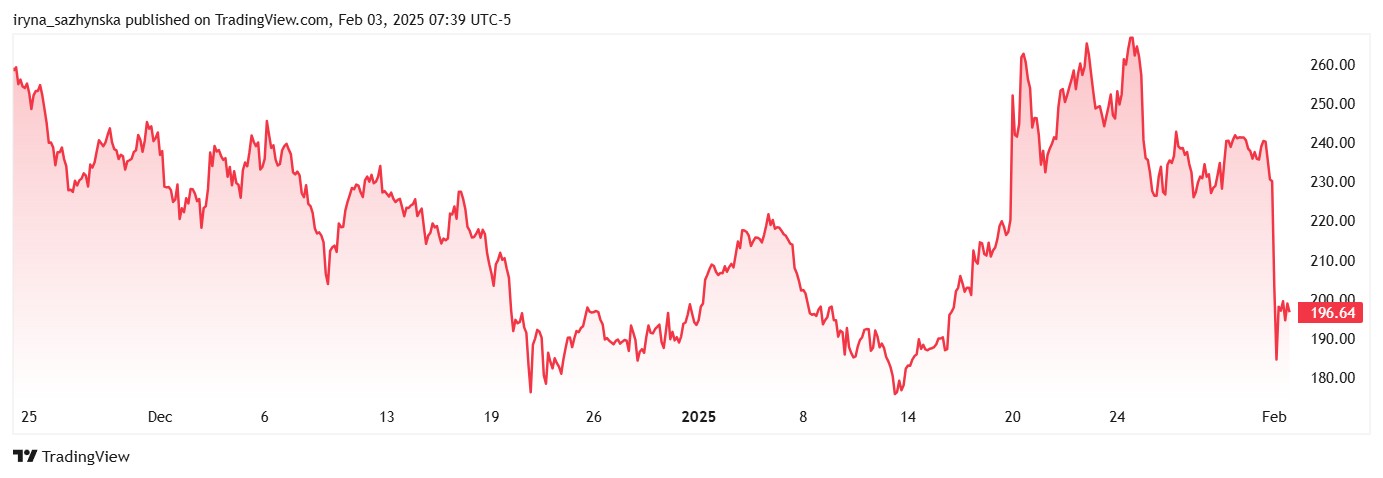
Solana faced a significant decline as well, with its price dropping sharply. The network's dependency on investor confidence made it vulnerable to market turbulence. Solana's ecosystem, heavily reliant on venture-backed projects, has been hit hard by the sell-off.
Latest Solana (SOL) News

Solana technical analysis: Seller pressure keeps price near $100.32 support

Solana decline stretches into oversold territory as RSI nears key threshold: weekly outlook

Solana trades flat as Middle East tensions escalate

Solana technical analysis: Range-bound trading with support pressure at $104.38

SOL slips as sellers pressure $102.24 support despite oversold conditions

Solana holds steady as Alpenglow upgrade cuts transaction finality time
Meme Coins: Dogecoin (DOGE) and Shiba Inu (SHIB)
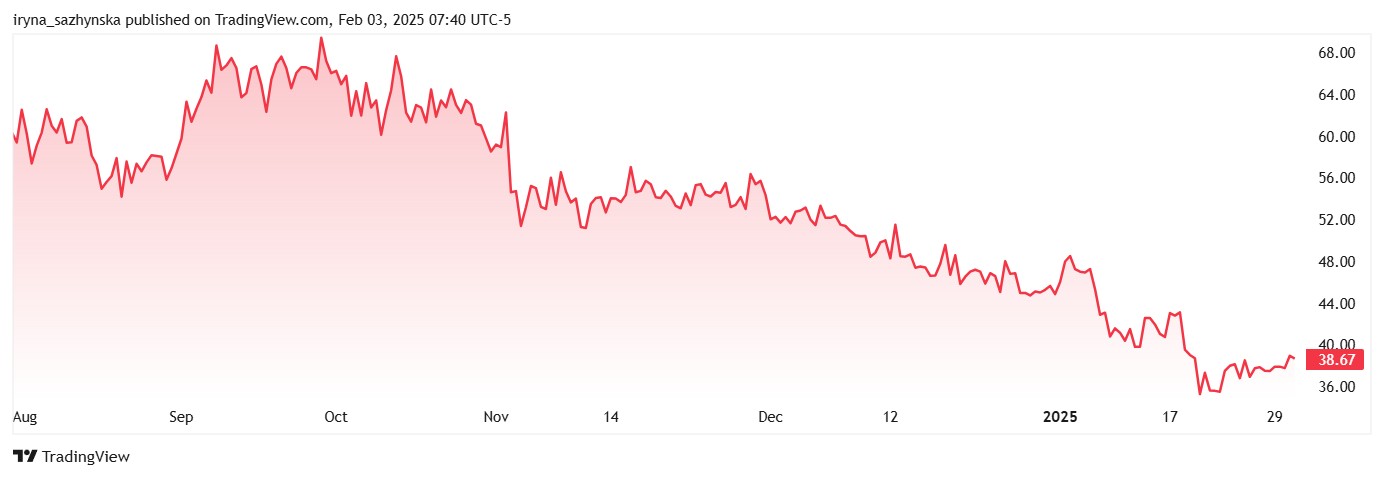
Meme coins like DOGE and SHIB have suffered severely, reflecting the highly speculative nature of these assets. Their volatility has been exacerbated by the broader market downturn, with losses exceeding 35% in some cases.
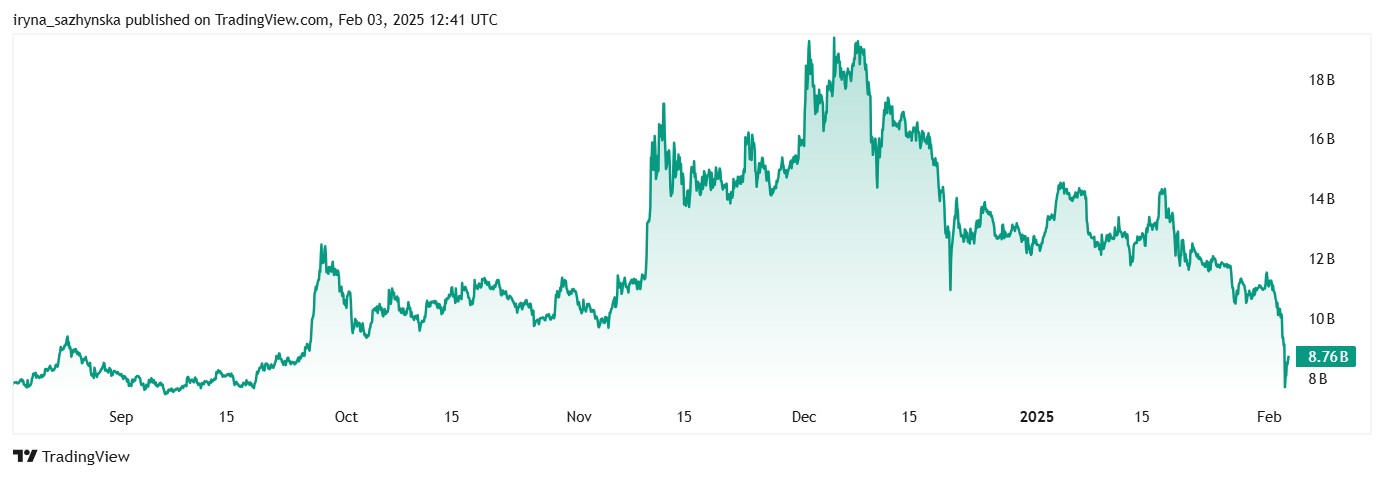
Total crypto liquidations
The total liquidations have exceeded $2.2 billion, highlighting the scale of the market's reaction. According to Cointelegraph, this sharp decline is fueled by a combination of macroeconomic factors, including the strengthening of the U.S. dollar and rising global tensions.
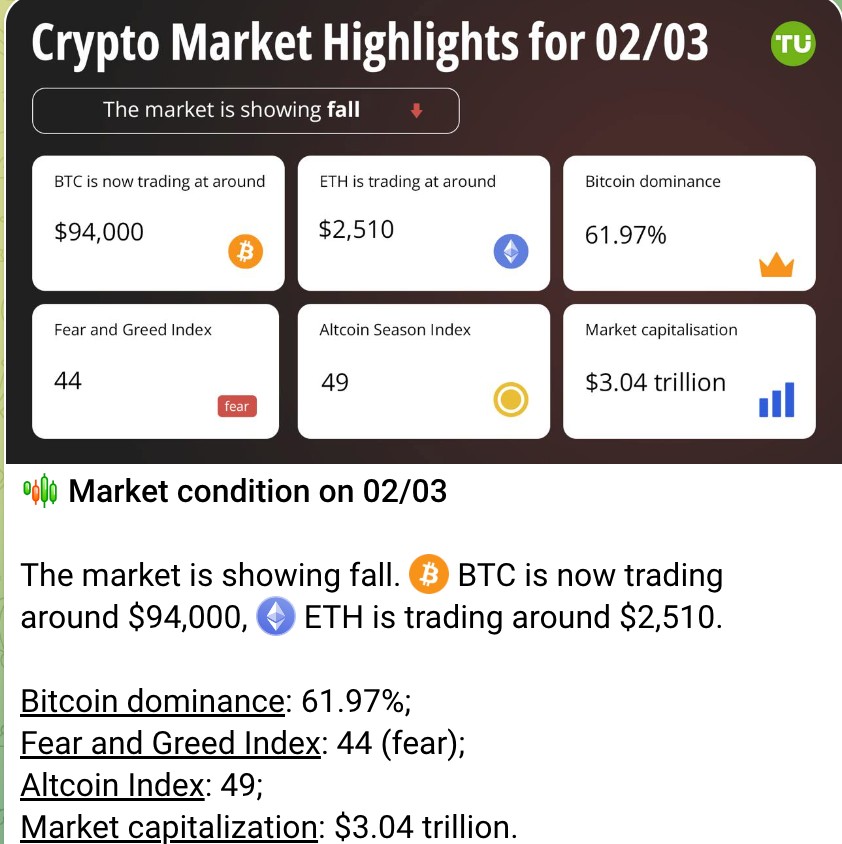
Data from Coinpedia and Coingape suggest that leveraged positions were wiped out across major exchanges, with Bitcoin and Ethereum futures seeing the highest liquidations. This cascade effect has further deepened the sell-off, creating a feedback loop of panic selling.
The actual liquidations could be much higher
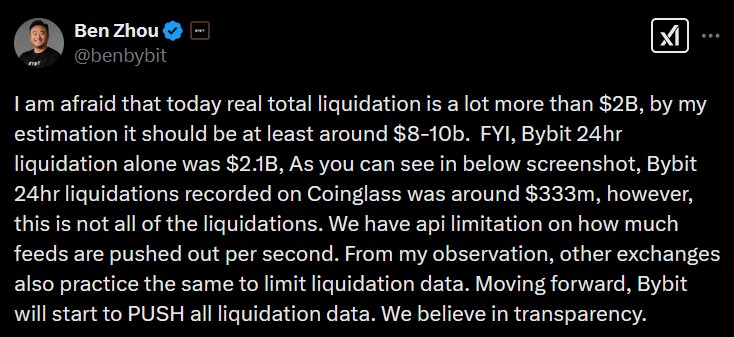
Ben Zhou, the CEO of Bybit, recently took to Twitter (X) to address concerns about the true scale of liquidations in the cryptocurrency market. He suggested that the actual liquidation total is significantly higher than what is being publicly reported. While the reported figure was around $2 billion, Zhou estimates the real number to be between $8 billion and $10 billion. His statement raises questions about how liquidation data is collected and displayed across different platforms.

In his post, Zhou highlighted that Bybit's 24-hour liquidation total alone was $2.1 billion. However, on Coinglass, a popular liquidation tracking platform, Bybit’s recorded liquidations were only $333 million. This, he explained, is due to API limitations, meaning that Bybit’s system can only push out a limited amount of data per second. He also pointed out that other crypto exchanges likely follow similar practices, leading to a significant underreporting of the true liquidation volume in the market.
This revelation is crucial because liquidation events can have a major impact on the market. When traders using leverage (borrowed funds) fail to maintain required margins, their assets are automatically sold, creating a chain reaction that amplifies market crashes. If liquidation data is underreported, investors might underestimate market risks, leading to poor decision-making.
Ben Zhou shared this information on Twitter (X) via his handle @benbybit along with screenshots of Bybit's internal liquidation data, reinforcing his claim that the reported figures do not reflect the full extent of market liquidations.
Record crash as a combination of predictable economic reactions

I believe the recent market crash is a reactionary move driven by heightened geopolitical tensions, particularly the trade war declared by Donald Trump against Canada, Mexico, and China. The ripple effects of this conflict have spooked investors, leading to widespread liquidations and panic selling.
Bitcoin briefly tested the $90,000 mark before rebounding slightly, while most altcoins plummeted by over 20%. The meme coins — well, their performance speaks for itself, reflecting the extreme volatility inherent in speculative assets during times of uncertainty. Liquidations surpassed $2.2 billion within 24 hours, highlighting the magnitude of the market's response.
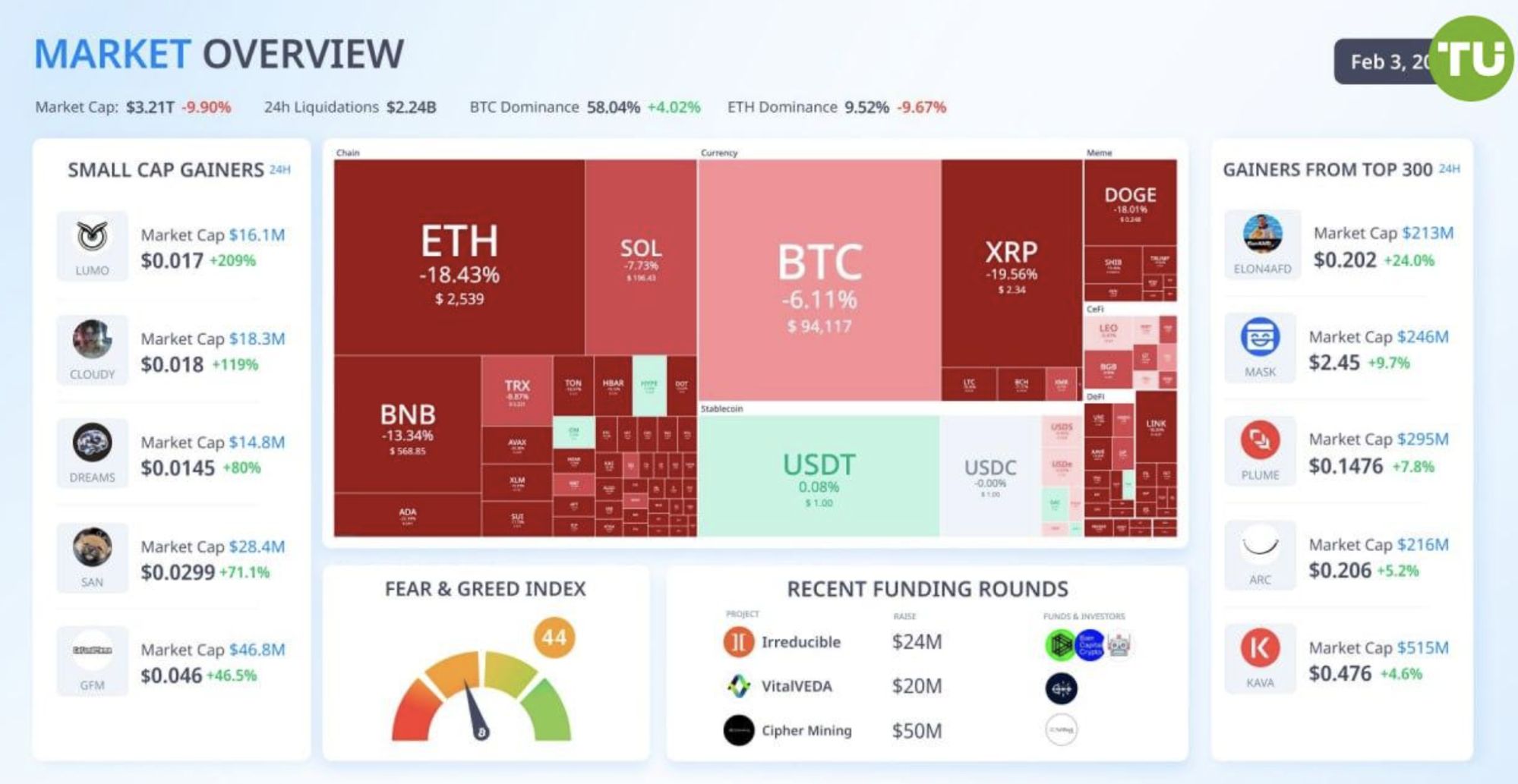
In my view, this correction was expected. The temporary strengthening of the U.S. dollar, combined with escalating global tensions, naturally drives investors to offload riskier assets. However, I see no clear signs of an impending recession or crypto winter. The Federal Reserve's potential to resume interest rate cuts could provide the necessary liquidity to stabilize the markets in the near future.
For strategic investors, this dip presents a compelling opportunity to acquire quality altcoins at discounted prices. Historically, similar market downturns have been followed by strong recoveries. Just last September, Bitcoin dipped below $50,000, only to surge close to $100,000 in November. I anticipate a similar mid-term rebound this time, reinforcing the importance of maintaining a long-term perspective in volatile markets.
Conclusion
While the current market conditions are alarming, history shows that cryptocurrency markets are resilient. Investors should stay informed, avoid panic selling, and consider strategic investments during these downturns. The cyclical nature of crypto markets often presents opportunities amid crises.
FAQs
Why is crypto crashing?
The crash is primarily due to geopolitical tensions, economic uncertainty, and investor panic triggered by Donald Trump's trade war.
Why is Bitcoin dropping?
Bitcoin's decline is linked to broader market liquidations, the strengthening U.S. dollar, and fears of economic instability.
What are the current crypto market conditions?
The market is experiencing a sharp decline, with major cryptocurrencies losing 20-30% of their value and total liquidations surpassing $2.2 billion.
Should I buy or sell crypto now?
While it's essential to consider your risk tolerance, some experts view this as a buying opportunity for long-term gains, especially in altcoins.
Editors' Top Picks and Insights






Related Articles
Team that worked on the article
Oleg Tkachenko is an economic analyst and risk manager having more than 14 years of experience in working with systemically important banks, investment companies, and analytical platforms. He has been a Traders Union analyst since 2018.
Chinmay Soni is a financial analyst with more than 5 years of experience in working with stocks, Forex, derivatives, and other assets. As a founder of a boutique research firm and an active researcher, he covers various industries and fields, providing insights backed by statistical data.
Mirjan Hipolito is a journalist and news editor at Traders Union. She is an expert crypto writer with five years of experience in the financial markets.
Cryptocurrency is a type of digital or virtual currency that relies on cryptography for security. Unlike traditional currencies issued by governments (fiat currencies), cryptocurrencies operate on decentralized networks, typically based on blockchain technology.
A bear market is a period of time in which an investment asset, such as stocks, bonds, or commodities, experiences a decline in price for an extended period of time.
An investor is an individual, who invests money in an asset with the expectation that its value would appreciate in the future. The asset can be anything, including a bond, debenture, mutual fund, equity, gold, silver, exchange-traded funds (ETFs), and real-estate property.
CFD is a contract between an investor/trader and seller that demonstrates that the trader will need to pay the price difference between the current value of the asset and its value at the time of contract to the seller.
Risk management in Forex involves strategies and techniques used by traders to minimize potential losses while trading currencies, such as setting stop-loss orders and position sizing, to protect their capital from adverse market movements.

-
 Afghanistan
-
 Albania
-
 Algeria
-
 Angola
-
 Argentina
-
 Armenia
-
 Australia
-
 Austria
-
 Azerbaijan
-
 Bahamas
-
 Bahrain
-
 Bangladesh
-
 Belarus
-
 Belgium
-
 Bolivia
-
 Botswana
-
 Brazil
-
 Brunei
-
 Bulgaria
-
 Cambodia
-
 Cameroon
-
 Canada
-
 Chile
Chile
-
 China
China
-
 Colombia
-
 Congo
Congo
-
 Costa Rica
-
 Cote d'Ivoire
-
 Croatia
-
 Cuba
Cuba
-
 Cyprus
-
 Czechia
-
 DR Congo
-
 Denmark
-
 Dominican Republic
-
 Ecuador
-
 Egypt
Egypt
-
 El Salvador
-
 Estonia
-
 Eswatini
-
 Ethiopia
-
 Finland
-
 France
-
 Georgia
-
 Germany
-
 Ghana
Ghana
-
 Greece
-
 Haiti
Haiti
-
 Hong Kong
-
 Hungary
-
 India
India
-
 Indonesia
-
 Iran, Islamic republic
-
 Iraq
Iraq
-
 Ireland
-
 Israel
-
 Italy
Italy
-
 Jamaica
-
 Japan
Japan
-
 Jordan
-
 Kazakhstan
-
 Kenya
Kenya
-
 Korea
Korea
-
 Kuwait
-
 Kyrgyzstan
-
 Laos
Laos
-
 Latvia
-
 Lebanon
-
 Lesotho
-
 Libya
Libya
-
 Lithuania
-
 Luxembourg
-
 Madagascar
-
 Malaysia
-
 Malta
Malta
-
 Mauritius
-
 Mexico
-
 Moldova
-
 Mongolia
-
 Montenegro
-
 Morocco
-
 Mozambique
-
 Myanmar
-
 Namibia
-
 Nepal
Nepal
-
 Netherlands
-
 New Zealand
-
 Nigeria
-
 North Macedonia
-
 Norway
-
 Oman
Oman
-
 Pakistan
-
 Palestine
-
 Panama
-
 Papua New Guinea
-
 Paraguay
-
 Peru
Peru
-
 Philippines
-
 Poland
-
 Portugal
-
 Puerto Rico
-
 Qatar
Qatar
-
 Reunion
-
 Romania
-
 Rwanda
-
 Saudi Arabia
-
 Serbia
-
 Singapore
-
 Slovakia
-
 Slovenia
-
 Somalia
-
 South Africa
-
 Spain
Spain
-
 Sri Lanka
-
 Sweden
-
 Switzerland
-
 Syria
Syria
-
 Taiwan
-
 Tajikistan
-
 Tanzania
-
 Thailand
-
 Trinidad and Tobago
-
 Tunisia
-
 Turkey
-
 UAE
UAE
-
 Uganda
-
 Ukraine
-
 United Kingdom
-
United States
-
 Uruguay
-
 Uzbekistan
-
 Venezuela
-
 Vietnam
-
 Yemen
Yemen
-
 Zambia
-
 Zimbabwe
- Forex
- Crypto












