
MetaMask Wallet Review 2026


Editorial Note: While we adhere to strict Editorial Integrity, this post may contain references to products from our partners. Here's an explanation for How We Make Money. None of the data and information on this webpage constitutes investment advice according to our Disclaimer.
MetaMask is a free, non-custodial crypto wallet available as a browser extension and mobile app. The MetaMask extension and MetaMask app provide access to storing, sending, and swapping Ethereum-based tokens, while also connecting users to Web3 applications across different blockchains.
MetaMask is considered a reliable hot wallet that combines usability with security. As an open-source project launched in 2016 by ConsenSys, MetaMask quickly became one of the most trusted tools in decentralized finance. The wallet is often described as legit and safe, though it is not a cold wallet, which makes proper security practices essential. The balance between convenience and protection has helped MetaMask maintain its reputation as a leading blockchain wallet.
In this MetaMask review 2026, we analyze its main features across the MetaMask desktop download version and the mobile app available on the App Store, its integration with the Ethereum network, and unique offerings such as the ability to set a custom spending cap. We also review potential disadvantages of MetaMask, including common MetaMask scams, technical issues, and cases where users reported their wallets being hacked.
What is a Metamask wallet? What does MetaMask do
MetaMask is a hot wallet that helps users store digital assets and access decentralized apps. It is available as a browser extension for Chrome, Firefox, Edge, and Brave, and also as a mobile app for Android and iOS. The MetaMask blockchain wallet is widely used by Ethereum enthusiasts because it supports ERC-20 tokens as well as other networks built on the Ethereum Virtual Machine. As a non-custodial crypto wallet, it gives users full control of their funds without requiring KYCMetamask verification.
How does Metamask work: can you buy crypto on Metamask?
Beyond basic wallet functions, MetaMask acts as a full Web3 crypto wallet. Users can access DeFi platforms, trade tokens, buy and sell NFTs, and interact with blockchain-based games directly from their browser or phone. Its open-source framework and frequent updates offered by MetaMask developers contribute to security, helping it remain one of the most trusted decentralized wallets.
Currently, MetaMask is used by tens of millions worldwide. It has earned a reputation as a legit, safe wallet with smooth integration across different networks. By combining flexibility, a decentralized structure, and broad compatibility, it remains a leading choice for Web3 participation.

| Feature | Description |
|---|---|
| Wallet type | Hot wallet (browser extension and mobile app) |
| Supported networks | Ethereum, BNB Chain, Polygon, Arbitrum, Optimism, Avalanche, Fantom, etc. |
| DApp integration | Seamless connection to Web3 apps and DeFi protocols |
| Key features | Token swap, DApp browser, NFT support, WalletConnect, Portfolio tracker |
| Supported coins | ETH, ERC-20, BEP-20, and other EVM-compatible tokens |
| Security model | Non-custodial, password + seed phrase, optional hardware wallet support |
| Best for | DeFi users, NFT collectors, Ethereum enthusiasts |
| Price | Free to use; swap and network fees apply |
Key features of MetaMask Wallet
The MetaMask wallet is a non-custodial hot wallet that combines core crypto storage with advanced Web3 tools. Its open-source blockchain wallet structure and versatile functions make it a popular choice for managing tokens, NFTs, and DeFi assets. Its key features include:
Token swaps within the app. MetaMask includes a built-in swap function that allows trading directly from the wallet. It sources pricing data from multiple decentralized exchanges to ensure competitive rates. While there is a 0.875% fee, the feature is valued for its transparency and ease of use. This strengthens MetaMask’s role as more than just storage, making it a blockchain wallet with integrated exchange functions.
Built-in DApp browser. On mobile, the MetaMask application includes a DApp browser for direct access to decentralized services. Whether browsing NFT marketplaces or using lending platforms, users benefit from a streamlined MetaMask Web3 experience.
NFT storage and viewing. MetaMask recognizes and stores NFTs, allowing visual display in the mobile app. While the desktop version doesn’t yet include NFT galleries, it integrates seamlessly with DApps that showcase NFT assets.
Portfolio tracker. The MetaMask Portfolio DApp provides a consolidated dashboard of tokens, NFTs, and DeFi positions across multiple wallets. It helps users track performance, manage balances, and oversee multi-chain assets.
WalletConnect and QR code support. MetaMask integrates with WalletConnect, enabling secure interactions with DApps beyond the browser extension. QR scanning ensures flexible connections for mobile use.
Custom network support. MetaMask lets users add custom networks, making it compatible with EVM blockchains such as BNB Chain, Avalanche, or Polygon. This flexibility allows investors to optimize fees and speed across ecosystems.
Pros and cons of MetaMask wallet
Like any crypto wallet, MetaMask has strong advantages but also a few drawbacks to keep in mind. Below are the main pros and cons of the MetaMask wallet based on its functionality, security, and ecosystem support.
- Pros
- Cons
Deep DeFi protocol access.MetaMask connects directly to emerging platforms, making it one of the most flexible Web3 wallets for experimenting with decentralized finance before tools appear in mainstream solutions.
Supports testnets for experimentation. Developers and traders benefit from test networks such as Goerli, which allow safe simulations without risking real assets, a feature that highlights how MetaMask works in both production and testing environments.
Hardware wallet compatibility. MetaMask integrates smoothly with Ledger and Trezor, adding cold wallet security to a hot wallet interface, strengthening overall security.
Granular gas fee control. Users can customize transaction costs directly, showcasing why MetaMask is a good wallet for advanced traders dealing with volatile network conditions.
High phishing vulnerability. Reported cases of MetaMask scams and even accounts being hacked underline the importance of caution, as most MetaMask issues occur through fake pop-ups or malicious signatures rather than the wallet itself.
No native Bitcoin support. MetaMask is not a Bitcoin wallet and does not directly hold BTC; it is focused on Ethereum and EVM-compatible chains, although wrapped tokens can be used as a workaround.
Over-reliance on browser security. Because the MetaMask extension depends on the browser, any compromise of that environment puts the wallet at risk. This is why many users ask whether MetaMask is a safe wallet or consider pairing it with hardware devices.
Inconsistent mobile experience. The MetaMask application works well on most networks but sometimes struggles with custom RPCs or token visibility, leading to differences between desktop and mobile performance.
MetaMask Wallet security review: is Metamask wallet safe
The MetaMask wallet is one of the most widely used non-custodial crypto wallets, but like any hot wallet, it carries certain risks. Here’s a detailed look at how secure MetaMask is and how MetaMask safety is implemented in practice.
Password + seed phrase protection
MetaMask relies on a local password combined with a 12-word seed phrase for wallet recovery. This system highlights how MetaMask works as a non-custodial wallet: users are fully in control of their private keys. However, if the seed phrase is stolen or exposed, the wallet can be completely compromised, which is why many reports of MetaMask hacked accounts are tied to phishing or careless seed storage.
Non-custodial model (user holds keys)
As a decentralized blockchain wallet, MetaMask does not store user keys or credentials. Instead, all wallet information remains encrypted on the user’s device. This reinforces the doubt of whether MetaMask is a safe wallet or not. And in that context, its design is fundamentally secure but also places all responsibility on the user.
No secure element / hot wallet risks
MetaMask is a hot wallet, meaning it stays connected to the internet. Unlike hardware or cold wallets, it lacks a dedicated secure element chip. While MetaMask security updates are frequent, the absence of offline storage creates exposure to malware. This raises the question of whether MetaMask is a good wallet for long-term storage versus daily DeFi use.
Supported coins & tokens
Beyond Ethereum and ERC-20, MetaMask works with a wide range of EVM-compatible networks, including Polygon, Avalanche, Optimism, Arbitrum, Fantom, and others. It also supports manual addition of token contract addresses, which underlines why the MetaMask crypto wallet is so versatile. Even obscure tokens can be added and tracked before they reach centralized exchanges, making it a key tool for active Web3 users. This flexibility extends to stablecoins as well – you can easily add USDT to MetaMask across networks like Ethereum, Polygon, and others, using the correct contract addresses and keeping in mind network fees.
MetaMask wallet price & fees
Many assume MetaMask is free, but the wallet monetizes through its built-in swap feature. Every swap includes a 0.875% fee, which is significantly higher than decentralized exchanges like Uniswap. This is how MetaMask makes money, and frequent traders should be aware of the costs. In addition, variable gas fees add another layer of expense, which is often overlooked. As a result, while the MetaMask application remains convenient, using swaps without comparing prices can reduce profitability.
How to use MetaMask Wallet: a step-by-step guide
The MetaMask wallet is a non-custodial hot wallet that works as both a browser extension and a mobile app. Here’s how to set it up and start using it safely.
Step 1: Install MetaMask
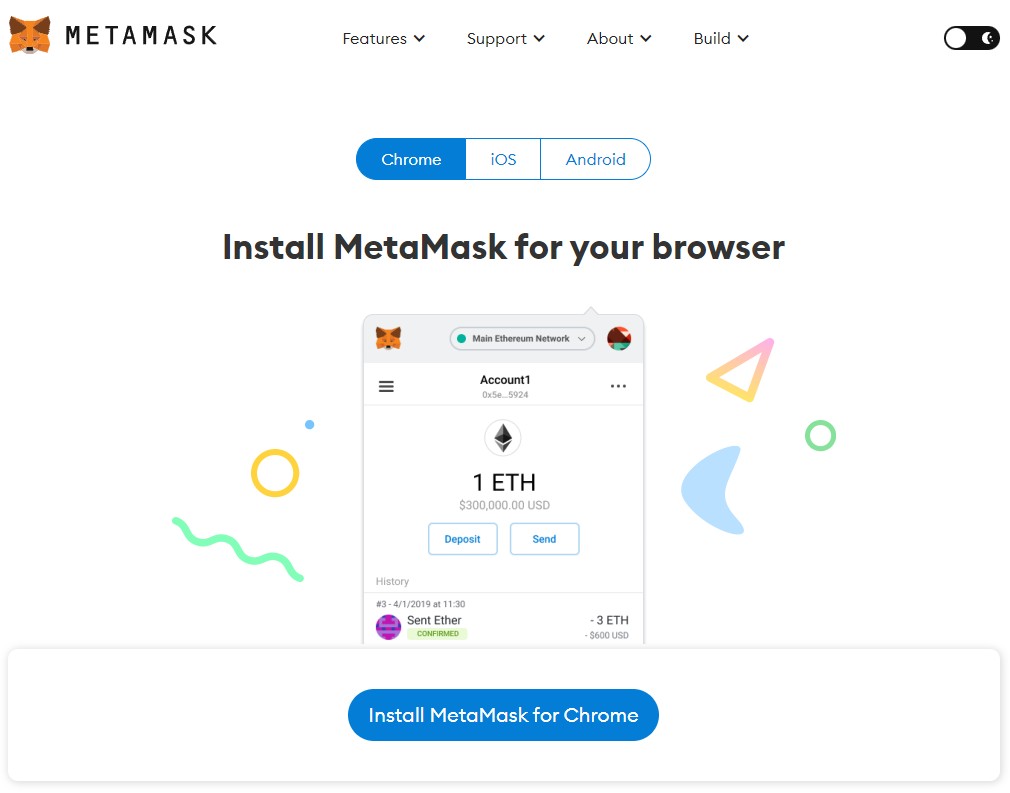
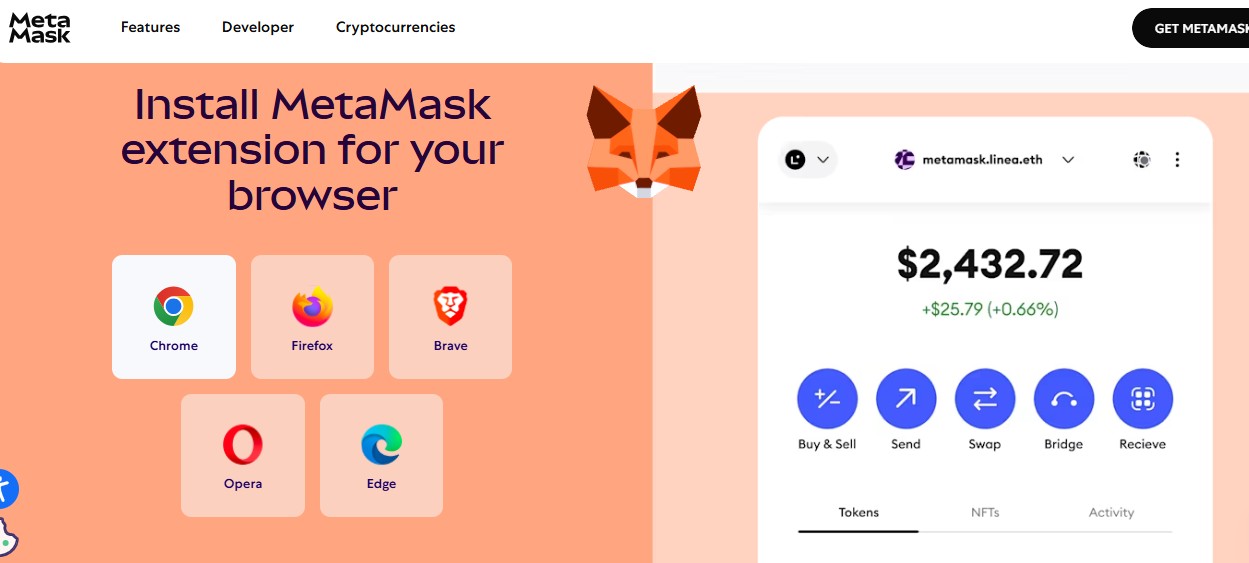
The MetaMask extension for Chrome, Firefox, or Brave can be installed in a few clicks, while the MetaMask application for mobile brings the same experience to Android and iOS. Download MetaMask only from the official MetaMask website or the App Store/Google Play.
Step 2: Create a wallet
Launch MetaMask and select “Create Wallet.” Choose a strong password and back up your 12-word seed phrase. Because MetaMask is a non-custodial wallet, losing this seed phrase means losing access to your funds forever.
Step 3: Add funds
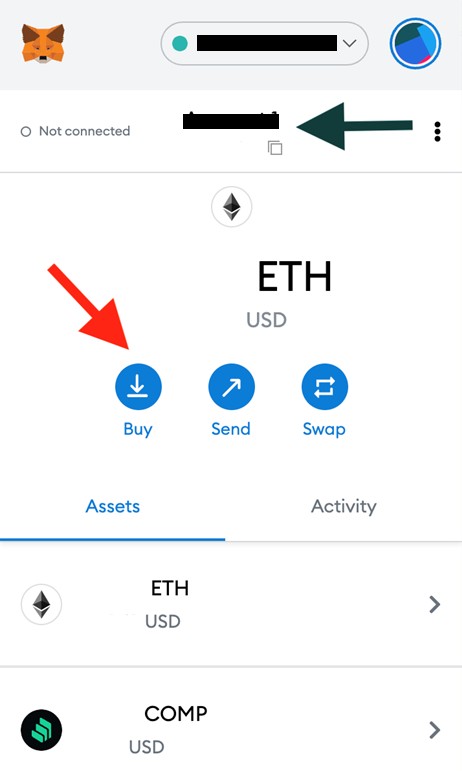
You can fund your wallet by transferring crypto from another address or by buying directly through the integrated service. Since MetaMask is a blockchain wallet built on Ethereum, you will need ETH for gas fees.
Step 4: Connect to DApps
Use the MetaMask Web3 integration to connect with decentralized applications. By clicking “Connect Wallet,” you can approve smart contract interactions and manage assets directly from MetaMask.
Step 5: Swap or send tokens
MetaMask allows you to swap tokens inside the wallet, send them to other addresses, or interact with smart contracts. This shows how MetaMask works as both a storage tool and a gateway to decentralized finance. Always check the network settings and recipient address to avoid errors.
Alternatives to MetaMask wallet
Although MetaMask is one of the most popular crypto wallets, some users look for other options depending on features or supported assets. Below are three notable MetaMask alternatives:
Trust Wallet. A fully mobile crypto wallet that supports more coins than MetaMask, including Bitcoin and Solana. Unlike MetaMask, which focuses on EVM chains, Trust Wallet provides wider multi-chain coverage.
Coinbase Wallet. A non-custodial wallet with NFT and DeFi support, ideal for those already using Coinbase. It has a similar Web3 style experience, but tied more closely to the Coinbase ecosystem.
Rabby Wallet. A browser extension designed with extra safety checks, preventing common phishing issues seen in MetaMask scams. It supports multi-chain functionality and is gaining popularity among advanced users who want more transparency.
Storing crypto on exchanges: an alternative to hot wallets
Keeping your crypto on an exchange can be convenient, especially for beginners. It allows simple trading, tracking, and portfolio management in one place, without needing to install a MetaMask extension or set up a non-custodial crypto wallet.
However, there is a clear trade-off. On exchanges, you don’t hold your private keys, unlike with the MetaMask wallet or another blockchain wallet. This means your assets depend on a third party, and if the exchange faces issues such as hacks, shutdowns, or scams, your funds could be at risk.
For short-term activity, exchanges may be suitable, but for larger balances or long-term storage, a dedicated hot wallet like MetaMask or even a cold wallet is far safer. This balance between convenience and control explains why many investors use MetaMask for Web3 activity while keeping part of their assets in hardware wallets.
To help you compare, we’ve compiled a list of trusted exchanges that focus on security, usability, and overall reliability, so you can decide what best fits your trading style.
| Coinbase | OKX | BTCC | Cryptohopper | Crypto.com | |
|---|---|---|---|---|---|
|
Min. Deposit, $ |
10 | 10 | 10 | No | 1 |
|
Coins Supported |
400+ | 600+ | 399 | 1000 | 400+ |
|
Spot Taker fee, % |
0.5 | 0.1 | 0.3 | 0 | 0.5 |
|
Spot Maker Fee, % |
0.5 | 0.08 | 0.2 | 0 | 0.25 |
|
Alerts |
Yes | Yes | No | Yes | Yes |
|
Copy trading |
No | Yes | Yes | Yes | No |
|
TU overall score |
8.5 | 8.46 | 8.08 | 7.8 | 7.76 |
|
Open an account |
Go to broker Your capital is at risk. |
Go to broker Your capital is at risk. |
Go to broker Your capital is at risk.
|
Go to broker Your capital is at risk. |
Go to broker Your capital is at risk. |
Using hardware and burner wallets for safer DeFi access

Most beginners just use the basics: install the MetaMask extension, swap a token, and move on. But here’s what’s interesting. You can import multiple hardware wallets into the same MetaMask wallet, which is useful if you’re splitting funds across different profiles. This setup combines the flexibility of a hot wallet with the layered protection of a cold wallet, showing clearly how MetaMask works when paired with hardware devices.
If you’re testing risky airdrops, it’s safer to use a temporary burner wallet. By connecting it through MetaMask Web3, you can sign transactions and then quickly send assets back to your main non-custodial wallet. This reduces exposure to phishing and potential MetaMask scams while keeping your main funds safe.
Conclusion
MetaMask stands out as a versatile and user-friendly crypto wallet, providing seamless access to decentralized applications and easy management of various digital assets. Its robust security features, such as seed phrase backups and encrypted storage, instill confidence in both new and experienced users. Whether you're swapping tokens directly from the wallet or connecting to a DeFi platform, MetaMask simplifies the process while maintaining high standards of safety. Ultimately, MetaMask empowers individuals to take full control of their crypto journey, making blockchain technology accessible and secure for everyone.
FAQs
How does MetaMask integrate with hardware wallets for enhanced security?
What is the process for adding custom networks to MetaMask?
What are the main risks associated with using MetaMask as a hot wallet?
How does MetaMask facilitate portfolio tracking across multiple wallets and networks?
Editors' Top Picks and Insights





Related Articles
Team that worked on the article
Oleg Tkachenko is an economic analyst and risk manager having more than 14 years of experience in working with systemically important banks, investment companies, and analytical platforms. He has been a Traders Union analyst since 2018.
Dan Blystone began his trading career in 1998 as an arbitrage clerk on the floor of the Chicago Mercantile Exchange (CME). He later traded bond and Eurex futures at proprietary firms such as Altea Trading, gaining valuable experience in high-frequency trading and risk management.
Chinmay Soni is a financial analyst with more than 5 years of experience in working with stocks, Forex, derivatives, and other assets. As a founder of a boutique research firm and an active researcher, he covers various industries and fields, providing insights backed by statistical data.
An investor is an individual, who invests money in an asset with the expectation that its value would appreciate in the future. The asset can be anything, including a bond, debenture, mutual fund, equity, gold, silver, exchange-traded funds (ETFs), and real-estate property.
Copy trading is an investing tactic where traders replicate the trading strategies of more experienced traders, automatically mirroring their trades in their own accounts to potentially achieve similar results.
Cryptocurrency is a type of digital or virtual currency that relies on cryptography for security. Unlike traditional currencies issued by governments (fiat currencies), cryptocurrencies operate on decentralized networks, typically based on blockchain technology.
CFD is a contract between an investor/trader and seller that demonstrates that the trader will need to pay the price difference between the current value of the asset and its value at the time of contract to the seller.
Index in trading is the measure of the performance of a group of stocks, which can include the assets and securities in it.

-
 Afghanistan
-
 Albania
-
 Algeria
-
 Angola
-
 Argentina
-
 Armenia
-
 Australia
-
 Austria
-
 Azerbaijan
-
 Bahamas
-
 Bahrain
-
 Bangladesh
-
 Belarus
-
 Belgium
-
 Bolivia
-
 Botswana
-
 Brazil
-
 Brunei
-
 Bulgaria
-
 Cambodia
-
 Cameroon
-
 Canada
-
 Chile
Chile
-
 China
China
-
 Colombia
-
 Congo
Congo
-
 Costa Rica
-
 Cote d'Ivoire
-
 Croatia
-
 Cuba
Cuba
-
 Cyprus
-
 Czechia
-
 DR Congo
-
 Denmark
-
 Dominican Republic
-
 Ecuador
-
 Egypt
Egypt
-
 El Salvador
-
 Estonia
-
 Eswatini
-
 Ethiopia
-
 Finland
-
 France
-
 Georgia
-
 Germany
-
 Ghana
Ghana
-
 Greece
-
 Haiti
Haiti
-
 Hong Kong
-
 Hungary
-
 India
India
-
 Indonesia
-
 Iran, Islamic republic
-
 Iraq
Iraq
-
 Ireland
-
 Israel
-
 Italy
Italy
-
 Jamaica
-
 Japan
Japan
-
 Jordan
-
 Kazakhstan
-
 Kenya
Kenya
-
 Korea
Korea
-
 Kuwait
-
 Kyrgyzstan
-
 Laos
Laos
-
 Latvia
-
 Lebanon
-
 Lesotho
-
 Libya
Libya
-
 Lithuania
-
 Luxembourg
-
 Madagascar
-
 Malaysia
-
 Malta
Malta
-
 Mauritius
-
 Mexico
-
 Moldova
-
 Mongolia
-
 Montenegro
-
 Morocco
-
 Mozambique
-
 Myanmar
-
 Namibia
-
 Nepal
Nepal
-
 Netherlands
-
 New Zealand
-
 Nigeria
-
 North Macedonia
-
 Norway
-
 Oman
Oman
-
 Pakistan
-
 Palestine
-
 Panama
-
 Papua New Guinea
-
 Paraguay
-
 Peru
Peru
-
 Philippines
-
 Poland
-
 Portugal
-
 Puerto Rico
-
 Qatar
Qatar
-
 Reunion
-
 Romania
-
 Rwanda
-
 Saudi Arabia
-
 Serbia
-
 Singapore
-
 Slovakia
-
 Slovenia
-
 Somalia
-
 South Africa
-
 Spain
Spain
-
 Sri Lanka
-
 Sweden
-
 Switzerland
-
 Syria
Syria
-
 Taiwan
-
 Tajikistan
-
 Tanzania
-
 Thailand
-
 Trinidad and Tobago
-
 Tunisia
-
 Turkey
-
 UAE
UAE
-
 Uganda
-
 Ukraine
-
 United Kingdom
-
United States
-
 Uruguay
-
 Uzbekistan
-
 Venezuela
-
 Vietnam
-
 Yemen
Yemen
-
 Zambia
-
 Zimbabwe
- Forex
- Crypto












