
Best MetaMask Alternatives In 2026 | Full Guide


Editorial Note: While we adhere to strict Editorial Integrity, this post may contain references to products from our partners. Here's an explanation for How We Make Money. None of the data and information on this webpage constitutes investment advice according to our Disclaimer.
The top MetaMask alternatives in 2026:
Trust Wallet. Mobile-first, cross-chain, supports Bitcoin.
Coinbase Wallet. Beginner-friendly, fiat integration, NFT support.
Ledger Live + Hardware Wallets. Secure offline storage.
Rabby Wallet. DeFi-focused with transparent transactions.
Exodus Wallet. Sleek design, supports 200+ assets.
SafePal. Integrated hardware and software wallet suite.
Each offers unique strengths, from advanced DeFi tools to long-term security.
MetaMask is often the first name people think of when choosing a crypto wallet, especially for Ethereum-based DeFi and NFTs. Yet over the years, limitations and evolving threats have driven many to explore MetaMask alternatives. In this article, we go beyond surface-level alternatives for MetaMask. You’ll find fresh user-adoption data, security research you probably haven’t seen in wallet roundups, nuanced tradeoffs between wallets, and guidance based on your priorities (security, multi-chain access, DeFi, etc.).
Risk warning: Cryptocurrency markets are highly volatile, with sharp price swings and regulatory uncertainties. Research indicates that 75-90% of traders face losses. Only invest discretionary funds and consult an experienced financial advisor.
What are the top alternatives to Metamask?
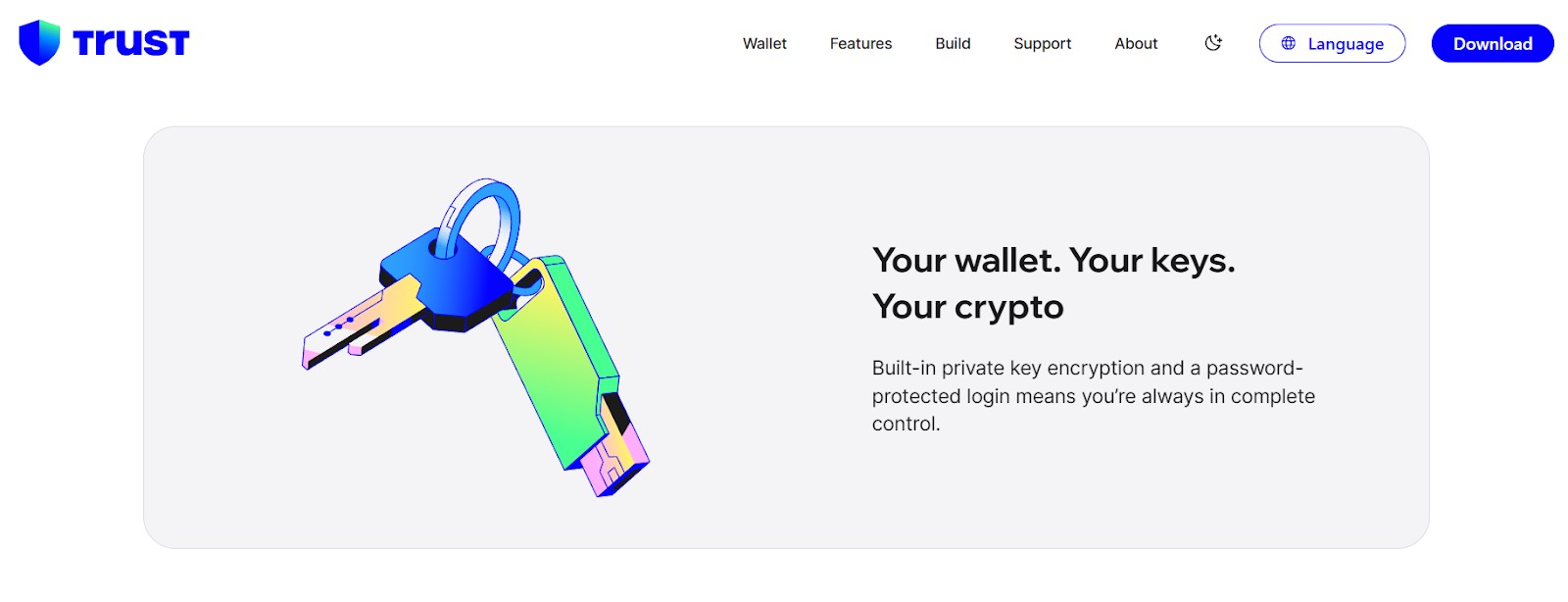
Trust Wallet
For traders who prefer managing assets directly from their phones, Trust Wallet is often the go-to choice. It combines simplicity with wide coverage of assets and chains. It is built with a mobile-first design, making it ideal for users who prefer trading and managing crypto on the go. It supports the full Ethereum Virtual Machine (EVM) ecosystem along with several non-EVM blockchains and even Bitcoin, offering broad multi-chain compatibility. The app includes an integrated decentralized exchange (DEX), staking features, and full NFT storage and viewing support, allowing users to handle nearly all crypto activities within one platform.
Unlike MetaMask, which is primarily optimized for browsers and desktop extensions, Trust Wallet was developed from the ground up for mobile use. Its interface and architecture are geared toward accessibility, simplicity, and instant cross-chain connectivity, making it easier for both new and experienced traders to navigate multiple blockchain ecosystems seamlessly.
The main limitation is the lack of a full-featured desktop browser extension. While a Web3 wallet option is available through Binance for desktop users, it doesn’t yet match the depth of functionality and independence that Trust Wallet provides on mobile devices.
Coinbase Wallet
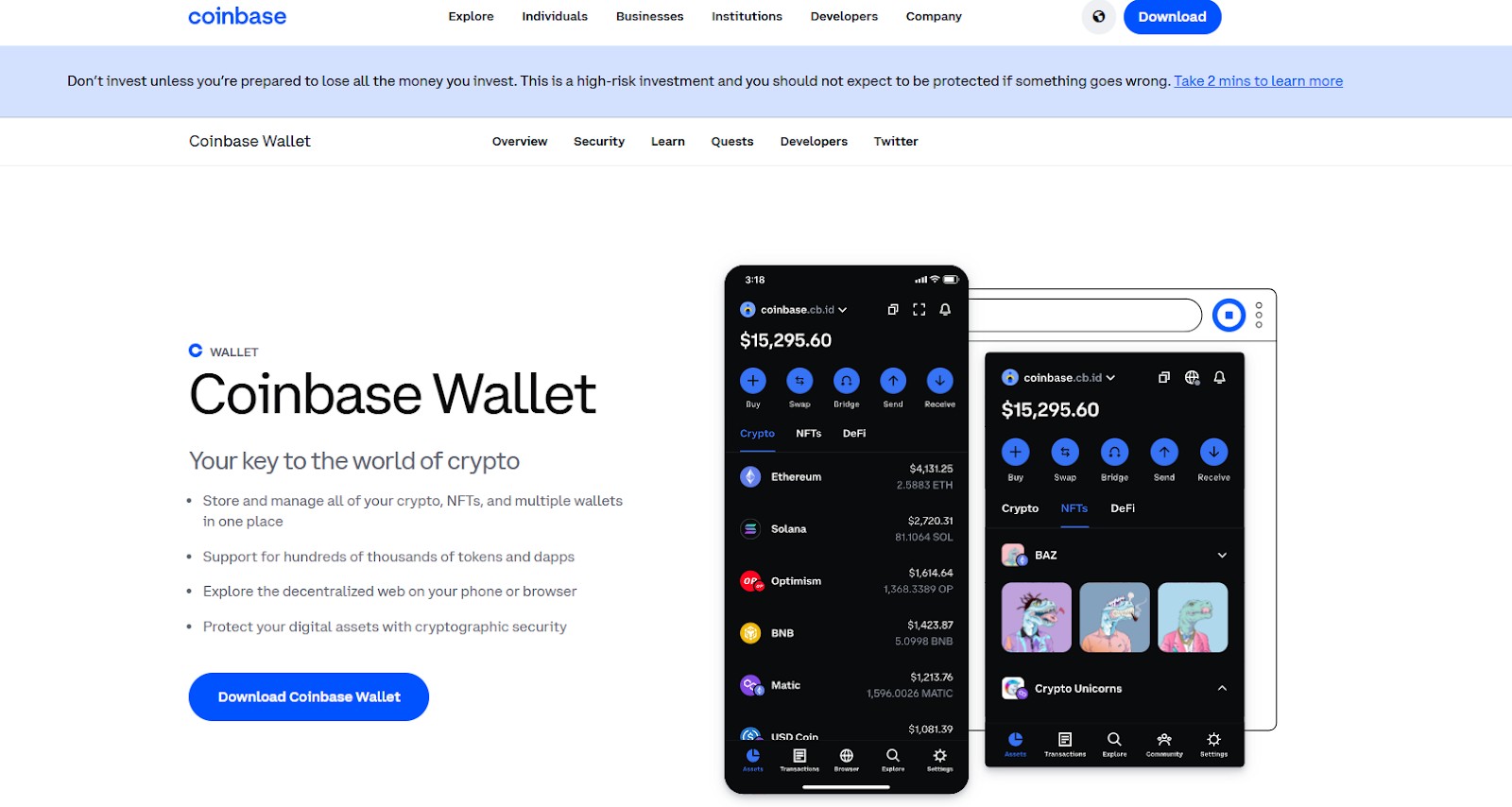
This MetaMask wallet alternative is tailored for those starting their crypto journey within a regulated environment. Its tight integration with Coinbase makes onboarding straightforward. Coinbase Wallet is designed for newcomers who want a simple, regulated entry into crypto. It offers a clean and intuitive mobile interface with easy fiat onboarding, allowing users to purchase crypto directly with local currency. Its close connection to the Coinbase exchange ensures smooth transfers between trading and self-custody. The wallet supports multiple blockchains, including Ethereum, Polygon, and Solana, giving users access to a wide range of tokens and dApps without needing separate platforms.
Unlike most self-custody wallets, Coinbase Wallet bridges the gap between centralized exchanges and decentralized applications. It’s built for users who value ease of use and trust in a well-known, regulated ecosystem rather than navigating multiple third-party tools. This makes it especially appealing for those entering Web3 for the first time.
The main limitation lies in its relative centralization and limited advanced Web3 flexibility. While the wallet grants users control of their private keys, its dependence on the Coinbase ecosystem means some features remain tied to the company’s infrastructure, offering less freedom than open-source wallets like MetaMask.
Ledger Live + Ledger Hardware Devices
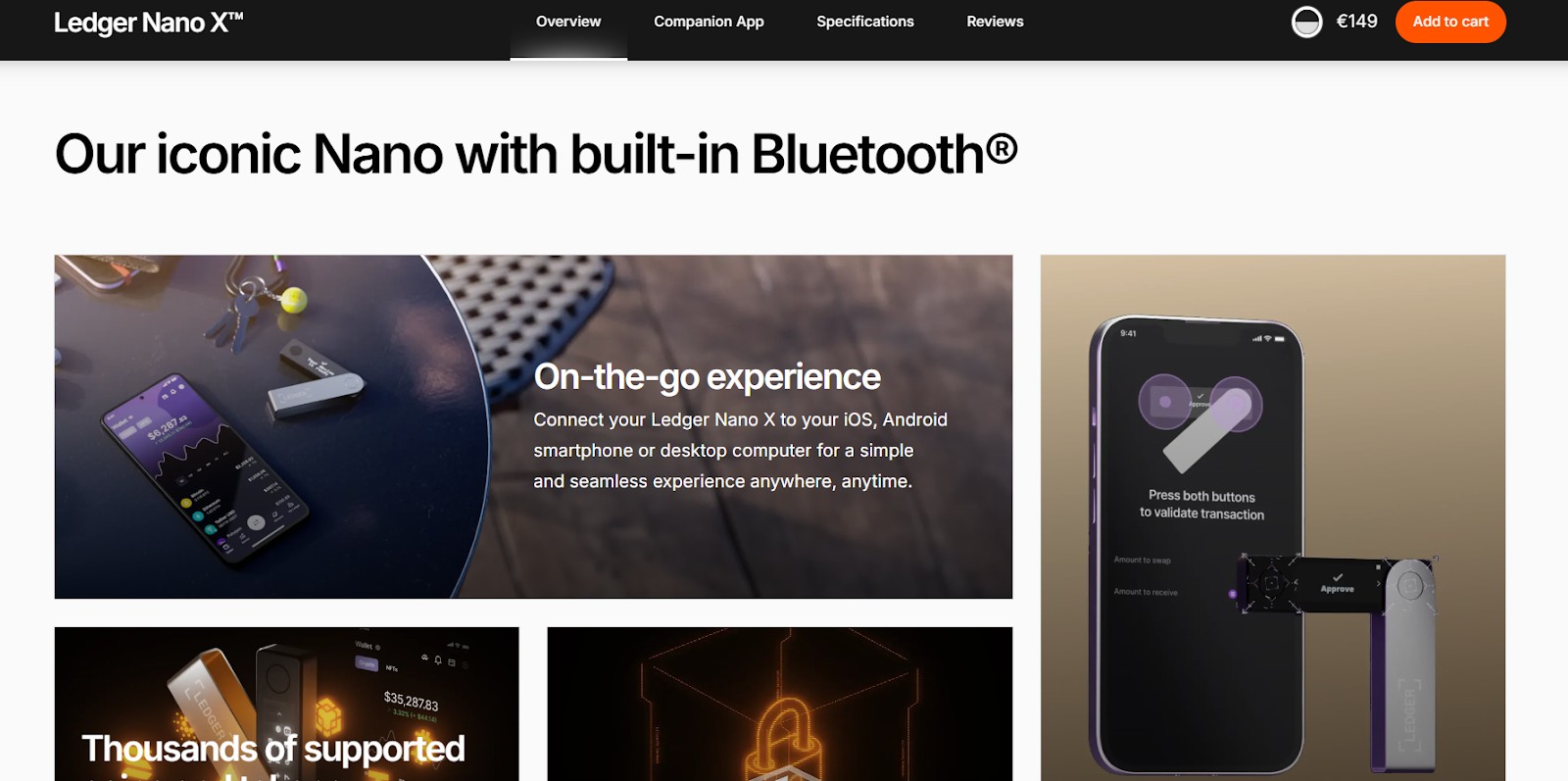
If your top priority is protecting assets for the long term, Ledger offers a trusted hardware solution paired with its Ledger Live app.
Ledger combines secure hardware devices with its Ledger Live software to create one of the most trusted solutions for long-term crypto storage. The private keys are stored entirely offline on the hardware wallet, keeping them isolated from online threats. Ledger supports thousands of cryptocurrencies across major blockchains and provides staking, portfolio tracking, and token management directly through the Ledger Live app. This setup gives investors both institutional-grade security and convenient portfolio oversight.
Unlike purely software-based wallets, Ledger delivers a hybrid experience that merges cold storage security with controlled online access. The hardware device ensures that all transaction signing happens offline, while the Ledger Live app allows users to monitor holdings, claim rewards, and manage assets without compromising safety. It’s ideal for those who want the reassurance of cold storage but still want to interact with their crypto occasionally.
The main limitation is convenience. Using Ledger for regular DeFi or Web3 activity can feel slower since it often requires connecting to external wallets like MetaMask to interact with decentralized applications. While the extra steps enhance security, they can make day-to-day trading less seamless compared to mobile-first software wallets.
Rabby Wallet
Built with DeFi users in mind, Rabby focuses on transparency and safety in every transaction, making it attractive for advanced traders.
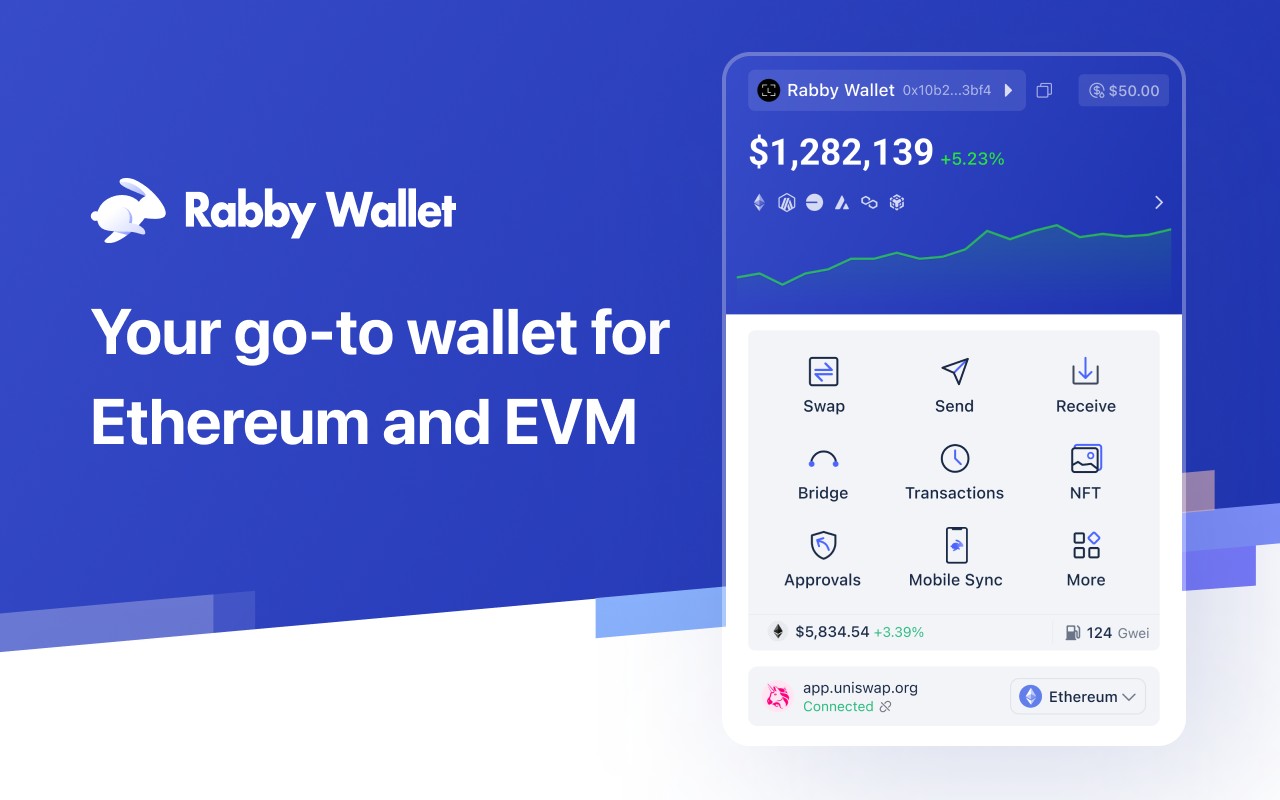
Rabby Wallet is designed specifically for DeFi users who value transparency and control over their transactions. It provides detailed previews before any transaction is executed, showing exactly which smart contract functions will run, how much gas will be consumed, and what permissions are being granted. This feature helps users avoid scams, hidden approvals, or unwanted token transfers. Rabby also supports multiple EVM-compatible networks by default, making it easy to switch between chains without manual configuration.
Rabby stands out for its focus on transaction clarity. While most wallets only display general prompts, Rabby breaks down every step so users can see precisely what their wallet is doing before confirming. This level of visibility builds trust and helps advanced traders manage complex DeFi interactions with greater confidence.
Since Rabby is a relatively new entrant compared to established wallets like MetaMask or Trust Wallet, its ecosystem is still developing. Although security and usability are strong, it lacks some integrations and community depth found in more mature platforms. However, its rapid adoption among DeFi enthusiasts suggests growing momentum and potential for long-term expansion.
Exodus Wallet
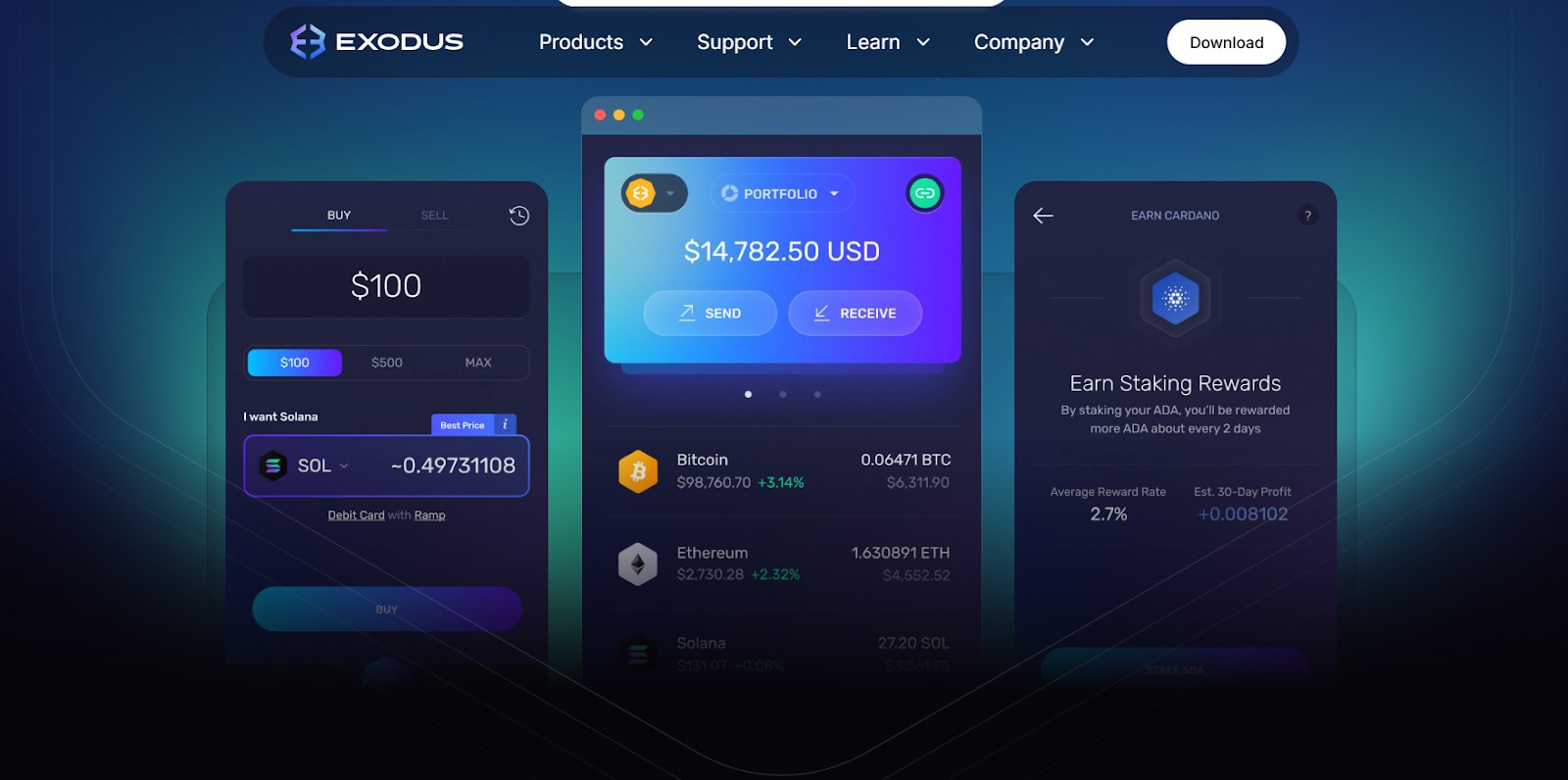
Exodus appeals to users who value design and simplicity. Its polished interface makes it easy to manage a large variety of assets in one place.
Exodus is known for its elegant design and ease of use, making it a favorite among users who want a clean, intuitive way to manage their crypto. It supports over 200 cryptocurrencies across multiple blockchains and works seamlessly across desktop and mobile platforms. The wallet includes a built-in exchange, allowing users to swap assets directly without leaving the app. Its portfolio tracker provides clear visual insights into holdings, price movements, and performance trends, all within a single, beginner-friendly interface.
Exodus stands out for its focus on design and accessibility. Unlike wallets built mainly for advanced DeFi interactions, it prioritizes simplicity and unified asset management. Users can view, send, receive, and swap a wide range of tokens without dealing with complex setups or third-party integrations. It’s ideal for casual investors and long-term holders who want everything in one easy dashboard.
While Exodus delivers convenience and aesthetic appeal, it’s not designed for heavy DeFi users or developers who need granular control over smart contracts. It doesn’t offer direct interaction with decentralized applications, and advanced customization options are limited. However, for everyday portfolio management and secure storage, it strikes an excellent balance between usability and functionality.
SafePal
SafePal provides a complete suite that blends hardware-level security with software convenience, attracting those who want an all-in-one option.
SafePal delivers an all-in-one crypto management solution that combines the strong security of hardware wallets with the ease and flexibility of software access. Users can choose between the SafePal mobile app, browser extension, and dedicated hardware wallet, all synchronized under one ecosystem. It supports a wide range of blockchains and tokens, allowing users to store, trade, and manage their crypto in a single interface. The hardware wallet keeps private keys offline, while the app enables quick DeFi, NFT, and DEX interactions securely.
SafePal stands out for offering both hardware and software wallets that operate within a unified system. This hybrid design provides the best of both worlds: hardware-level security for long-term storage and software-level convenience for daily transactions. It’s one of the few multi-device wallets that has earned recognition in independent reviews, such as being listed by CoinGecko among the top MetaMask alternatives.
Although SafePal’s feature set is impressive, its ecosystem is still developing compared to long-established wallets like Ledger or MetaMask. Users should review which chains and DeFi protocols are supported, as liquidity and integration depth can vary. Still, its rapid innovation and expanding compatibility make it an increasingly strong option for users who want comprehensive crypto management under one secure platform.

Now that you have an overview of the available MetaMask alternatives, let’s try to narrow down on which one is the best for you. If:
You transact often in DeFi/yield farming/minting new contracts, go for Rabby or a wallet that gives you contract-level visibility.
You hold many different tokens, including Bitcoin & non-EVM chains, Trust Wallet, Exodus, or SafePal are good fits.
Your priority is security above all, use Ledger or hardware-first wallets, with a companion wallet for occasional use.
You’re relatively new to crypto and want a frictionless start, Coinbase Wallet or Exodus are user-friendly and low barrier.
Also, before you pick a wallet, you’ll still need a reliable on-/off-ramp. Choose an exchange based on what you actually need: availability in your country, easy funding/withdrawals with your local rails, fair fees, and the coins you trade most. The table below highlights options that fit those needs so you can move funds smoothly and safely.
| Crypto | Foundation year | Min. Deposit, $ | Coins Supported | Spot Taker fee, % | Spot Maker Fee, % | Alerts | Copy trading | Tier-1 regulation | TU overall score | Open an account | |
|---|---|---|---|---|---|---|---|---|---|---|---|
| Yes | 2017 | 10 | 600+ | 0.1 | 0.08 | Yes | Yes | No | 8.48 | Go to broker Your capital is at risk. |
|
| Yes | 2012 | 10 | 400+ | 0.5 | 0.5 | Yes | No | Yes | 7.84 | Go to broker Your capital is at risk. |
|
| Yes | 2016 | 1 | 400+ | 0.5 | 0.25 | Yes | No | Yes | 7.8 | Go to broker Your capital is at risk. |
|
| Yes | 2018 | No | 1000 | 0 | 0 | Yes | Yes | No | 7.76 | Go to broker Your capital is at risk. |
|
| Yes | 2011 | 10 | 399 | 0.3 | 0.2 | No | Yes | Yes | 7.6 | Go to broker Your capital is at risk.
|
MetaMask vs alternatives: side-by-side comparison
| Dimension | MetaMask (baseline) | Strength of alternative | What you might sacrifice |
|---|---|---|---|
| DeFi & dApp compatibility | Very high (Ethereum / EVM) | Some wallets (Rabby, WalletConnect bridges, SafePal) match this. | You may lose seamless integration with certain obscure dApps. |
| Multi-chain & Bitcoin support | Limited (needs bridging) | Trust Wallet, Exodus, Coinbase Wallet support many chains + Bitcoin natively. | Slight increase in complexity managing cross-chain collateral. |
| Security (offline keys) | Hot wallet (keys are on device) | Hardware (Ledger), hybrid (SafePal) keep keys offline. | Convenience: slower UX, extra steps to sign. |
| Transaction visibility | Basic confirmation UI | Rabby shows contract logic, gas breakdowns before you approve. | Possibly more UI clutter for non-advanced users. |
| Resource usage / side effects | Some users saw excessive disk writes. | Simpler wallets or hardware may avoid such system-level side effects. | You might trade off advanced background state updates. |
| Centralization / node dependency | Dependent on Infura & centralized infrastructure | Alternatives using decentralized node infrastructure (e.g. some wallets let you choose nodes) reduce risk. | More configuration needed; may face performance tradeoffs. |
Your ideal wallet may combine more than one of these: e.g. use MetaMask (or one of the best alternatives to MetaMask) for DeFi, while keeping most funds in a hardware wallet for safekeeping.
Security risks & research you should know
When comparing MetaMask vs its alternatives, a big differentiator is security. Below are two lesser-known but serious risks and how various wallets mitigate them:
EthClipper: clipboard‐spoofing attacks on hardware wallets
You might assume hardware wallets are immune to malware, but a 2021 academic paper introduced EthClipper, a clipboard meddling attack that targets even hardware wallet users. The attack replaces a copied address in the clipboard with a visually similar malicious address. Many users only verify a small segment of the address (say, first and last few characters) and miss the malicious swap. The authors tested this on Trezor, Ledger, and KeepKey, and found non-trivial success rates.
So, always confirm full addresses on the device’s own display. This risk is independent of whether you use MetaMask, hardware wallets, or other alternatives.
Excessive disk writes in MetaMask’s browser extension
A surprising but relevant issue surfaced in 2026: some users observed that the MetaMask browser extension was writing ~5 MB/s repeatedly onto their SSDs, roughly 500 GB/day. Over time, this could wear down SSDs (which have limited write endurance). The MetaMask team acknowledged the reports and announced a fix.
This problem highlights that it’s not just security or features that matter; resource efficiency and unintended side effects are also concerns when choosing a wallet.
Other security considerations
Hot wallets (extensions/phone apps) are more vulnerable to phishing, malware, and device compromise.
Cold (hardware/offline) wallets are safer in many contexts, but they are not invulnerable (e.g. supply-chain attacks, side-channel exploits).
Some wallets force reliance on third-party nodes (e.g. via Infura), introducing centralization risk and censorship potential. MetaMask historically depends on Infura, which has been criticized.
Given all this, a “best wallet” depends heavily on your threat model (i.e. how valuable your holdings are, how often you transact, how much privacy you need).
Check wallet simulations before approving any crypto transaction

If you’re trying out wallets beyond MetaMask in 2026, focus less on how they look and more on how they warn you. The smartest move is to use a wallet that shows what’s happening behind the scenes before you hit confirm. Rabby, for example, reveals the actual contract actions before they go through. That one check can stop you from approving a bad transaction or getting caught in a fake dApp. It’s a simple trick that builds real confidence.
Conclusion
In 2026, the evolving landscape of crypto wallets offers users a wealth of compelling MetaMask alternatives that prioritize security, privacy, and multi-chain functionality. Solutions like Rabby and xDefi stand out for their robust DeFi integrations and seamless hardware wallet compatibility, ensuring both experienced traders and newcomers can navigate the decentralized world with confidence. The growing demand for user autonomy and data protection continues to drive innovation across these platforms. Ultimately, choosing the right wallet comes down to aligning features with personal needs, but one thing is clear: the next generation of digital wallets is empowering users like never before.
FAQs
What security features set MetaMask alternatives apart for advanced crypto users?
How do MetaMask alternatives approach the balance between convenience and privacy?
Are there limitations when using MetaMask alternatives with decentralized applications (dApps)?
What key factors should be considered when selecting the best MetaMask alternative for different user priorities?
Editors' Top Picks and Insights





Related Articles
Team that worked on the article
Viktoras Karapetjanc is a seasoned financial trader, market analyst, and content creator with over 20 years of expertise in Forex, cryptocurrency, and stock markets. As a contributor to the Traders Union website, he provides in-depth analysis, data-driven strategies, and educational content to empower traders of all levels.
Dan Blystone began his trading career in 1998 as an arbitrage clerk on the floor of the Chicago Mercantile Exchange (CME). He later traded bond and Eurex futures at proprietary firms such as Altea Trading, gaining valuable experience in high-frequency trading and risk management.
Chinmay Soni is a financial analyst with more than 5 years of experience in working with stocks, Forex, derivatives, and other assets. As a founder of a boutique research firm and an active researcher, he covers various industries and fields, providing insights backed by statistical data.
Risk management is a risk management model that involves controlling potential losses while maximizing profits. The main risk management tools are stop loss, take profit, calculation of position volume taking into account leverage and pip value.
Ethereum is a decentralized blockchain platform and cryptocurrency that was proposed by Vitalik Buterin in late 2013 and development began in early 2014. It was designed as a versatile platform for creating decentralized applications (DApps) and smart contracts.
Bitcoin is a decentralized digital cryptocurrency that was created in 2009 by an anonymous individual or group using the pseudonym Satoshi Nakamoto. It operates on a technology called blockchain, which is a distributed ledger that records all transactions across a network of computers.
Xetra is a German Stock Exchange trading system that the Frankfurt Stock Exchange operates. Deutsche Börse is the parent company of the Frankfurt Stock Exchange.
Yield refers to the earnings or income derived from an investment. It mirrors the returns generated by owning assets such as stocks, bonds, or other financial instruments.

-
 Afghanistan
-
 Albania
-
 Algeria
-
 Angola
-
 Argentina
-
 Armenia
-
 Australia
-
 Austria
-
 Azerbaijan
-
 Bahamas
-
 Bahrain
-
 Bangladesh
-
 Belarus
-
 Belgium
-
 Bolivia
-
 Botswana
-
 Brazil
-
 Brunei
-
 Bulgaria
-
 Cambodia
-
 Cameroon
-
 Canada
-
 Chile
Chile
-
 China
China
-
 Colombia
-
 Congo
Congo
-
 Costa Rica
-
 Cote d'Ivoire
-
 Croatia
-
 Cuba
Cuba
-
 Cyprus
-
 Czechia
-
 DR Congo
-
 Denmark
-
 Dominican Republic
-
 Ecuador
-
 Egypt
Egypt
-
 El Salvador
-
 Estonia
-
 Eswatini
-
 Ethiopia
-
 Finland
-
 France
-
 Georgia
-
 Germany
-
 Ghana
Ghana
-
 Greece
-
 Haiti
Haiti
-
 Hong Kong
-
 Hungary
-
 India
India
-
 Indonesia
-
 Iran, Islamic republic
-
 Iraq
Iraq
-
 Ireland
-
 Israel
-
 Italy
Italy
-
 Jamaica
-
 Japan
Japan
-
 Jordan
-
 Kazakhstan
-
 Kenya
Kenya
-
 Korea
Korea
-
 Kuwait
-
 Kyrgyzstan
-
 Laos
Laos
-
 Latvia
-
 Lebanon
-
 Lesotho
-
 Libya
Libya
-
 Lithuania
-
 Luxembourg
-
 Madagascar
-
 Malaysia
-
 Malta
Malta
-
 Mauritius
-
 Mexico
-
 Moldova
-
 Mongolia
-
 Montenegro
-
 Morocco
-
 Mozambique
-
 Myanmar
-
 Namibia
-
 Nepal
Nepal
-
 Netherlands
-
 New Zealand
-
 Nigeria
-
 North Macedonia
-
 Norway
-
 Oman
Oman
-
 Pakistan
-
 Palestine
-
 Panama
-
 Papua New Guinea
-
 Paraguay
-
 Peru
Peru
-
 Philippines
-
 Poland
-
 Portugal
-
 Puerto Rico
-
 Qatar
Qatar
-
 Reunion
-
 Romania
-
 Rwanda
-
 Saudi Arabia
-
 Serbia
-
 Singapore
-
 Slovakia
-
 Slovenia
-
 Somalia
-
 South Africa
-
 Spain
Spain
-
 Sri Lanka
-
 Sweden
-
 Switzerland
-
 Syria
Syria
-
 Taiwan
-
 Tajikistan
-
 Tanzania
-
 Thailand
-
 Trinidad and Tobago
-
 Tunisia
-
 Turkey
-
 UAE
UAE
-
 Uganda
-
 Ukraine
-
 United Kingdom
-
United States
-
 Uruguay
-
 Uzbekistan
-
 Venezuela
-
 Vietnam
-
 Yemen
Yemen
-
 Zambia
-
 Zimbabwe
- Forex
- Crypto












