
Successful Forex Traders In Cameroon (2026 Overview)


Editorial Note: While we adhere to strict Editorial Integrity, this post may contain references to products from our partners. Here's an explanation for How We Make Money. None of the data and information on this webpage constitutes investment advice according to our Disclaimer.
Richest financial traders in Cameroon:
Legima: CTI-backed forex trader from Cameroon.
Camilus (CamiForex): intraday trading with manual execution.
Retail Forex trading in Cameroon develops through small-scale private initiatives, local training groups, and access to international platforms. The country lacks centralized regulation of currency trading, so the core infrastructure relies on offshore brokers and foreign terminals. Most active participants are young individuals trained informally via English-speaking YouTube channels and proprietary trading firms. Technical access is provided through mobile platforms like MetaTrader, while settlements are primarily made in US dollars using crypto wallets and peer-to-peer services. Given the weak integration with the banking system, traders build their own funding and withdrawal networks, often using peer agents within city neighborhoods. Trading practices evolve under capital constraints, making broker selection, trade type, and entry strategy the central points of early decision-making.
Successful and rich traders in Cameroon
Legima: CTI-backed Forex trader from Cameroon
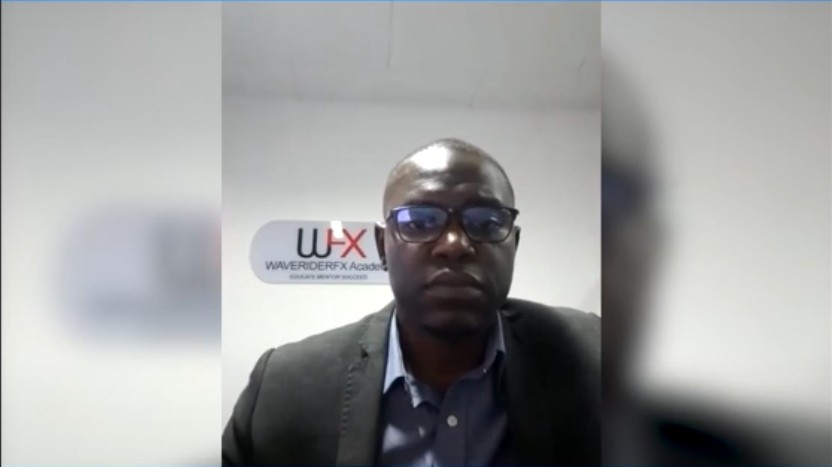
Legima is a Forex analyst and trader from Cameroon. In an interview with City Traders Imperium, he stated that he began trading in 2020. During his first year, he lost around $500 due to the absence of a structured system and risk management. He later joined CTI after passing their selection process and entered a mentorship program. He applies a daily loss limit of 1% and a monthly profit target of 6%. He uses fixed lot sizes, avoids averaging, and filters entries based on volatility.
His trading system is based on supply and demand zones. He uses price action signals such as inside bars, engulfing patterns, and retests. He trades GBP/USD and EUR/USD on H1–H4 timeframes. He limits himself to three trades per day. All trades are recorded manually. His journal tracks entry, exit, scenario, and market context. He does not violate limits and follows a strict process.
He passed evaluations at several prop firms and gained access to a $20,000 funded account. The drawdown is limited to 10%. Breaching the limit results in account termination. He confirmed that he trades under the fund’s conditions. No information on personal capital is available.
Camilus (CamiForex): intraday trading with manual execution
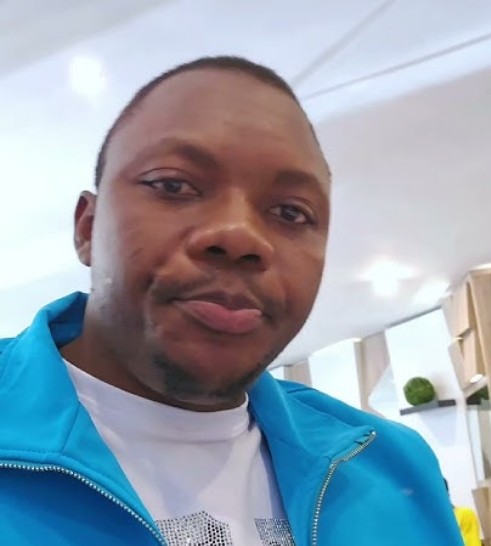
Camilus, known as CamiForex, is a trader and entrepreneur from Cameroon. He trades manually using the MetaTrader platform on both laptop and mobile devices. His focus is on major currency pairs, including GBP/USD and EUR/USD. Trading is concentrated during the overlap of the London and New York sessions. Entry points are determined by breakouts from short-term price ranges. Positions are held until a reversal condition appears. Scalping is not used. Automated strategies are not applied. Lot sizes are fixed, and risk is limited by predefined parameters.
His workflow includes session preparation, technical analysis, trade execution, and exit. There is no publicly available written strategy or statistical reporting. The source of initial capital is undisclosed. The amount of personal funds is unknown. No participation in proprietary firms is confirmed. No external funding is documented.
Camilus maintains a public presence under the name CamiForex. He shares trading-related content across multiple online platforms, including a YouTube channel, as well as Telegram and TikTok accounts. These resources are used to publish updates, commentary, and related information.
Potential for success in the Forex market in Cameroon

Cameroon does not operate a national regulatory framework for retail Forex trading. Oversight of capital flows and currency controls is handled by the Bank of Central African States (BEAC). Supervision of financial activity in the region is carried out by the Central African Financial Market Supervisory Commission (COSUMAF). These institutions regulate institutional channels and banking products but do not issue licenses or conduct audits for retail brokers.
Retail Forex trading is conducted through international platforms. Brokers are registered in offshore jurisdictions and provide access via remote terminals. Transactions are carried out primarily in cryptocurrency, and deposits and withdrawals are handled using peer-to-peer services.
Traders gain access to the market directly, without involvement from local banks. The absence of domestic regulation eliminates legal protection and makes it impossible to formally verify the status of a trader. Brokerage accounts are opened without local authorization, and identity verification is handled by the platform. Profit withdrawals and fee payments depend on the policies of the individual company. In the event of disputes, no resolution mechanism is available within Cameroon's legal system. All contractual obligations are governed by user agreements based in foreign jurisdictions.
Initial training is conducted through private channels. Educational materials are distributed via YouTube, Telegram groups, and Discord servers. These materials cover basic topics such as technical analysis, trading platform configuration, risk calculation, and the procedures for qualifying with proprietary firms. Funded access is granted upon successful completion of evaluation phases and compliance with specific terms. Cameroonian participants are mentioned on public pages of such programs.
How to start trading Forex in Cameroon: advice from experienced traders

In Cameroon, access to Forex education is provided through both international and local training providers. Available programs cover technical and fundamental analysis, risk management, and trading psychology. FN Forex Academy, based in Douala, offers courses tailored to the local context and focused on practical execution. Online options such as the Forex Trading Masterclass from The Knowledge Academy provide flexible learning formats with structured content.
Selecting a reliable broker is a critical step in building a trading setup. Traders are advised to evaluate brokers based on regulation, fee structure, trading platform quality, and client support. Choose platforms that provide access to multiple instruments and offer demo accounts, which are essential for strategy testing and practice.
| Min. deposit, $ | Education | Customer support | Copy trading | Demo | Cent | Open an account | ||
|---|---|---|---|---|---|---|---|---|
|
1 |
1 | 9.10 | 7.00 | Yes | Yes | No | Go to broker Your capital is at risk. |
|
|
2 |
5 | 7.20 | 9.90 | Yes | Yes | No | Go to broker Your capital is at risk. |
|
|
3 |
10 | 8.90 | 9.60 | Yes | Yes | Yes | Go to broker Your capital is at risk. |
|
|
4 |
10 | 9.20 | 9.60 | Yes | Yes | Yes | Go to broker Your capital is at risk.
|
|
|
5 |
1 | 6.60 | 6.20 | Yes | Yes | Yes | Go to broker Your capital is at risk. |
|
|
6 |
1 | 6.80 | 9.80 | Yes | Yes | Yes | Go to broker Your capital is at risk.
|



Demo trading is widely used to develop and refine skills before deploying real capital. Building a trading plan and adhering to it strictly helps maintain discipline and reduce decision-making driven by emotion. Traders who have achieved measurable results, such as Successful Forex traders in Cameroon, consistently reference structured processes and post-trade reviews as part of their routine.
Psychological resilience is an essential part of consistent performance. The ability to manage emotional responses such as fear and greed contributes to decision-making under pressure. Applying techniques to reduce stress and improve focus is especially important during periods of market volatility. Observations drawn from Forex financial Trading Success Stories provide additional insight into how experienced traders approach mental stability and control under uncertain conditions.
How to build a functional trading setup in Cameroon
A trader in Cameroon operates without stable settlement infrastructure. Using P2P channels with USDT and M-Pesa is a practical workaround, but each route should be tested for rate accuracy and transfer speed across several providers. Relying on a single pathway is risky. IP-based restrictions are also common, so a VPN with a fixed location should be integrated from the start.
Once the account is opened, the main barrier is discipline, not spreads or liquidity. For solo traders, an external journaling method works well: sending daily screenshots of entries and exits to another trader. This alone improves execution quality. An alternative is a Telegram bot that logs positions and reasoning in real time. Both tools help eliminate post-trade rationalization.
Broker selection should be based on behavior during high-load periods, not interface design. Micro-orders placed during CPI or FOMC releases reveal execution stability. If the broker holds spreads and avoids requotes under pressure, the conditions are workable. Other features are secondary.
Conclusion
Retail Forex trading in Cameroon operates outside formal institutional structures and depends on the trader’s individual preparation. The infrastructure relies on offshore brokers, with settlements conducted through alternative channels. Educational resources are accessible in digital formats and focus on independent learning of both foundational and applied trading principles. Key areas include platform selection, strategy development, and behavioral risk management. Practice and technical discipline influence execution consistency. The legal status of operations is defined by external provider terms and is not governed by domestic regulatory mechanisms.
FAQs
What technical indicators are most commonly used by traders in Cameroon?
Simple and exponential moving averages, RSI, and support/resistance levels are widely used. These indicators typically serve to confirm price action signals.
How do traders in Cameroon access economic calendar data?
They rely on English-language public resources with daily macroeconomic event schedules. To streamline tracking, traders often save event templates based on session timings.
How can a Cameroonian trader test a strategy without financial risk?
Historical chart simulation with manual entry and exit marking is commonly used. Results are logged in a spreadsheet, including entry reasons, holding duration, and outcome in pips.
What methods help traders adapt to unstable internet connections?
They use backup networks, offline charting tools, and reduce trade duration to avoid exposure during connectivity interruptions.
Editors' Top Picks and Insights

The crypto IPO problem: How high-profile listings became investor traps

U.S. Bitcoin reserve: Trump’s unrealized crypto promise

Aiming for leadership: Payment giants prepare a new stablecoin

Proof of Reserves: the new standard for cryptocurrency exchanges
Three trends that could reshape the crypto market over the next decade

Trump financial disclosure: How the president's crypto income became a U.S. ethics issue
Related Articles
Team that worked on the article
Sholanke is a financial market analyst, trader, and writer. He has over 10 years of experience in forex, stocks, commodities, indices, cryptocurrencies, and other financial assets.
One of the most widely respected and quoted currency experts, Marc Chandler has been analyzing and advising on the global capital markets for more than 30 years. Throughout his career on Wall Street, Chandler has advised private businesses, hedge funds and asset managers on navigating the foreign exchange market.
Chinmay Soni is a financial analyst with more than 5 years of experience in working with stocks, Forex, derivatives, and other assets. As a founder of a boutique research firm and an active researcher, he covers various industries and fields, providing insights backed by statistical data.

-
 Afghanistan
-
 Albania
-
 Algeria
-
 Angola
-
 Argentina
-
 Armenia
-
 Australia
-
 Austria
-
 Azerbaijan
-
 Bahamas
-
 Bahrain
-
 Bangladesh
-
 Belarus
-
 Belgium
-
 Bolivia
-
 Botswana
-
 Brazil
-
 Brunei
-
 Bulgaria
-
 Cambodia
-
 Cameroon
-
 Canada
-
 Chile
Chile
-
 China
China
-
 Colombia
-
 Congo
Congo
-
 Costa Rica
-
 Cote d'Ivoire
-
 Croatia
-
 Cuba
Cuba
-
 Cyprus
-
 Czechia
-
 DR Congo
-
 Denmark
-
 Dominican Republic
-
 Ecuador
-
 Egypt
Egypt
-
 El Salvador
-
 Estonia
-
 Eswatini
-
 Ethiopia
-
 Finland
-
 France
-
 Georgia
-
 Germany
-
 Ghana
Ghana
-
 Greece
-
 Haiti
Haiti
-
 Hong Kong
-
 Hungary
-
 India
India
-
 Indonesia
-
 Iran, Islamic republic
-
 Iraq
Iraq
-
 Ireland
-
 Israel
-
 Italy
Italy
-
 Jamaica
-
 Japan
Japan
-
 Jordan
-
 Kazakhstan
-
 Kenya
Kenya
-
 Korea
Korea
-
 Kuwait
-
 Kyrgyzstan
-
 Laos
Laos
-
 Latvia
-
 Lebanon
-
 Lesotho
-
 Libya
Libya
-
 Lithuania
-
 Luxembourg
-
 Madagascar
-
 Malaysia
-
 Malta
Malta
-
 Mauritius
-
 Mexico
-
 Moldova
-
 Mongolia
-
 Montenegro
-
 Morocco
-
 Mozambique
-
 Myanmar
-
 Namibia
-
 Nepal
Nepal
-
 Netherlands
-
 New Zealand
-
 Nigeria
-
 North Macedonia
-
 Norway
-
 Oman
Oman
-
 Pakistan
-
 Palestine
-
 Panama
-
 Papua New Guinea
-
 Paraguay
-
 Peru
Peru
-
 Philippines
-
 Poland
-
 Portugal
-
 Puerto Rico
-
 Qatar
Qatar
-
 Reunion
-
 Romania
-
 Rwanda
-
 Saudi Arabia
-
 Serbia
-
 Singapore
-
 Slovakia
-
 Slovenia
-
 Somalia
-
 South Africa
-
 Spain
Spain
-
 Sri Lanka
-
 Sweden
-
 Switzerland
-
 Syria
Syria
-
 Taiwan
-
 Tajikistan
-
 Tanzania
-
 Thailand
-
 Trinidad and Tobago
-
 Tunisia
-
 Turkey
-
 UAE
UAE
-
 Uganda
-
 Ukraine
-
 United Kingdom
-
United States
-
 Uruguay
-
 Uzbekistan
-
 Venezuela
-
 Vietnam
-
 Yemen
Yemen
-
 Zambia
-
 Zimbabwe
- Forex
- Crypto











