

Rio Tinto expands Argentina lithium capacity with new Catamarca plants

Argentina is strengthening its role in the global lithium supply chain as Rio Tinto opens two new processing plants in Catamarca province. The projects add 25,000 metric tons of annual lithium carbonate equivalent capacity and support the miner's plan to lift its total output in the country to 200,000 metric tons a year by 2028.
Highlights
- Rio Tinto invested $1.4 billion to launch the Sal de Vida plant and Fenix 1B expansion in Catamarca, boosting annual lithium carbonate equivalent capacity by 25,000 metric tons.
- Rio Tinto targets 200,000 metric tons of annual lithium output in Argentina by 2028, leveraging direct lithium extraction (DLE) technology at both Rincon and Fenix sites.
- Argentina, under President Javier Milei, offers 30-year tax, legal, and FX incentives for projects over $200 million, aiming to surpass Chile in lithium production by 2029.
Catamarca projects advance Rio Tinto's DLE strategy
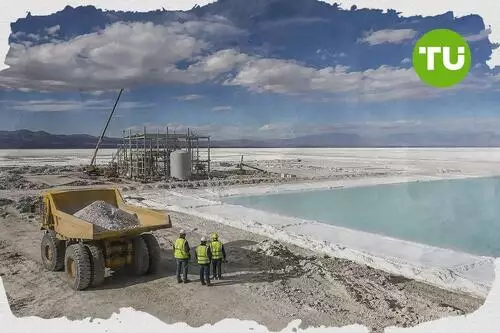
As reported by Reuters, Rio Tinto inaugurates the new Sal de Vida plant and the Fenix 1B expansion project in Catamarca on Wednesday as part of its effort to build a large-scale lithium business based on direct lithium extraction technology.With a $1.4 billion investment, the two projects add 25,000 metric tons of lithium carbonate equivalent a year, a key material used in electric vehicle batteries. The company's flagship Rincon project in Salta province is expected to produce 60,000 metric tons annually, and Rio Tinto says it is targeting overall output in Argentina of 200,000 metric tons a year by 2028.
Chief executive Simon Trott says Rio Tinto is pursuing that capacity goal as global demand for lithium grows. Both Rincon and Fenix use DLE technology, which supporters say is more sustainable than open-pit mining and evaporation ponds while also cutting production time.
Argentina competes for lithium investment
Rio Tinto is positioning itself among the first major mining groups to build a large-scale lithium business around DLE, even as questions remain over the technology's costs, scalability and long-term performance.Argentina forms part of South America's Lithium Triangle with Bolivia and Chile, a region that holds 60% of the world's lithium reserves. While Chile has classified lithium as a strategic resource and promotes a public-private model that industry executives say can constrain investment, Bolivia keeps tight state control over its reserves.
Under President Javier Milei, Argentina is seeking to present itself as a leading investment destination through market-friendly reforms and a tax incentive regime that grants tax, legal and foreign-exchange benefits for 30 years to projects worth more than $200 million. Projections from Argentina's Mining Secretariat show the country could overtake Chile by 2029 and reach 573,000 metric tons of lithium carbonate equivalent production by 2035.
In our earlier article on the Philippines’ sovereign bond market reforms and planned index inclusion, we explained how changes to pricing conventions and benchmark membership could broaden the investor base and improve liquidity. We also noted that cheaper funding and deeper markets do not automatically translate into real-economy investment unless they are backed by fiscal credibility and wider structural reforms that strengthen productivity and business conditions.






Latest Rio Tinto News


-
 Afghanistan
-
 Albania
-
 Algeria
-
 Angola
-
 Argentina
-
 Armenia
-
 Australia
-
 Austria
-
 Azerbaijan
-
 Bahamas
-
 Bahrain
-
 Bangladesh
-
 Belarus
-
 Belgium
-
 Bolivia
-
 Botswana
-
 Brazil
-
 Brunei
-
 Bulgaria
-
 Cambodia
-
 Cameroon
-
 Canada
-
 Chile
-
 China
-
 Colombia
-
 Congo
-
 Costa Rica
-
 Cote d'Ivoire
-
 Croatia
-
 Cuba
-
 Cyprus
-
 Czechia
-
 DR Congo
-
 Denmark
-
 Dominican Republic
-
 Ecuador
-
 Egypt
-
 El Salvador
-
 Estonia
-
 Eswatini
-
 Ethiopia
-
 Finland
-
 France
-
 Georgia
-
 Germany
-
 Ghana
-
 Greece
-
 Haiti
-
 Hong Kong
-
 Hungary
-
 India
-
 Indonesia
-
 Iran, Islamic republic
-
 Iraq
-
 Ireland
-
 Israel
-
 Italy
-
 Jamaica
-
 Japan
-
 Jordan
-
 Kazakhstan
-
 Kenya
-
 Korea
-
 Kuwait
-
 Kyrgyzstan
-
 Laos
-
 Latvia
-
 Lebanon
-
 Lesotho
-
 Libya
-
 Lithuania
-
 Luxembourg
-
 Madagascar
-
 Malaysia
-
 Malta
-
 Mauritius
-
 Mexico
-
 Moldova
-
 Mongolia
-
 Montenegro
-
 Morocco
-
 Mozambique
-
 Myanmar
-
 Namibia
-
 Nepal
-
 Netherlands
-
 New Zealand
-
 Nigeria
-
 North Macedonia
-
 Norway
-
 Oman
-
 Pakistan
-
 Palestine
-
 Panama
-
 Papua New Guinea
-
 Paraguay
-
 Peru
-
 Philippines
-
 Poland
-
 Portugal
-
 Puerto Rico
-
 Qatar
-
 Reunion
-
 Romania
-
 Rwanda
-
 Saudi Arabia
-
 Serbia
-
 Singapore
-
 Slovakia
-
 Slovenia
-
 Somalia
-
 South Africa
-
 Spain
-
 Sri Lanka
-
 Sweden
-
 Switzerland
-
 Syria
-
 Taiwan
-
 Tajikistan
-
 Tanzania
-
 Thailand
-
 Trinidad and Tobago
-
 Tunisia
-
 Turkey
-
 UAE
-
 Uganda
-
 Ukraine
-
 United Kingdom
-
United States
-
 Uruguay
-
 Uzbekistan
-
 Venezuela
-
 Vietnam
-
 Yemen
-
 Zambia
-
 Zimbabwe
- Forex
- Crypto












