

Ivanhoe Mines chair warns copper market faces supply strain amid AI and defence demand

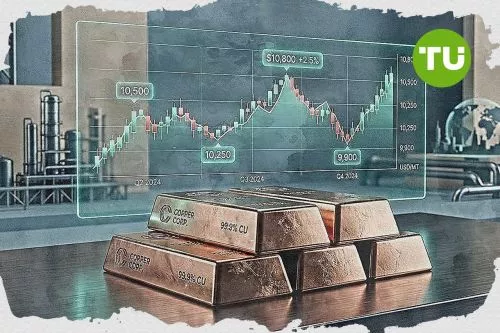
Critical minerals are moving closer to the centre of investor and geopolitical attention as demand from AI infrastructure and military uses grows. Robert Friedland, founder and executive co-chair of Ivanhoe Mines, says copper prices need to rise further because current levels do not support enough new mine development.
Highlights
- Copper prices are rising as demand outpaces supply, with Friedland noting $6 a pound is insufficient to justify a $22 billion Gobi Desert project.
- Friedland argues conventional net present value models underestimate the strategic value of copper amid hoarding, defence needs, and data centre demand growth.
- Intensifying geopolitical competition and hyperscaler infrastructure expansion are reshaping mining, suggesting a sector re-rating if supply constraints persist.
Copper pricing pressure and investment economics
As reported by Financial Times, Friedland argues the bull case for metals rests on a combination of war, stockpiling and tightening supply chains rather than on a single catalyst. He says the world is increasingly hoarding critical metals, while large technology groups are seeking secure access to materials needed for data centre and infrastructure expansion.He says copper prices are rising because demand is outpacing supply and adds that the market will continue moving higher until demand destruction appears. In his view, the current incentive price is still too low to justify building very large new projects, citing the economics of a potential $22 billion copper mine in the Gobi Desert at $6 a pound copper.
Friedland also criticises conventional net present value models for strategic minerals projects, arguing they fail to capture the importance of supply security when metals are needed for defence and other essential uses. He says the issue is no longer only industrial demand, but access to materials that countries and companies see as critical to resilience and survival.
Geopolitical competition reshapes mining outlook
Friedland frames the market backdrop as one shaped by conflict in Europe and by intensifying competition among major buyers of infrastructure inputs. He says mining still represents an exceptionally low share of S&P 500 valuation, even as hyperscalers discuss sourcing critical materials for large-scale build-outs, suggesting he expects a re-rating in the sector over time.His remarks point to a mining industry that is becoming more exposed to strategic rivalry between technology groups as well as governments. That dynamic could strengthen the commercial and political value of copper and other critical minerals, especially if supply growth remains constrained while AI, electrification and defence demand continue to expand.
Friedland ends by calling for internationally accepted rules to reduce the risk of broader conflict. He says avoiding global war is essential and cites the war in Ukraine as an example of why civilian populations must be protected.
We have previously noted Copper futures volatility after AI-stock selloffs fueled renewed demand concerns and sharp price swings.









-
 Afghanistan
-
 Albania
-
 Algeria
-
 Angola
-
 Argentina
-
 Armenia
-
 Australia
-
 Austria
-
 Azerbaijan
-
 Bahamas
-
 Bahrain
-
 Bangladesh
-
 Belarus
-
 Belgium
-
 Bolivia
-
 Botswana
-
 Brazil
-
 Brunei
-
 Bulgaria
-
 Cambodia
-
 Cameroon
-
 Canada
-
 Chile
-
 China
-
 Colombia
-
 Congo
-
 Costa Rica
-
 Cote d'Ivoire
-
 Croatia
-
 Cuba
-
 Cyprus
-
 Czechia
-
 DR Congo
-
 Denmark
-
 Dominican Republic
-
 Ecuador
-
 Egypt
-
 El Salvador
-
 Estonia
-
 Eswatini
-
 Ethiopia
-
 Finland
-
 France
-
 Georgia
-
 Germany
-
 Ghana
-
 Greece
-
 Haiti
-
 Hong Kong
-
 Hungary
-
 India
-
 Indonesia
-
 Iran, Islamic republic
-
 Iraq
-
 Ireland
-
 Israel
-
 Italy
-
 Jamaica
-
 Japan
-
 Jordan
-
 Kazakhstan
-
 Kenya
-
 Korea
-
 Kuwait
-
 Kyrgyzstan
-
 Laos
-
 Latvia
-
 Lebanon
-
 Lesotho
-
 Libya
-
 Lithuania
-
 Luxembourg
-
 Madagascar
-
 Malaysia
-
 Malta
-
 Mauritius
-
 Mexico
-
 Moldova
-
 Mongolia
-
 Montenegro
-
 Morocco
-
 Mozambique
-
 Myanmar
-
 Namibia
-
 Nepal
-
 Netherlands
-
 New Zealand
-
 Nigeria
-
 North Macedonia
-
 Norway
-
 Oman
-
 Pakistan
-
 Palestine
-
 Panama
-
 Papua New Guinea
-
 Paraguay
-
 Peru
-
 Philippines
-
 Poland
-
 Portugal
-
 Puerto Rico
-
 Qatar
-
 Reunion
-
 Romania
-
 Rwanda
-
 Saudi Arabia
-
 Serbia
-
 Singapore
-
 Slovakia
-
 Slovenia
-
 Somalia
-
 South Africa
-
 Spain
-
 Sri Lanka
-
 Sweden
-
 Switzerland
-
 Syria
-
 Taiwan
-
 Tajikistan
-
 Tanzania
-
 Thailand
-
 Trinidad and Tobago
-
 Tunisia
-
 Turkey
-
 UAE
-
 Uganda
-
 Ukraine
-
 United Kingdom
-
United States
-
 Uruguay
-
 Uzbekistan
-
 Venezuela
-
 Vietnam
-
 Yemen
-
 Zambia
-
 Zimbabwe
- Forex
- Crypto












