The tweet was deleted by the author.
But we saved everything 🙂.


Western automakers and markets dominate premium segments and set key rules through tariffs and intellectual-property rights. However, Chinese and other Asian producers are expanding due to cost advantages, vertical integration in batteries and EVs, and localization that minimizes duties. Will tariff walls and design battles slow Asia’s advance or accelerate changes in the global auto industry?
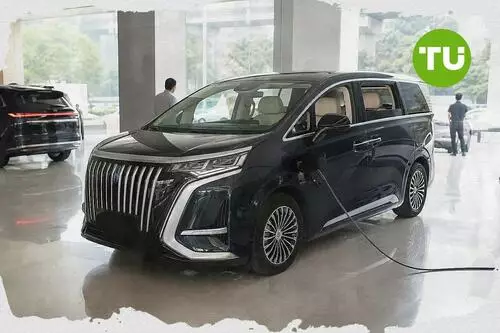
Western automakers regularly claim that Chinese rivals copy exterior styling, but few claims have reached European courts until 2026. On 20 November, a Dutch district court in The Hague issued a provisional injunction that barred BYD from importing, producing, stocking, or selling its Ti7 seven-seat SUV in the European Union.
The judge stated that the vehicle reflects the “characteristic and distinctive elements” of Jaguar Land Rover’s registered Defender design. In particular, Chinese producers copied curved shoulders, rounded corners, wheel-arch cut-outs, continuous glasshouse, proportions, and silhouette.
View post on X Loading...
The order prohibits manufacture of the Ti7 at BYD’s new Szeged plant in Hungary and presupposes penalty payments up to a €10 million ceiling.
“We protect our intellectual property and take legal action when necessary,” JLR stated.
Its chief executive, PB Balaji, went further in an earnings briefing, declaring the company “will do what it takes to protect” its designs. BYD replied that it “strongly disagrees with today’s judgment and will appeal it. The BYD Ti7 is the result of BYD’s own independent design work and infringes none of JLR’s rights.”
Industry observers believe that successful enforcement should encourage other European groups to file similar suits. This can make design rights a routine defensive weapon in addition to tariffs.
The legal action reflects a tariff regime introduced in 2024. The European Union uses countervailing duties of 17 percent on BYD, 18.8 percent on Geely, and 35.3 percent on SAIC. The standard import tariff and producing effective rates may reach 45.3 percent for battery-electric models.
The United States maintains a flat 100 percent tariff that has locked Chinese passenger cars out of its market. When Chinese exporters shifted volume into plug-in hybrids trying to escape the higher duties, Brussels had added safeguard quotas.
View post on X Loading...
On 24 November 2026, the Commission limited Chinese hybrid imports to 191,780 units from 1 December through mid-June 2027. This will establish a limit of 350,000 vehicles as compared with the projected shipments of 800,000. EU Trade Commissioner Maroš Šefčovič described the package as “a first step, but only a first step” toward correcting a bilateral trade deficit that exceeds €1 billion a day.
China’s Ministry of Commerce opposed such measures, claiming that “protectionism leads nowhere, and openness and cooperation is the right path forward.” WTO disputes over potential compensation are likely. The combination of duties and quotas has increased costs and forced Chinese groups to reconsider their pure-export strategies.
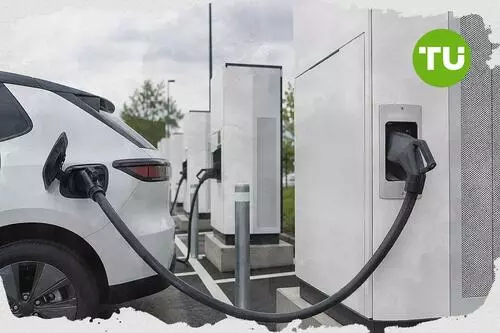
Chinese manufacturers have reacted to the barriers by increasing production inside the tariff wall. Industry data shows 26 operational and planned Chinese vehicle and battery sites across the European Union. BYD’s 300-hectare Szeged plant may produce 150,000 vehicles a year with a potential to reach even 300,000; the company is also negotiating the possibility to acquire the former Ineos facility in Hambach, France. CATL is constructing a 100 GWh battery factory in Debrecen, Hungary, while Leapmotor is assembling vehicles at a Stellantis plant in Zaragoza, Spain.
View post on X Loading...
“When we do business, we want to do something and have certainty and visibility, then we can control and then we can invest. But with geopolitics, you never understand what’s the angle,” said Stella Li, BYD’s executive vice president.
She confirmed that passenger-car plans for the United States are frozen due to the lack of “clarity, visibility and stability.” Local assembly allows companies to avoid most duties and qualifies vehicles for “Made in Europe” incentives as well as shortens delivery times. It also improves supplier relationships and creates political alliances inside member states.
Despite the existing barriers, Chinese brands continue to increase their share. ACEA figures show they held 15.8 percent of new-car registrations across the EU, EFTA and UK in September 2026. This is 9.8 percent more than a year earlier. BYD’s European registrations more than doubled to over 206,000 units in the first nine months.
This increased its share to 2.4 percent. Chinese makers controlled 25 percent of the plug-in hybrid segment in the first half of 2026, while it was only 2 percent in 2024. Lower production costs ($11,000 less per vehicle than European equivalents) counterbalance the tariff burden.
View post on X Loading...
Meanwhile, Volkswagen Group’s market share fell to 22.6 percent from 25.7 percent, and German brands tend to lose competitiveness as Chinese registrations rose 73.4 percent in October. Jim Baumbick,
“Everything we’re talking about should be … in service of Europe, not in service of China,” said Ford’s president for Europe. He added that European workers “want to compete on a fair playing field.”
The data indicate that price factors and rapid product cycles may play an even greater role than duties and litigation.
Both camps are preparing for a longer contest. European and American manufacturers may initiate additional design and copyright actions; policymakers may introduce new local-content rules for subsidies and company-car tax benefits. Permanent quotas may be introduced once the current 200-day requirement expires.
David Bailey, professor of business economics at the University of Birmingham, has stressed that exclusion from such schemes may create an “existential” threat to UK plants.
View post on X Loading...
Chinese groups will expand European capacity and joint ventures to redesign models and reduce visual similarities with protected European designs. Some may shift higher-value component production into the bloc to satisfy the latest rules. The cumulative effect is a reconfiguration of the global auto industry: tariffs and court requests have not affected Chinese volume growth.
However, they have redirected investments into European factories and increased the cost of export strategies. The ultimate situation will be determined by the duration of the barriers and the speed with which Asian manufacturers adapt to them.



 Afghanistan
 Albania
 Algeria
 Angola
 Argentina
 Armenia
 Australia
 Austria
 Azerbaijan
 Bahamas
 Bahrain
 Bangladesh
 Belarus
 Belgium
 Bolivia
 Botswana
 Brazil
 Brunei
 Bulgaria
 Cambodia
 Cameroon
 Canada
 Chile
 China
 Colombia
 Congo
 Costa Rica
 Cote d'Ivoire
 Croatia
 Cuba
 Cyprus
 Czechia
 DR Congo
 Denmark
 Dominican Republic
 Ecuador
 Egypt
 El Salvador
 Estonia
 Eswatini
 Ethiopia
 Finland
 France
 Georgia
 Germany
 Ghana
 Greece
 Haiti
 Hong Kong
 Hungary
 India
 Indonesia
 Iran, Islamic republic
 Iraq
 Ireland
 Israel
 Italy
 Jamaica
 Japan
 Jordan
 Kazakhstan
 Kenya
 Korea
 Kuwait
 Kyrgyzstan
 Laos
 Latvia
 Lebanon
 Lesotho
 Libya
 Lithuania
 Luxembourg
 Madagascar
 Malaysia
 Malta
 Mauritius
 Mexico
 Moldova
 Mongolia
 Montenegro
 Morocco
 Mozambique
 Myanmar
 Namibia
 Nepal
 Netherlands
 New Zealand
 Nigeria
 North Macedonia
 Norway
 Oman
 Pakistan
 Palestine
 Panama
 Papua New Guinea
 Paraguay
 Peru
 Philippines
 Poland
 Portugal
 Puerto Rico
 Qatar
 Reunion
 Romania
 Rwanda
 Saudi Arabia
 Serbia
 Singapore
 Slovakia
 Slovenia
 Somalia
 South Africa
 Spain
 Sri Lanka
 Sweden
 Switzerland
 Syria
 Taiwan
 Tajikistan
 Tanzania
 Thailand
 Trinidad and Tobago
 Tunisia
 Turkey
 UAE
 Uganda
 Ukraine
 United Kingdom
United States
 Uruguay
 Uzbekistan
 Venezuela
 Vietnam
 Yemen
 Zambia
 Zimbabwe