The tweet was deleted by the author.
But we saved everything 🙂.


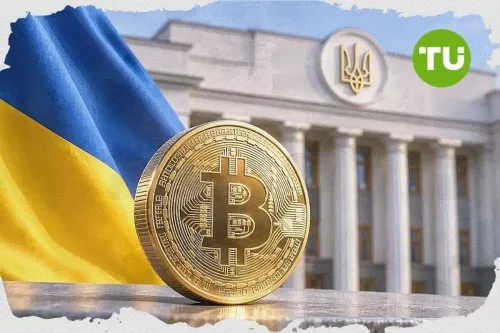
Ukraine’s parliament has passed a law legalizing cryptocurrencies. Despite the popularity of digital assets in Ukraine, the process has taken many years. But will the hryvnia return to crypto exchanges?
On November 25, Ukraine’s parliament, the Verkhovna Rada, passed a bill regulating the circulation and taxation of virtual assets in its second and final reading. Once signed by the president, the main provisions of the law are expected to take effect on July 1, 2027.
View post on X Loading...
Income earned by Ukrainians from cryptocurrency transactions will be taxed similarly to income from securities. The combined tax rate will be 23%: an 18% personal income tax and a 5% military levy. However, the tax will apply to profits rather than the total sale amount, taking into account documented expenses.
For example, if a Ukrainian buys bitcoin for UAH 100,000 and sells it for UAH 150,000 within the same year, they will have to pay UAH 11,500 in taxes on the profit. Exchanging one cryptocurrency for another will not be subject to taxation. Annual profits not exceeding one minimum monthly wage will also be exempt from taxation.
A transitional period is предусмотрен for holders of cryptocurrencies acquired before the law takes effect. As Ukrainian lawmaker Yaroslav Zhelezniak explained, they will be able to benefit from a preferential tax rate of 10% (5% personal income tax and a 5% military levy). In this case, however, the tax will apply to the entire sale amount rather than just the profit.
Cryptocurrency exchanges, exchange services, and digital asset custodians will be required to obtain authorization to operate in Ukraine. Companies will have to comply with financial monitoring requirements, safeguard customer funds, and provide tax authorities with information about user transactions.
Two government agencies will oversee the market. The National Securities and Stock Market Commission (NSSMC) will be responsible for authorizing crypto companies and supervising their activities. The National Bank of Ukraine (NBU) will oversee transactions between the hryvnia and virtual assets and regulate certain types of payment tokens, including stablecoins.
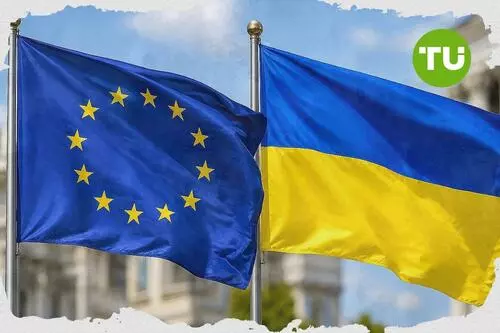
The legislation was developed with consideration of the European Union’s Markets in Crypto-Assets Regulation (MiCA). Its adoption is also linked to Ukraine’s commitments to the European Union and the International Monetary Fund. According to Danylo Hetmantsev, chairman of the parliamentary finance committee, taxing the cryptocurrency market could generate UAH 14–15 billion in annual government revenue.
The newly adopted law is far from Ukraine’s first attempt to regulate the cryptocurrency market. Back in October 2017, two bills were introduced in parliament. The first proposed recognizing cryptocurrencies as objects of property rights, while the second sought to classify them as financial assets. Neither bill was passed.
View post on X Loading...
The legislative process accelerated following the establishment of the Ministry of Digital Transformation in 2019. On September 8, 2021, parliament passed the Law on Virtual Assets. However, President Volodymyr Zelenskyy vetoed the legislation, opposing the creation of a separate regulatory body that would require additional government spending.
On February 17, 2022, one week before the start of the full-scale war, parliament passed the law again, incorporating the president’s proposals. Zelenskyy signed it on March 16. However, the legislation never entered into force because amendments to Ukraine’s Tax Code were required.
In November 2023, two competing bills on the taxation and regulation of virtual assets were introduced in parliament. Revising the legislation took nearly two years. In May 2025, the bill was withdrawn from parliamentary consideration before being approved in its first reading in September.
More than another year was spent coordinating regulatory powers and addressing concerns about the legislation. As recently as early November 2026, the NBU opposed the proposed version, warning of risks to financial stability and competition. It was not until November 23 that the NBU and NSSMC reached an agreement, after which the parliamentary committee approved the bill.
While Ukrainian lawmakers debated how to regulate the market, the country became a global leader in cryptocurrency adoption. Ukraine ranked first in the Chainalysis index in 2020 and third in 2022. In 2025, the country slipped to eighth place before ranking seventh in 2026, although the research methodology changed several times over that period.
View post on X Loading...
Following the start of the full-scale war, cryptocurrencies became one of the instruments of financial support for Ukraine. According to the Ministry of Digital Transformation, the government-backed cryptocurrency fund Aid For Ukraine alone raised more than $60 million during the first 100 days of the war.
However, as early as April 2022, the NBU prohibited cryptocurrency purchases abroad using hryvnia-denominated bank accounts. Transactions from foreign currency accounts were subject to a monthly limit equivalent to UAH 100,000. The regulator sought to prevent capital outflows from the country.
The situation became even more complicated in March 2023. Amid a government crackdown on tax evasion in the gambling industry, Ukrainian banks stopped processing certain high-risk transactions. Binance, WhiteBIT, and other crypto exchanges suspended hryvnia deposits and withdrawals via bank cards. Users had to switch to peer-to-peer (P2P) services and physical exchange offices. Years later, full cooperation between crypto exchanges and Ukrainian banks has yet to be restored.
The adoption of cryptocurrency legislation by Ukraine’s parliament marks a major step toward regulating the industry. Unlike the 2022 law, the new legislation establishes both market rules and a taxation framework. However, its adoption does not automatically lift the NBU’s currency restrictions.
If the government hopes to bring the cryptocurrency market out of the shadows and generate billions of hryvnias in tax revenue, it needs to restore full cooperation between banks and crypto exchanges. Ukrainians should be able to buy and sell digital assets directly for hryvnias without relying on intermediaries. Otherwise, legalization may amount to little more than introducing new taxes that many Ukrainians will try to avoid.



 Afghanistan
 Albania
 Algeria
 Angola
 Argentina
 Armenia
 Australia
 Austria
 Azerbaijan
 Bahamas
 Bahrain
 Bangladesh
 Belarus
 Belgium
 Bolivia
 Botswana
 Brazil
 Brunei
 Bulgaria
 Cambodia
 Cameroon
 Canada
 Chile
 China
 Colombia
 Congo
 Costa Rica
 Cote d'Ivoire
 Croatia
 Cuba
 Cyprus
 Czechia
 DR Congo
 Denmark
 Dominican Republic
 Ecuador
 Egypt
 El Salvador
 Estonia
 Eswatini
 Ethiopia
 Finland
 France
 Georgia
 Germany
 Ghana
 Greece
 Haiti
 Hong Kong
 Hungary
 India
 Indonesia
 Iran, Islamic republic
 Iraq
 Ireland
 Israel
 Italy
 Jamaica
 Japan
 Jordan
 Kazakhstan
 Kenya
 Korea
 Kuwait
 Kyrgyzstan
 Laos
 Latvia
 Lebanon
 Lesotho
 Libya
 Lithuania
 Luxembourg
 Madagascar
 Malaysia
 Malta
 Mauritius
 Mexico
 Moldova
 Mongolia
 Montenegro
 Morocco
 Mozambique
 Myanmar
 Namibia
 Nepal
 Netherlands
 New Zealand
 Nigeria
 North Macedonia
 Norway
 Oman
 Pakistan
 Palestine
 Panama
 Papua New Guinea
 Paraguay
 Peru
 Philippines
 Poland
 Portugal
 Puerto Rico
 Qatar
 Reunion
 Romania
 Rwanda
 Saudi Arabia
 Serbia
 Singapore
 Slovakia
 Slovenia
 Somalia
 South Africa
 Spain
 Sri Lanka
 Sweden
 Switzerland
 Syria
 Taiwan
 Tajikistan
 Tanzania
 Thailand
 Trinidad and Tobago
 Tunisia
 Turkey
 UAE
 Uganda
 Ukraine
 United Kingdom
United States
 Uruguay
 Uzbekistan
 Venezuela
 Vietnam
 Yemen
 Zambia
 Zimbabwe