

Oil market edges higher as Middle East supply risks support prices

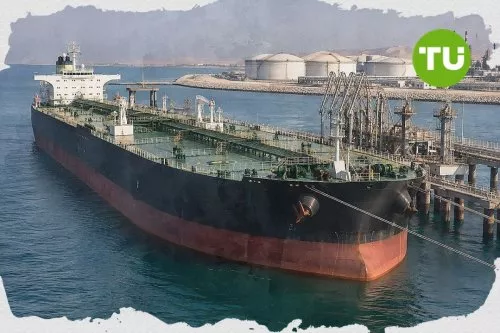
Oil prices rise slightly on Friday and are on track to end a three-week losing streak as attacks on tankers in the Strait of Hormuz and on Saudi energy assets keep supply concerns in focus. Brent crude is trading at $96.61 a barrel by 0450 GMT after Thursday's sharp gain, while market attention is also turning to OPEC+ output policy for early 2027.
Highlights
- Brent crude rises 4 cents to $96.61 a barrel while WTI climbs $2.10 to $85.78 amid heightened Middle East supply risks.
- Saudi Aramco's Jazan refinery halts operations after a projectile kills one and injures several, latest in a pattern of regional infrastructure attacks.
- OPEC+ likely to keep output targets unchanged through at least Q1 2027 as geopolitical threats and refinery disruptions sustain risk premiums and tight supplies.
Supply disruptions and price outlook
As reported by Pakistan Business Recorder, crude benchmarks are firming as renewed security threats in the Middle East add to concerns over export flows from a region critical to global oil supply.Brent crude futures are up 4 cents at $96.61 a barrel after rising nearly $2 on Thursday to their highest level since November 6. U.S. West Texas Intermediate crude futures are at $85.78 a barrel, up $2.10, or 2.5%, from their close on Wednesday, with no Thursday settlement because of the Thanksgiving holiday in the U.S.
ANZ analysts Brian Martin and Daniel Hynes say Brent can still move above $100 a barrel without another major escalation in the Middle East, but that would increasingly require evidence of tighter deliverable supply. Prices had weakened in previous weeks on relief that U.S. President Donald Trump did not intensify military action on Iran after the midterm elections, but continued attacks on shipping through the Hormuz Strait have kept risk premiums alive.
Regional attacks and broader refining impact
Iran continues to target ships transiting the Hormuz Strait, disrupting oil exports, while Yemeni Houthis are striking Saudi infrastructure. Saudi Aramco's Jazan refinery temporarily halts some operations after a projectile hits the facility on Thursday, killing a Nepalese worker and injuring several others, according to a statement from Saudi Arabia's Energy Ministry.The Jazan strike follows the Houthis' claimed attacks a day earlier on Ras Tanura, Saudi Arabia's largest refinery and a major crude export hub, as well as the Red Sea ports of Jeddah and Jazan. With disruption from the Iran war continuing, OPEC+ is likely to keep oil output targets unchanged for at least the first quarter of 2027 at its meeting on Sunday, according to two sources.
Elsewhere, Ukraine has intensified drone attacks on Russian oil refineries since the end of October, with the latest incident causing a fire at the Slavyansk ECO refinery in Russia's Krasnodar region. Separate fires also disrupt activity at Thailand's Bangchak refinery and Venezuela's Amuay refinery, while OCBC analyst Sim Moh Siong says recovering Gulf exports and easing geopolitical risk could support lower oil prices in 2027, though depleted inventories, shipping risks and slow refinery repairs still leave the market exposed.
Previously, we highlighted Hormuz supply risks after tanker and refinery attacks pushed Brent above $91 ahead of an OPEC+ meeting.






Latest Brent News




-
 Afghanistan
-
 Albania
-
 Algeria
-
 Angola
-
 Argentina
-
 Armenia
-
 Australia
-
 Austria
-
 Azerbaijan
-
 Bahamas
-
 Bahrain
-
 Bangladesh
-
 Belarus
-
 Belgium
-
 Bolivia
-
 Botswana
-
 Brazil
-
 Brunei
-
 Bulgaria
-
 Cambodia
-
 Cameroon
-
 Canada
-
 Chile
-
 China
-
 Colombia
-
 Congo
-
 Costa Rica
-
 Cote d'Ivoire
-
 Croatia
-
 Cuba
-
 Cyprus
-
 Czechia
-
 DR Congo
-
 Denmark
-
 Dominican Republic
-
 Ecuador
-
 Egypt
-
 El Salvador
-
 Estonia
-
 Eswatini
-
 Ethiopia
-
 Finland
-
 France
-
 Georgia
-
 Germany
-
 Ghana
-
 Greece
-
 Haiti
-
 Hong Kong
-
 Hungary
-
 India
-
 Indonesia
-
 Iran, Islamic republic
-
 Iraq
-
 Ireland
-
 Israel
-
 Italy
-
 Jamaica
-
 Japan
-
 Jordan
-
 Kazakhstan
-
 Kenya
-
 Korea
-
 Kuwait
-
 Kyrgyzstan
-
 Laos
-
 Latvia
-
 Lebanon
-
 Lesotho
-
 Libya
-
 Lithuania
-
 Luxembourg
-
 Madagascar
-
 Malaysia
-
 Malta
-
 Mauritius
-
 Mexico
-
 Moldova
-
 Mongolia
-
 Montenegro
-
 Morocco
-
 Mozambique
-
 Myanmar
-
 Namibia
-
 Nepal
-
 Netherlands
-
 New Zealand
-
 Nigeria
-
 North Macedonia
-
 Norway
-
 Oman
-
 Pakistan
-
 Palestine
-
 Panama
-
 Papua New Guinea
-
 Paraguay
-
 Peru
-
 Philippines
-
 Poland
-
 Portugal
-
 Puerto Rico
-
 Qatar
-
 Reunion
-
 Romania
-
 Rwanda
-
 Saudi Arabia
-
 Serbia
-
 Singapore
-
 Slovakia
-
 Slovenia
-
 Somalia
-
 South Africa
-
 Spain
-
 Sri Lanka
-
 Sweden
-
 Switzerland
-
 Syria
-
 Taiwan
-
 Tajikistan
-
 Tanzania
-
 Thailand
-
 Trinidad and Tobago
-
 Tunisia
-
 Turkey
-
 UAE
-
 Uganda
-
 Ukraine
-
 United Kingdom
-
United States
-
 Uruguay
-
 Uzbekistan
-
 Venezuela
-
 Vietnam
-
 Yemen
-
 Zambia
-
 Zimbabwe
- Forex
- Crypto












