

ASML capacity outlook tightens as AI chip tool demand outpaces supply

ASML is signaling that demand for its most advanced chipmaking tools is set to exceed supply well beyond the near term as customers expand for artificial intelligence workloads. The shift is pushing investors to weigh the company’s ability to add capacity against rising doubts over how durable AI spending and long-range growth forecasts will be.
Highlights
- ASML expects supply of chip-printing systems to fall short of demand in 2027 and 2028 despite planned capacity increases of 30%.
- ASML shares have dropped 5% and valuation has declined to about 30 times forward earnings from 45 times in June amid AI infrastructure uncertainty.
- Major customers including TSMC, Samsung, SK Hynix, and Micron are reserving capacity through sizeable down payments, with ASML not yet accepting 2029–2030 orders.
Capacity expansion plans face longer-term strain
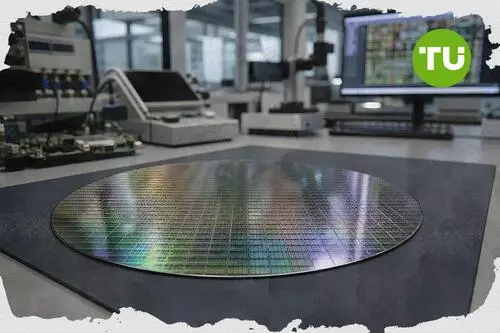
As reported by Reuters, ASML now expects supply of its chip-printing systems for advanced logic and memory production to fall short of demand in both 2027 and 2028, despite earlier commitments to avoid becoming a bottleneck for the semiconductor industry.Chief Executive Christophe Fouquet said in April that the company would prevent supply constraints "by all possible means," but management is now acknowledging that planned capacity increases of 30% in 2027 and 2028 will still not fully meet customer needs. Investors say order discussions are already stretching into 2029 and 2030, suggesting demand may continue to run ahead of supply for several more years.
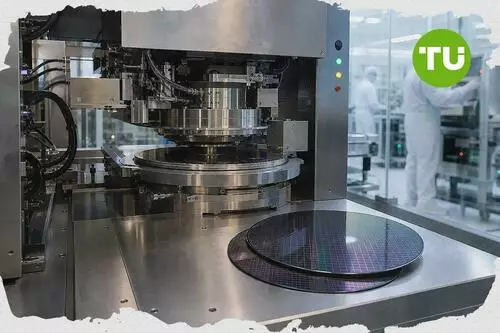
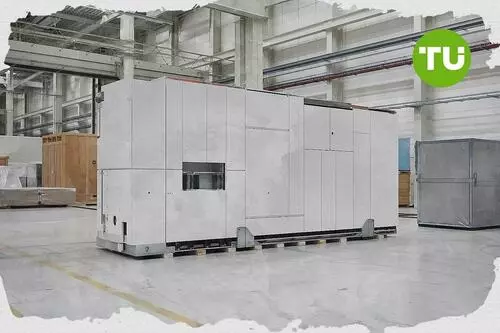
ASML is trying to ease the backlog by shortening assembly times, upgrading machines already installed at customer sites and rolling out faster systems. The company had planned to lift annual capacity to 110 of its EUV lithography machines by 2028 and is now considering adding roughly another dozen, while a manufacturing expansion in Eindhoven is not expected to begin operating until 2029.
Fouquet also told investors that ASML’s own suppliers, including key optics partner Zeiss, are not the main constraint. That leaves ASML’s internal ability to scale production as the central issue for customers seeking access to its high-end tools.
Valuation pressure grows as investors test AI demand
Investor debate is increasingly centered on whether the current wave of AI infrastructure spending can support the expectations built into ASML’s longer-term outlook. Although analysts have raised earnings estimates since June, the company’s shares have weakened relative to those forecasts and the stock’s valuation has fallen to about 30 times forward earnings from more than 45 times in June, according to investor comments cited in the report.Some shareholders still see the lower valuation as attractive given ASML’s market position and expected growth, arguing that supply remains the company’s main limit. ASML has also said price increases in 2027 and 2028 should support performance.
Others are more cautious. Concerns over financing for AI and data-center projects, higher interest rates and practical limits such as power availability are adding pressure to chip stocks, and Jefferies analyst Janardan Menon said skepticism around very high 2028 and 2029 expectations is driving the recent derating. ASML shares fell 5% on Thursday in a broader market selloff.
Customers continue competing for production slots, and Chief Financial Officer Roger Dassen said the company is requiring sizeable down payments that would be painful to forfeit if orders are later canceled. While TSMC said in July that equipment supply is not expected to constrain its expansion and it maintained 2026 capital spending plans of $60 billion to $64 billion on Thursday, Samsung, SK Hynix and Micron are also reserving ASML capacity amid strong demand for AI memory chips.
Potential new demand could add to the strain, including Elon Musk’s proposed TeraFab project, while U.S. restrictions on China remain a risk for sales of ASML’s mid-range DUV tools. China is expected to account for about 20% of ASML’s sales this year. Even with the order pipeline extending further out, ASML is not yet accepting 2029 and 2030 orders as it evaluates both customer readiness and its own ability to meet future demand.
In our earlier article on Micron Technology’s weakening chart outlook, we highlighted that the stock had broken below a rising wedge pattern on the weekly chart, a signal that the prior rally may be losing strength. We also noted that RSI and MACD were turning lower, pointing to growing downside momentum with defined support and resistance zones that could shape near-term trading.





Latest ASML News


-
 Afghanistan
-
 Albania
-
 Algeria
-
 Angola
-
 Argentina
-
 Armenia
-
 Australia
-
 Austria
-
 Azerbaijan
-
 Bahamas
-
 Bahrain
-
 Bangladesh
-
 Belarus
-
 Belgium
-
 Bolivia
-
 Botswana
-
 Brazil
-
 Brunei
-
 Bulgaria
-
 Cambodia
-
 Cameroon
-
 Canada
-
 Chile
-
 China
-
 Colombia
-
 Congo
-
 Costa Rica
-
 Cote d'Ivoire
-
 Croatia
-
 Cuba
-
 Cyprus
-
 Czechia
-
 DR Congo
-
 Denmark
-
 Dominican Republic
-
 Ecuador
-
 Egypt
-
 El Salvador
-
 Estonia
-
 Eswatini
-
 Ethiopia
-
 Finland
-
 France
-
 Georgia
-
 Germany
-
 Ghana
-
 Greece
-
 Haiti
-
 Hong Kong
-
 Hungary
-
 India
-
 Indonesia
-
 Iran, Islamic republic
-
 Iraq
-
 Ireland
-
 Israel
-
 Italy
-
 Jamaica
-
 Japan
-
 Jordan
-
 Kazakhstan
-
 Kenya
-
 Korea
-
 Kuwait
-
 Kyrgyzstan
-
 Laos
-
 Latvia
-
 Lebanon
-
 Lesotho
-
 Libya
-
 Lithuania
-
 Luxembourg
-
 Madagascar
-
 Malaysia
-
 Malta
-
 Mauritius
-
 Mexico
-
 Moldova
-
 Mongolia
-
 Montenegro
-
 Morocco
-
 Mozambique
-
 Myanmar
-
 Namibia
-
 Nepal
-
 Netherlands
-
 New Zealand
-
 Nigeria
-
 North Macedonia
-
 Norway
-
 Oman
-
 Pakistan
-
 Palestine
-
 Panama
-
 Papua New Guinea
-
 Paraguay
-
 Peru
-
 Philippines
-
 Poland
-
 Portugal
-
 Puerto Rico
-
 Qatar
-
 Reunion
-
 Romania
-
 Rwanda
-
 Saudi Arabia
-
 Serbia
-
 Singapore
-
 Slovakia
-
 Slovenia
-
 Somalia
-
 South Africa
-
 Spain
-
 Sri Lanka
-
 Sweden
-
 Switzerland
-
 Syria
-
 Taiwan
-
 Tajikistan
-
 Tanzania
-
 Thailand
-
 Trinidad and Tobago
-
 Tunisia
-
 Turkey
-
 UAE
-
 Uganda
-
 Ukraine
-
 United Kingdom
-
United States
-
 Uruguay
-
 Uzbekistan
-
 Venezuela
-
 Vietnam
-
 Yemen
-
 Zambia
-
 Zimbabwe
- Forex
- Crypto












