

Data center suppliers gain from Microsoft and Alphabet AI spending plans

Rising concern over whether big technology groups can sustain artificial intelligence spending is shifting attention toward the hardware suppliers that receive those orders. Microsoft and Alphabet say they expect to spend a combined $370 billion this year and both signal faster spending in 2027, reinforcing demand across chips, memory, networking and data center infrastructure.
Highlights
- Micron reports a record quarter with about 75% of its planned 2027 memory chip output already committed due to robust AI-driven demand.
- Marvell's data center revenue grows 46% in the latest quarter as optical networking component demand surges to link AI systems at scale.
- TSMC posts nearly 69% profit growth and raises its full-year sales forecast to 44%, driven by sustained AI processor manufacturing demand.
Spending pipeline points to core hardware makers
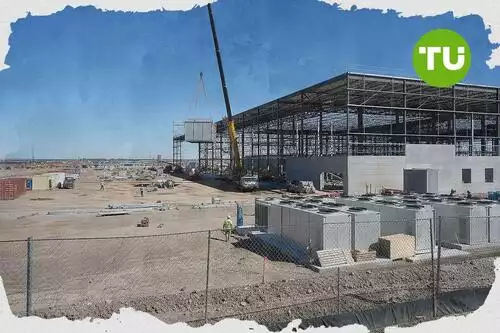
As reported by Weiss Ratings, the latest spending plans from Microsoft and Alphabet highlight how artificial intelligence investment is flowing beyond model developers to the manufacturers that supply physical data center components.Those outlays ultimately fund a broad stack of equipment, including processors, memory, storage, networking, power systems and cooling. While investors are questioning whether some AI builders can keep financing expansion, the companies supplying these parts are facing a different challenge, strong demand and limited capacity.
The article identifies memory as one of the clearest examples. Micron, one of the largest memory chipmakers, posts a record quarter, and its chief executive says he cannot see when the shortage will end. Weiss Ratings says about 75% of Micron's planned 2027 output is already committed, underscoring how quickly AI demand is absorbing future supply.
AI workloads also depend on the balance between central processing units and graphics processing units. Intel says current training systems use roughly seven or eight GPUs for every CPU, but expects that ratio to fall to three or four as AI moves into wider day-to-day use, where coordination becomes more important than raw computing muscle.
Memory, networking and manufacturing see industry tailwinds
Beyond processors, networking and optical components are also benefiting as data centers scale. Marvell and Broadcom make chips that move data across AI systems, increasingly through optical technologies rather than traditional copper connections, while Lumentum and Coherent supply lasers tied to that transition.Weiss Ratings says Marvell's data center revenue grows 46% in the latest quarter, reflecting demand for infrastructure that links thousands of chips inside AI clusters. Storage, power and cooling remain essential as well, because any constraint in those layers can disrupt the performance of the entire system.
Chip fabrication is another major bottleneck in the supply chain. Nvidia designs leading AI chips, but manufacturing is handled largely by Taiwan Semiconductor Manufacturing Company, or TSMC, which remains central to production of advanced processors used across the sector.
TSMC posts strong results even during an AI stock selloff, with profit rising nearly 69% and its full-year sales growth forecast lifted to 44%. That performance suggests that regardless of uncertainty over AI's longer-term commercial outcome, the data center supply chain continues to capture immediate revenue from the sector's expanding capital spending.
In our earlier article on Micron Technology’s stock, we examined a weakening technical setup after the shares lost momentum from their June peak. We highlighted a break below a rising wedge on the weekly chart, with RSI and MACD trending lower and specific downside support zones in focus unless the price reclaimed key resistance levels.






Latest Alphabet Inc Class C News




-
 Afghanistan
-
 Albania
-
 Algeria
-
 Angola
-
 Argentina
-
 Armenia
-
 Australia
-
 Austria
-
 Azerbaijan
-
 Bahamas
-
 Bahrain
-
 Bangladesh
-
 Belarus
-
 Belgium
-
 Bolivia
-
 Botswana
-
 Brazil
-
 Brunei
-
 Bulgaria
-
 Cambodia
-
 Cameroon
-
 Canada
-
 Chile
-
 China
-
 Colombia
-
 Congo
-
 Costa Rica
-
 Cote d'Ivoire
-
 Croatia
-
 Cuba
-
 Cyprus
-
 Czechia
-
 DR Congo
-
 Denmark
-
 Dominican Republic
-
 Ecuador
-
 Egypt
-
 El Salvador
-
 Estonia
-
 Eswatini
-
 Ethiopia
-
 Finland
-
 France
-
 Georgia
-
 Germany
-
 Ghana
-
 Greece
-
 Haiti
-
 Hong Kong
-
 Hungary
-
 India
-
 Indonesia
-
 Iran, Islamic republic
-
 Iraq
-
 Ireland
-
 Israel
-
 Italy
-
 Jamaica
-
 Japan
-
 Jordan
-
 Kazakhstan
-
 Kenya
-
 Korea
-
 Kuwait
-
 Kyrgyzstan
-
 Laos
-
 Latvia
-
 Lebanon
-
 Lesotho
-
 Libya
-
 Lithuania
-
 Luxembourg
-
 Madagascar
-
 Malaysia
-
 Malta
-
 Mauritius
-
 Mexico
-
 Moldova
-
 Mongolia
-
 Montenegro
-
 Morocco
-
 Mozambique
-
 Myanmar
-
 Namibia
-
 Nepal
-
 Netherlands
-
 New Zealand
-
 Nigeria
-
 North Macedonia
-
 Norway
-
 Oman
-
 Pakistan
-
 Palestine
-
 Panama
-
 Papua New Guinea
-
 Paraguay
-
 Peru
-
 Philippines
-
 Poland
-
 Portugal
-
 Puerto Rico
-
 Qatar
-
 Reunion
-
 Romania
-
 Rwanda
-
 Saudi Arabia
-
 Serbia
-
 Singapore
-
 Slovakia
-
 Slovenia
-
 Somalia
-
 South Africa
-
 Spain
-
 Sri Lanka
-
 Sweden
-
 Switzerland
-
 Syria
-
 Taiwan
-
 Tajikistan
-
 Tanzania
-
 Thailand
-
 Trinidad and Tobago
-
 Tunisia
-
 Turkey
-
 UAE
-
 Uganda
-
 Ukraine
-
 United Kingdom
-
United States
-
 Uruguay
-
 Uzbekistan
-
 Venezuela
-
 Vietnam
-
 Yemen
-
 Zambia
-
 Zimbabwe
- Forex
- Crypto












