The tweet was deleted by the author.
But we saved everything 🙂.

In just a few years, CoreWeave went from mining cryptocurrencies to becoming one of the largest providers of computing power for artificial intelligence. However, its rapid growth has led to massive debts and the threat of a financial crisis. The most dangerous part of this story is that not only the company itself, but the entire AI industry could be at risk.
The story of CoreWeave began in 2017, when three former Wall Street professionals — Michael Intrator, Brian Venturo, and Brannin McBee — founded a company called Atlantic Crypto. They mined Ethereum using Nvidia graphics cards. The first machines were placed on a pool table in a Manhattan office before the equipment was moved to Venturo's grandfather's garage in New Jersey. Over time, the number of graphics cards grew to several thousand.
When the cryptocurrency market crashed in 2018, the founders began buying discounted equipment from other miners. At the same time, they looked for new ways to use their accumulated computing power. In 2019, the company began developing cloud computing services and changed its name to CoreWeave in December. It started renting out computing capacity for graphics processing, visual effects, and other tasks requiring high performance.
In 2020, the company launched its own cloud platform. Two years later, Ethereum switched to the Proof-of-Stake mechanism, which no longer required mining with graphics cards. CoreWeave completely shut down its mining operations in September 2022. By that time, demand for computing power had begun to grow rapidly thanks to advances in artificial intelligence. AI developers needed thousands of powerful processors to train their models, and CoreWeave began renting out such equipment.
The company's financial performance began to improve rapidly. While its revenue was just $16 million in 2022, it reached $229 million in 2023 and $1.9 billion in 2024. Revenue increased nearly 120-fold in just two years.
View post on X Loading...
In March 2025, CoreWeave held its initial public offering (IPO) on Nasdaq. The company raised approximately $1.5 billion at an offering price of $40 per share. Its market value at the time of its stock market debut was estimated at around $23 billion.
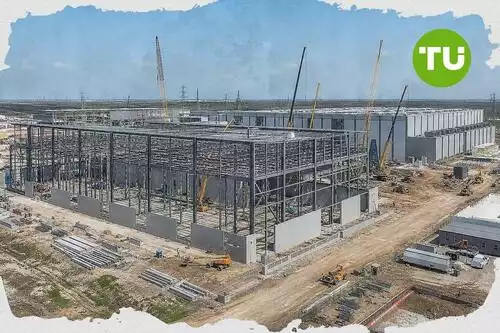
Today, CoreWeave's business model is fairly simple. The company purchases powerful Nvidia GPUs, installs them in data centers, and rents computing power to artificial intelligence developers. This allows customers to train and run AI models without spending billions of their own dollars on building infrastructure.
CoreWeave's largest customers include Microsoft, OpenAI, Meta, and Anthropic. In 2025, Microsoft accounted for approximately 67% of the company's revenue. That same year, CoreWeave signed several agreements with OpenAI worth a combined $22.4 billion. In April 2026, the company also announced an expansion of its partnership with Meta under a $21 billion deal.
View post on X Loading...
Nvidia plays a particularly important role in this business. The chipmaker not only supplies CoreWeave with equipment but is also one of its largest shareholders. In January 2026, Nvidia invested an additional $2 billion in the company. Earlier, in September 2025, the partners signed a $6.3 billion agreement under which Nvidia committed to purchasing CoreWeave's unused computing capacity through April 2032 if other buyers could not be found.
At the same time, Nvidia invests in artificial intelligence developers, including OpenAI and Anthropic. This creates a kind of circular flow of money: AI developers rent computing power from CoreWeave, which in turn purchases new Nvidia chips. As a result, the chipmaker simultaneously supports both one of its major customers and that customer's clients.
However, this system of mutual financing has a weak point: CoreWeave must spend billions on equipment and data centers long before they begin generating revenue. To finance these investments, the company actively takes out loans and issues bonds.
By the end of September 2026, its debt from loans and bonds had reached $47.5 billion, with nearly $11 billion due for repayment in 2027 alone. The company also faces expenses from long-term leases on data centers, many of which it does not own.
View post on X Loading...
To finance construction, CoreWeave has used an unusual approach: borrowing money against Nvidia GPUs and long-term customer contracts. The problem is that GPUs quickly become outdated. CoreWeave expects to use them for approximately six years, but some analysts believe that new generations of chips could cause older equipment to lose value much faster. In that case, the value of the collateral could fall sharply before the loans are repaid.
Meanwhile, CoreWeave continues to grow its revenue rapidly but remains unprofitable. In the third quarter of 2026, the company generated $3.66 billion in revenue but ended the period with a net loss of $709 million. Interest expenses alone totaled $846 million over the three months.
Against this backdrop, investors are increasingly questioning CoreWeave's ability to manage its debt burden. According to CNBC, by November 18, the yield on the company's bonds maturing in 2031 had approached 16%. Meanwhile, the cost of insuring against default reached levels typically associated with borrowers facing serious financial difficulties.
Potential delays in data center construction pose another threat. Opposition to new facilities is growing in the U.S. because of their high electricity consumption and the strain they place on local infrastructure. While construction is delayed, CoreWeave must continue paying interest on its loans but cannot fully generate revenue from capacity that has not yet come online.
Following Jensen Huang's departure as Nvidia CEO, another uncertainty has emerged: whether the chipmaker will maintain its previous level of financial support for AI companies.
Despite its enormous debts, it is too early to write off CoreWeave. The company has major customers, long-term contracts, and rapidly growing revenue. However, its future depends on whether new data centers can generate enough money to service its debt and whether AI developers can continue paying to rent computing power. Any construction delays or decline in demand could seriously undermine the company's financial position.
If CoreWeave fails to meet its obligations, the consequences could extend far beyond its own business. Creditors, investors, equipment suppliers, and artificial intelligence developers could all suffer. But the greater danger is a potential chain reaction: problems at one of the industry's largest players could undermine confidence in the entire system of mutual financing that supports the AI sector. And then the house of cards built on billions of dollars in investments and loans could truly come crashing down.



 Afghanistan
 Albania
 Algeria
 Angola
 Argentina
 Armenia
 Australia
 Austria
 Azerbaijan
 Bahamas
 Bahrain
 Bangladesh
 Belarus
 Belgium
 Bolivia
 Botswana
 Brazil
 Brunei
 Bulgaria
 Cambodia
 Cameroon
 Canada
 Chile
 China
 Colombia
 Congo
 Costa Rica
 Cote d'Ivoire
 Croatia
 Cuba
 Cyprus
 Czechia
 DR Congo
 Denmark
 Dominican Republic
 Ecuador
 Egypt
 El Salvador
 Estonia
 Eswatini
 Ethiopia
 Finland
 France
 Georgia
 Germany
 Ghana
 Greece
 Haiti
 Hong Kong
 Hungary
 India
 Indonesia
 Iran, Islamic republic
 Iraq
 Ireland
 Israel
 Italy
 Jamaica
 Japan
 Jordan
 Kazakhstan
 Kenya
 Korea
 Kuwait
 Kyrgyzstan
 Laos
 Latvia
 Lebanon
 Lesotho
 Libya
 Lithuania
 Luxembourg
 Madagascar
 Malaysia
 Malta
 Mauritius
 Mexico
 Moldova
 Mongolia
 Montenegro
 Morocco
 Mozambique
 Myanmar
 Namibia
 Nepal
 Netherlands
 New Zealand
 Nigeria
 North Macedonia
 Norway
 Oman
 Pakistan
 Palestine
 Panama
 Papua New Guinea
 Paraguay
 Peru
 Philippines
 Poland
 Portugal
 Puerto Rico
 Qatar
 Reunion
 Romania
 Rwanda
 Saudi Arabia
 Serbia
 Singapore
 Slovakia
 Slovenia
 Somalia
 South Africa
 Spain
 Sri Lanka
 Sweden
 Switzerland
 Syria
 Taiwan
 Tajikistan
 Tanzania
 Thailand
 Trinidad and Tobago
 Tunisia
 Turkey
 UAE
 Uganda
 Ukraine
 United Kingdom
United States
 Uruguay
 Uzbekistan
 Venezuela
 Vietnam
 Yemen
 Zambia
 Zimbabwe