

Philippine auto industry sees 2027 sales recovery as EV demand accelerates

Philippine vehicle sales are expected to recover in 2027 after likely missing the industry’s 500,000-unit target in 2026 amid pressure from higher fuel prices and weaker consumer spending. The industry still sees resilient demand in the second half of 2026, while electrified vehicles continue to gain market share during the transition.
Highlights
- Philippine automotive sales will decline to 470,000–480,000 units in 2026, missing the 500,000-unit target, before rebounding by 3.9–5.9% in 2027.
- xEV sales surged 184.6% year on year in October to 10,491 units, with CAMPI projecting electrified vehicles to take up 30% of total sales by end-2026.
- CAMPI is urging the government to extend zero tariffs on EVs and parts beyond 2028 as Executive Order No. 12 supports industry transition while protecting local manufacturing.
2026 sales outlook and monthly trends
As reported by BusinessWorld, citing CAMPI and the Truck Manufacturers’ Association, Inc., Philippine automotive sales are projected to total 470,000 to 480,000 units in 2026, below the industry’s 500,000-unit target. That implies an overall decline of about 3.4% to 5.2% from the 496,900 units sold in 2025, before sales return to around 500,000 units in 2027, equivalent to growth of 3.9% to 5.9%.CAMPI President Jose Maria M. Atienza said demand remains positive, especially in the second half, and that the trend is expected to continue. CAMPI Marketing Committee Chairman Beatrice Villegas described 2026 as a year of adjustment for the Philippine automotive industry, with sales under pressure but demand staying resilient.
In October, CAMPI-TMA data showed sales slipped 7.8% year on year to 36,938 units from 40,081, although they rose 3.4% from September’s 35,721 units. Including other industry data, total vehicle sales reached 40,394 units in October, with passenger car sales rising 2.4% year on year to 8,353 units while commercial vehicle sales fell 10.5% to 28,585 units.
For the January to October period, total vehicle sales declined 10.1% to 344,929 units from 383,852 a year earlier. Including non-CAMPI and non-TMA brands, ten-month vehicle sales reached 389,000 units, with passenger car sales down 8.1% and commercial vehicle sales down 10.7%.
EV growth and policy support
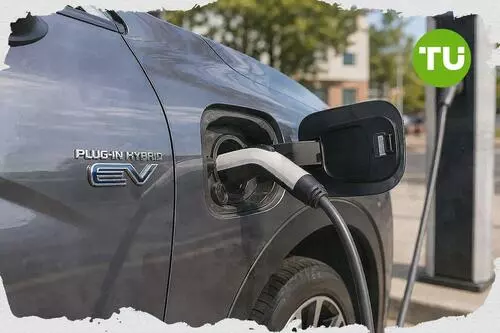
Electrified vehicle demand remains a major growth area for the industry. In October, xEV sales surged 184.6% to 10,491 units from 3,686 a year earlier, while year-to-date xEV sales jumped 166.1% to 65,793 units across battery EVs, plug-in hybrids, and hybrids.Battery EV sales climbed 654.7% in October to 2,649 units, while plug-in hybrid sales rose 587.6% to 1,891 units and hybrid sales increased 94.5% to 5,951 units. CAMPI Vice President Rhys Alexei Y. Murillo said xEVs are expected to account for 30% of total automotive sales by end-2026, with their market share potentially rising to as much as 35% in 2027, although internal combustion vehicles are still expected to hold the larger share of the market.
CAMPI is also urging the Philippine government to extend zero tariffs on EVs and their components beyond 2028, arguing that adoption remains in a transition stage. Executive Order No. 12 cut import duties on certain EVs and parts to zero for five years through 2028, from previous tariff rates of 5% to 30%, and the group said policy support should continue while protecting both local manufacturing and imports.
Toyota Motor Philippines Corp. remains the market leader despite a 7.3% drop in end-October sales to 171,689 units. It is followed by Mitsubishi Motors Philippines Corp., Suzuki Phils., Inc., Ford Motor Company Phils. Inc., and Honda Cars Philippines, Inc., all of which also post lower ten-month sales.
As noted in our earlier article, India’s energy storage sector is expanding on policy support, though viability still hinges on battery costs and execution.






Latest Automotive News




-
 Afghanistan
-
 Albania
-
 Algeria
-
 Angola
-
 Argentina
-
 Armenia
-
 Australia
-
 Austria
-
 Azerbaijan
-
 Bahamas
-
 Bahrain
-
 Bangladesh
-
 Belarus
-
 Belgium
-
 Bolivia
-
 Botswana
-
 Brazil
-
 Brunei
-
 Bulgaria
-
 Cambodia
-
 Cameroon
-
 Canada
-
 Chile
-
 China
-
 Colombia
-
 Congo
-
 Costa Rica
-
 Cote d'Ivoire
-
 Croatia
-
 Cuba
-
 Cyprus
-
 Czechia
-
 DR Congo
-
 Denmark
-
 Dominican Republic
-
 Ecuador
-
 Egypt
-
 El Salvador
-
 Estonia
-
 Eswatini
-
 Ethiopia
-
 Finland
-
 France
-
 Georgia
-
 Germany
-
 Ghana
-
 Greece
-
 Haiti
-
 Hong Kong
-
 Hungary
-
 India
-
 Indonesia
-
 Iran, Islamic republic
-
 Iraq
-
 Ireland
-
 Israel
-
 Italy
-
 Jamaica
-
 Japan
-
 Jordan
-
 Kazakhstan
-
 Kenya
-
 Korea
-
 Kuwait
-
 Kyrgyzstan
-
 Laos
-
 Latvia
-
 Lebanon
-
 Lesotho
-
 Libya
-
 Lithuania
-
 Luxembourg
-
 Madagascar
-
 Malaysia
-
 Malta
-
 Mauritius
-
 Mexico
-
 Moldova
-
 Mongolia
-
 Montenegro
-
 Morocco
-
 Mozambique
-
 Myanmar
-
 Namibia
-
 Nepal
-
 Netherlands
-
 New Zealand
-
 Nigeria
-
 North Macedonia
-
 Norway
-
 Oman
-
 Pakistan
-
 Palestine
-
 Panama
-
 Papua New Guinea
-
 Paraguay
-
 Peru
-
 Philippines
-
 Poland
-
 Portugal
-
 Puerto Rico
-
 Qatar
-
 Reunion
-
 Romania
-
 Rwanda
-
 Saudi Arabia
-
 Serbia
-
 Singapore
-
 Slovakia
-
 Slovenia
-
 Somalia
-
 South Africa
-
 Spain
-
 Sri Lanka
-
 Sweden
-
 Switzerland
-
 Syria
-
 Taiwan
-
 Tajikistan
-
 Tanzania
-
 Thailand
-
 Trinidad and Tobago
-
 Tunisia
-
 Turkey
-
 UAE
-
 Uganda
-
 Ukraine
-
 United Kingdom
-
United States
-
 Uruguay
-
 Uzbekistan
-
 Venezuela
-
 Vietnam
-
 Yemen
-
 Zambia
-
 Zimbabwe
- Forex
- Crypto












