
Walmart's fintech app OnePay expands list of available cryptocurrencies to 15 assets

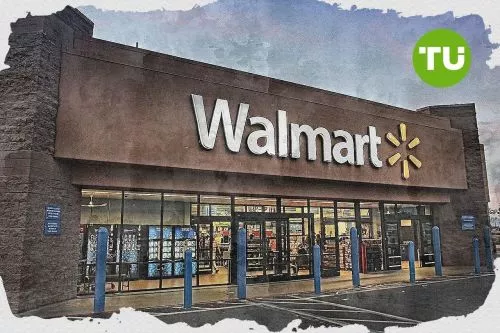
OnePay, a fintech platform majority-owned by retail giant Walmart, has significantly expanded its list of available digital assets.
In addition to Bitcoin (BTC) and Ethereum (ETH), which were available at the January launch, the company has added more than ten new tokens. On Thursday, the list was joined by SUI (SUI), Polygon (POL), and Arbitrum (ARB), following the recent listing of Solana (SOL), Cardano (ADA), Bitcoin Cash (BCH), and PAX Gold (PAXG). According to management, the expansion is driven by customer demand for high-quality instruments with high liquidity and regulatory transparency.
The project is positioned as an intuitive entry point into the crypto industry for the general public. OnePay aims to integrate cryptocurrencies into its users' everyday financial transactions. This move confirms the company's ambitions to create a comprehensive financial ecosystem in the US.
The "Super-App" Concept and Retail Integration
OnePay is systematically implementing a strategy to create an American "super-app" modeled after China's WeChat. The platform already combines banking services, high-yield savings accounts, credit cards, and even wireless plans. A key advantage is the digital wallet, which customers can use to pay for purchases at Walmart stores and on the retailer's website.
Given that Walmart's US net sales in fiscal year 2025 totaled $462.4 billion, the potential audience reach is enormous. OnePay General Manager Ron Rojany emphasizes that the company focuses on a curated approach to assets rather than chasing "hype tokens." This method allows for building trust with users who are just beginning to explore blockchain technologies. The app offers a seamless interaction experience between traditional finance and digital assets.
Market Competition and Regulatory Support
The drive toward financial super-apps is becoming a global industry trend. Coinbase CEO Brian Armstrong previously announced plans for a similar service offering credit cards and Bitcoin rewards. Japan's Startale Group also raised $50 million to develop a platform combining payments and asset management. A significant catalyst for this process was the stance of US SEC Chairman Paul Atkins.
The regulator expressed support for platforms offering multiple financial services within a single legal framework. The SEC's updated strategy suggests the possibility of trading, lending, and staking digital assets under a "single regulatory umbrella." This creates fertile ground for the legal scaling of crypto services within traditional fintech applications.
Prospects for Mass Crypto Adoption
The integration of cryptocurrencies into an app associated with the world's largest retailer could be a turning point for digital asset adoption in the US. The $462.4 billion in Walmart net sales indicates a colossal volume of liquidity that could be partially directed into selected tokens. The curated list of assets (SUI, POL, ARB) highlights a focus on scalable Layer 2 blockchains and DeFi infrastructure.
Rising engagement among newcomers confirms the thesis that interface simplicity is more important than the number of available trading pairs. The practical significance for the reader lies in the ability to use PAXG to hedge against inflation or SOL for fast payments within familiar banking software. Given the support from the SEC, an influx of institutional capital into such hybrid platforms is expected in the coming quarters. OnePay is effectively building a bridge between retail and the Web3 economy.
Recently we wrote that Walmart has become the first retailer whose market capitalization has reached $1 trillion, joining the club of the world’s most valuable companies, which is dominated mainly by technology giants such as Nvidia, Alphabet, Apple, Microsoft and others.







-
 Afghanistan
-
 Albania
-
 Algeria
-
 Angola
-
 Argentina
-
 Armenia
-
 Australia
-
 Austria
-
 Azerbaijan
-
 Bahamas
-
 Bahrain
-
 Bangladesh
-
 Belarus
-
 Belgium
-
 Bolivia
-
 Botswana
-
 Brazil
-
 Brunei
-
 Bulgaria
-
 Cambodia
-
 Cameroon
-
 Canada
-
 Chile
Chile
-
 China
China
-
 Colombia
-
 Congo
Congo
-
 Costa Rica
-
 Cote d'Ivoire
-
 Croatia
-
 Cuba
Cuba
-
 Cyprus
-
 Czechia
-
 DR Congo
-
 Denmark
-
 Dominican Republic
-
 Ecuador
-
 Egypt
Egypt
-
 El Salvador
-
 Estonia
-
 Eswatini
-
 Ethiopia
-
 Finland
-
 France
-
 Georgia
-
 Germany
-
 Ghana
Ghana
-
 Greece
-
 Haiti
Haiti
-
 Hong Kong
-
 Hungary
-
 India
India
-
 Indonesia
-
 Iran, Islamic republic
-
 Iraq
Iraq
-
 Ireland
-
 Israel
-
 Italy
Italy
-
 Jamaica
-
 Japan
Japan
-
 Jordan
-
 Kazakhstan
-
 Kenya
Kenya
-
 Korea
Korea
-
 Kuwait
-
 Kyrgyzstan
-
 Laos
Laos
-
 Latvia
-
 Lebanon
-
 Lesotho
-
 Libya
Libya
-
 Lithuania
-
 Luxembourg
-
 Madagascar
-
 Malaysia
-
 Malta
Malta
-
 Mauritius
-
 Mexico
-
 Moldova
-
 Mongolia
-
 Montenegro
-
 Morocco
-
 Mozambique
-
 Myanmar
-
 Namibia
-
 Nepal
Nepal
-
 Netherlands
-
 New Zealand
-
 Nigeria
-
 North Macedonia
-
 Norway
-
 Oman
Oman
-
 Pakistan
-
 Palestine
-
 Panama
-
 Papua New Guinea
-
 Paraguay
-
 Peru
Peru
-
 Philippines
-
 Poland
-
 Portugal
-
 Puerto Rico
-
 Qatar
Qatar
-
 Reunion
-
 Romania
-
 Rwanda
-
 Saudi Arabia
-
 Serbia
-
 Singapore
-
 Slovakia
-
 Slovenia
-
 Somalia
-
 South Africa
-
 Spain
Spain
-
 Sri Lanka
-
 Sweden
-
 Switzerland
-
 Syria
Syria
-
 Taiwan
-
 Tajikistan
-
 Tanzania
-
 Thailand
-
 Trinidad and Tobago
-
 Tunisia
-
 Turkey
-
 UAE
UAE
-
 Uganda
-
 Ukraine
-
 United Kingdom
-
United States
-
 Uruguay
-
 Uzbekistan
-
 Venezuela
-
 Vietnam
-
 Yemen
Yemen
-
 Zambia
-
 Zimbabwe
- Forex
- Crypto











