


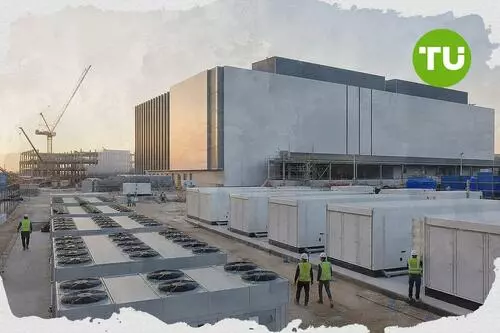
Keel Infrastructure has completely shut down its Bitcoin mining operations in the U.S. to prepare its sites for the construction of high-performance computing (HPC) infrastructure. The company disclosed the move in its second-quarter report published on Monday.
According to the document, the digital infrastructure company generated $30 million in revenue, down 50% from a year earlier. The decline was mainly attributed to a lower average Bitcoin price and the shutdown of mining operations in Moses Lake in April 2026.
Keel posted an operating loss of $141 million. By comparison, the company reported operating income of $11 million in the same period last year. The loss included $84 million in non-cash depreciation expenses.
A radical shift
Keel has become one of the few companies in the industry to completely exit Bitcoin mining in the U.S. as it transitions toward HPC infrastructure. Bit Digital and Crusoe have previously taken similar steps. More broadly, an increasing number of mining companies are diversifying their businesses and redirecting capacity toward AI and high-performance computing.
As of Friday, Keel held 1,861 Bitcoin. Since April 1, the company has sold 1,085 BTC for approximately $75 million as part of the gradual wind-down of its cryptocurrency holdings.
Keel had around $819 million in liquidity, including $698 million in unrestricted cash.
Following the earnings release, Keel shares fell 12% on Monday.
How significant was the company in Bitcoin mining?
Before rebranding as Keel Infrastructure, the company operated under the Bitfarms name and was considered one of the larger publicly traded Bitcoin miners. At its peak in late March 2025, its hashrate under management reached 19.5 EH/s, while the total Bitcoin network hashrate stood at around 812.5 EH/s. That means Bitfarms' infrastructure accounted for roughly 2.4% of the network's total computing power. However, the company's figure also included capacity hosted for third-party customers, meaning Bitfarms' own share was somewhat lower.
In terms of scale, Bitfarms was a significant but not dominant industry player. For comparison, MARA had 54.3 EH/s in March 2025, while CleanSpark's average hashrate stood at 40.2 EH/s. In other words, the future Keel was roughly two to three times smaller than the industry leaders, but it still controlled a meaningful amount of computing capacity. That makes its complete exit from U.S. Bitcoin mining in favor of HPC and AI a major strategic pivot rather than the withdrawal of a small niche operator.
As a reminder, Keel Infrastructure reported a net loss in the first quarter.






Latest AI News



-
 Afghanistan
-
 Albania
-
 Algeria
-
 Angola
-
 Argentina
-
 Armenia
-
 Australia
-
 Austria
-
 Azerbaijan
-
 Bahamas
-
 Bahrain
-
 Bangladesh
-
 Belarus
-
 Belgium
-
 Bolivia
-
 Botswana
-
 Brazil
-
 Brunei
-
 Bulgaria
-
 Cambodia
-
 Cameroon
-
 Canada
-
 Chile
-
 China
-
 Colombia
-
 Congo
-
 Costa Rica
-
 Cote d'Ivoire
-
 Croatia
-
 Cuba
-
 Cyprus
-
 Czechia
-
 DR Congo
-
 Denmark
-
 Dominican Republic
-
 Ecuador
-
 Egypt
-
 El Salvador
-
 Estonia
-
 Eswatini
-
 Ethiopia
-
 Finland
-
 France
-
 Georgia
-
 Germany
-
 Ghana
-
 Greece
-
 Haiti
-
 Hong Kong
-
 Hungary
-
 India
-
 Indonesia
-
 Iran, Islamic republic
-
 Iraq
-
 Ireland
-
 Israel
-
 Italy
-
 Jamaica
-
 Japan
-
 Jordan
-
 Kazakhstan
-
 Kenya
-
 Korea
-
 Kuwait
-
 Kyrgyzstan
-
 Laos
-
 Latvia
-
 Lebanon
-
 Lesotho
-
 Libya
-
 Lithuania
-
 Luxembourg
-
 Madagascar
-
 Malaysia
-
 Malta
-
 Mauritius
-
 Mexico
-
 Moldova
-
 Mongolia
-
 Montenegro
-
 Morocco
-
 Mozambique
-
 Myanmar
-
 Namibia
-
 Nepal
-
 Netherlands
-
 New Zealand
-
 Nigeria
-
 North Macedonia
-
 Norway
-
 Oman
-
 Pakistan
-
 Palestine
-
 Panama
-
 Papua New Guinea
-
 Paraguay
-
 Peru
-
 Philippines
-
 Poland
-
 Portugal
-
 Puerto Rico
-
 Qatar
-
 Reunion
-
 Romania
-
 Rwanda
-
 Saudi Arabia
-
 Serbia
-
 Singapore
-
 Slovakia
-
 Slovenia
-
 Somalia
-
 South Africa
-
 Spain
-
 Sri Lanka
-
 Sweden
-
 Switzerland
-
 Syria
-
 Taiwan
-
 Tajikistan
-
 Tanzania
-
 Thailand
-
 Trinidad and Tobago
-
 Tunisia
-
 Turkey
-
 UAE
-
 Uganda
-
 Ukraine
-
 United Kingdom
-
United States
-
 Uruguay
-
 Uzbekistan
-
 Venezuela
-
 Vietnam
-
 Yemen
-
 Zambia
-
 Zimbabwe
- Forex
- Crypto












