

Bitcoin slips after U.S. inflation exceeds expectations, with Treasury yield rise reducing speculative appetite

Bitcoin (BTC) continues to trade below recent highs after U.S. inflation figures for October came in above expectations, adding to macroeconomic uncertainty. The sustained pressure on risk assets has resulted in a modest downward move for BTC, with traders closely watching central bank signals.
 68446.21
76200.00
Highlights
- Bitcoin dropped below $74,000 as U.S. October inflation exceeded expectations for a third straight month.
- Institutional demand for Bitcoin has stayed muted, dampening prospects for a sustained rally without inflation relief or improved global risk sentiment.
- Technicals show Bitcoin trading below key moving averages with strong downside momentum and resistance near $74,464, indicating limited short-term upside.
Hot U.S. inflation data fuels Fed rate hike speculation
According to Decrypt, on November 10, 2026, Bitcoin fell below $74,000 after U.S. inflation data for October came in hotter than anticipated for the third consecutive month, raising expectations that the Federal Reserve may raise interest rates at its December meeting.
The prospect of tighter monetary policy has led to higher U.S. Treasury yields and a stronger dollar, reducing liquidity and speculative activity in the crypto market. This environment has historically limited demand for BTC as risk appetite declines.
Decrypt also reported that institutional demand for BTC has remained weak in recent sessions, further challenging the likelihood of a sustained rebound unless U.S. inflation moderates or global risk sentiment improves.
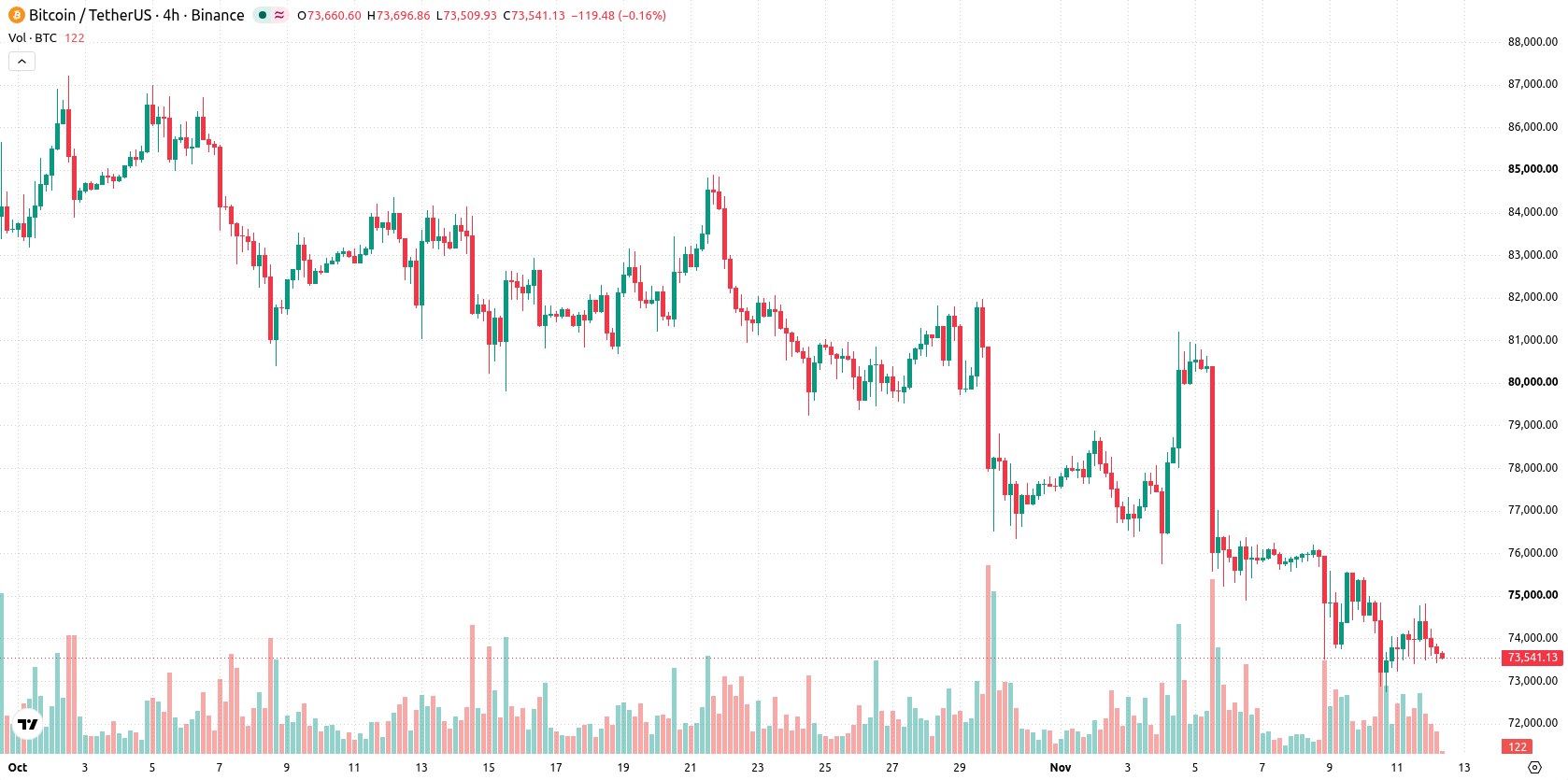
BTC stuck below 4H moving averages as macro risk looms
With the macro environment weighing on risk assets, the BTC 4-hour chart shows the price trading below its 50- and 200-period SMAs, reflecting ongoing downside momentum. The H4 Kijun remains positioned above the current price, indicating a technical resistance level that aligns with broader market caution.
Both the MACD and ADX on this timeframe signal a strong sell bias, confirming that BTC continues to face downward pressure. The absence of a bullish crossover and persistent resistance at recent levels suggest limited upside potential unless external sentiment shifts.
Further tightening would keep pressure; watch for break above $74,464
Further indications of U.S. inflationary pressure or hawkish central bank signals could put continued stress on BTC, especially if Treasury yields remain elevated. A decisive move above the H4 Kijun resistance around $74,464 would be required to reduce immediate downside risk. Until then, macro and technical conditions argue for caution as tightening policies dominate the backdrop.
Earlier, analysts noted that bitcoin remained range-bound with downside risks amid ongoing ETF outflows, miner reserve reductions, and evolving blockchain security measures. The latest move lower, driven by persistently high U.S. inflation data and speculation around Federal Reserve policy, reinforces the need to monitor inflationary signals and central bank actions as the primary catalysts for any significant shift in BTC’s trajectory.






Latest Bitcoin News





-
 Afghanistan
-
 Albania
-
 Algeria
-
 Angola
-
 Argentina
-
 Armenia
-
 Australia
-
 Austria
-
 Azerbaijan
-
 Bahamas
-
 Bahrain
-
 Bangladesh
-
 Belarus
-
 Belgium
-
 Bolivia
-
 Botswana
-
 Brazil
-
 Brunei
-
 Bulgaria
-
 Cambodia
-
 Cameroon
-
 Canada
-
 Chile
-
 China
-
 Colombia
-
 Congo
-
 Costa Rica
-
 Cote d'Ivoire
-
 Croatia
-
 Cuba
-
 Cyprus
-
 Czechia
-
 DR Congo
-
 Denmark
-
 Dominican Republic
-
 Ecuador
-
 Egypt
-
 El Salvador
-
 Estonia
-
 Eswatini
-
 Ethiopia
-
 Finland
-
 France
-
 Georgia
-
 Germany
-
 Ghana
-
 Greece
-
 Haiti
-
 Hong Kong
-
 Hungary
-
 India
-
 Indonesia
-
 Iran, Islamic republic
-
 Iraq
-
 Ireland
-
 Israel
-
 Italy
-
 Jamaica
-
 Japan
-
 Jordan
-
 Kazakhstan
-
 Kenya
-
 Korea
-
 Kuwait
-
 Kyrgyzstan
-
 Laos
-
 Latvia
-
 Lebanon
-
 Lesotho
-
 Libya
-
 Lithuania
-
 Luxembourg
-
 Madagascar
-
 Malaysia
-
 Malta
-
 Mauritius
-
 Mexico
-
 Moldova
-
 Mongolia
-
 Montenegro
-
 Morocco
-
 Mozambique
-
 Myanmar
-
 Namibia
-
 Nepal
-
 Netherlands
-
 New Zealand
-
 Nigeria
-
 North Macedonia
-
 Norway
-
 Oman
-
 Pakistan
-
 Palestine
-
 Panama
-
 Papua New Guinea
-
 Paraguay
-
 Peru
-
 Philippines
-
 Poland
-
 Portugal
-
 Puerto Rico
-
 Qatar
-
 Reunion
-
 Romania
-
 Rwanda
-
 Saudi Arabia
-
 Serbia
-
 Singapore
-
 Slovakia
-
 Slovenia
-
 Somalia
-
 South Africa
-
 Spain
-
 Sri Lanka
-
 Sweden
-
 Switzerland
-
 Syria
-
 Taiwan
-
 Tajikistan
-
 Tanzania
-
 Thailand
-
 Trinidad and Tobago
-
 Tunisia
-
 Turkey
-
 UAE
-
 Uganda
-
 Ukraine
-
 United Kingdom
-
United States
-
 Uruguay
-
 Uzbekistan
-
 Venezuela
-
 Vietnam
-
 Yemen
-
 Zambia
-
 Zimbabwe
- Forex
- Crypto












