

Higher inflation keeps Solana pressured amid rising rate fears and persistent outflows from risk assets

Solana (SOL) is trading lower as of November 12, 2026, with price action reflecting market caution amid shifting macroeconomic conditions. Market sentiment remains sensitive to U.S. monetary policy expectations and risk appetite, with technical positioning below key moving averages. Traders are watching inflation trends and associated policy signals for any shift in risk asset flows.
 73.28
88.46
Highlights
- SOL and other major cryptocurrencies fell more than 6% after U.S. inflation data increased expectations for Federal Reserve rate hikes.
- Crypto markets moved quickly as investors adjusted capital allocation in response to changing inflation and policy expectations.
- SOL trades below key moving averages with bearish technical signals, needing to reclaim $85.68 resistance for signs of stabilization.
U.S. inflation surprises drive outflows from risk assets
According to FXStreet, on November 10, 2026, SOL and other major cryptocurrencies declined by more than 6% after a higher-than-expected U.S. inflation report increased the likelihood of additional Federal Reserve rate hikes.
The report drove capital out of risk assets as investors reassessed exposure in the face of potentially higher interest rates, underscoring the sensitivity of crypto markets to macroeconomic policy expectations.
This response highlighted the conditional nature of crypto volatility, with capital allocation shifting quickly when policy expectations or inflation signals change, limiting any immediate stabilization in SOL's trend.
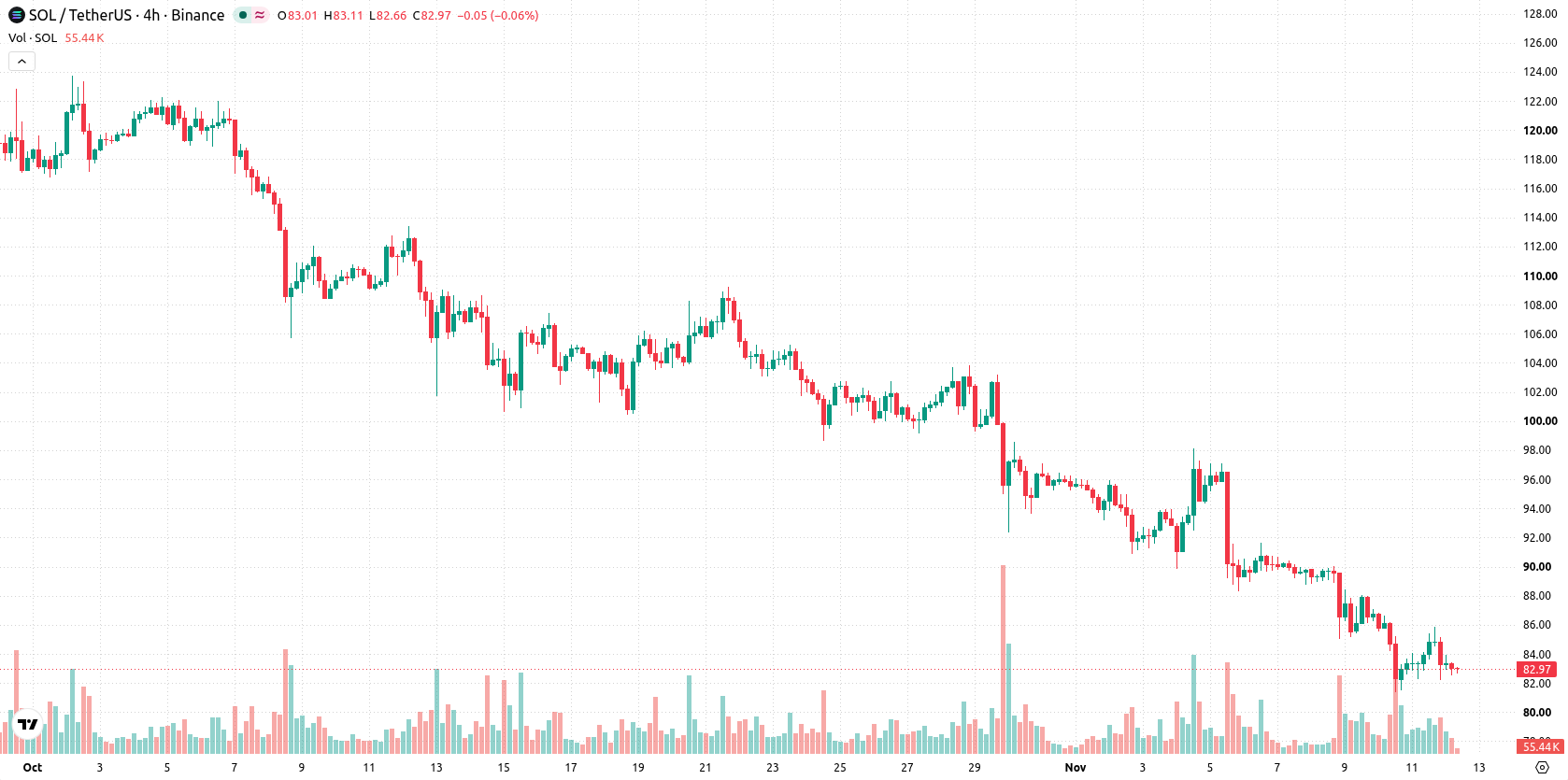
SOL remains below 4H moving averages after macro-driven drop
On the 4H chart, SOL continues to trade below its primary simple moving averages of 50 and 200 periods, reflecting lingering weak momentum since the U.S. inflation-driven selloff. The H4 Kijun at $85.68 remains overhead as a resistance level, confirming that buyers have yet to regain control over short-term direction.
Bearish signals are reinforced by a negative MACD reading and a strong bearish ADX, with no contravening signals from short-term momentum indicators. Immediate technical stabilization would require a break above resistance and sustained trading above key moving averages.
Persistent inflation risk pressures SOL unless resistance is overcome
If U.S. inflation and Federal Reserve rate-hike expectations remain elevated, SOL and other risk assets could continue to face outflows. A recovery scenario would require a decline in inflation risks or policy normalization, paired with SOL reclaiming resistance at $85.68. Stabilization above this level could reduce downside risk, while persistent macro headwinds would likely keep price action defensive.
Previously it was reported that Solana faced ongoing bearish pressure amid institutional outflows, with technicals suggesting continued downside risks. The current article reinforces this cautious outlook, emphasizing that further direction will hinge on developments in U.S. inflation expectations and Federal Reserve policy signals.









-
 Afghanistan
-
 Albania
-
 Algeria
-
 Angola
-
 Argentina
-
 Armenia
-
 Australia
-
 Austria
-
 Azerbaijan
-
 Bahamas
-
 Bahrain
-
 Bangladesh
-
 Belarus
-
 Belgium
-
 Bolivia
-
 Botswana
-
 Brazil
-
 Brunei
-
 Bulgaria
-
 Cambodia
-
 Cameroon
-
 Canada
-
 Chile
-
 China
-
 Colombia
-
 Congo
-
 Costa Rica
-
 Cote d'Ivoire
-
 Croatia
-
 Cuba
-
 Cyprus
-
 Czechia
-
 DR Congo
-
 Denmark
-
 Dominican Republic
-
 Ecuador
-
 Egypt
-
 El Salvador
-
 Estonia
-
 Eswatini
-
 Ethiopia
-
 Finland
-
 France
-
 Georgia
-
 Germany
-
 Ghana
-
 Greece
-
 Haiti
-
 Hong Kong
-
 Hungary
-
 India
-
 Indonesia
-
 Iran, Islamic republic
-
 Iraq
-
 Ireland
-
 Israel
-
 Italy
-
 Jamaica
-
 Japan
-
 Jordan
-
 Kazakhstan
-
 Kenya
-
 Korea
-
 Kuwait
-
 Kyrgyzstan
-
 Laos
-
 Latvia
-
 Lebanon
-
 Lesotho
-
 Libya
-
 Lithuania
-
 Luxembourg
-
 Madagascar
-
 Malaysia
-
 Malta
-
 Mauritius
-
 Mexico
-
 Moldova
-
 Mongolia
-
 Montenegro
-
 Morocco
-
 Mozambique
-
 Myanmar
-
 Namibia
-
 Nepal
-
 Netherlands
-
 New Zealand
-
 Nigeria
-
 North Macedonia
-
 Norway
-
 Oman
-
 Pakistan
-
 Palestine
-
 Panama
-
 Papua New Guinea
-
 Paraguay
-
 Peru
-
 Philippines
-
 Poland
-
 Portugal
-
 Puerto Rico
-
 Qatar
-
 Reunion
-
 Romania
-
 Rwanda
-
 Saudi Arabia
-
 Serbia
-
 Singapore
-
 Slovakia
-
 Slovenia
-
 Somalia
-
 South Africa
-
 Spain
-
 Sri Lanka
-
 Sweden
-
 Switzerland
-
 Syria
-
 Taiwan
-
 Tajikistan
-
 Tanzania
-
 Thailand
-
 Trinidad and Tobago
-
 Tunisia
-
 Turkey
-
 UAE
-
 Uganda
-
 Ukraine
-
 United Kingdom
-
United States
-
 Uruguay
-
 Uzbekistan
-
 Venezuela
-
 Vietnam
-
 Yemen
-
 Zambia
-
 Zimbabwe
- Forex
- Crypto












