

US inflation surprise amplifies ETF outflows and liquidation risk context for Ethereum

Ethereum (ETH) is trading at $1,907 and moved lower by 6.82% at the quoted time. A hotter-than-expected US inflation print on November 11, 2026, revived fears of Federal Reserve interest rate hikes and pressured ETH's value. Market participants are monitoring upcoming inflation releases and central bank policy signals amid renewed risk aversion in speculative assets.
 1936.49
2246.00
Highlights
- Ethereum dropped below $2,100 after US inflation data exceeded forecasts, triggering renewed concerns around further Federal Reserve rate increases.
- ETF outflows and liquidations intensified price declines as investors exited risk assets and unwound leveraged positions in response to inflation worries.
- ETH trades below major moving averages with strong selling momentum, and sustained pressure is likely unless price reclaims $2,108 resistance.
US inflation surprise drives Ethereum ETF outflows and liquidations
According to Crypto, on November 11, 2026, Ethereum's price dropped below $2,100 after US inflation data came in higher than forecast, renewing concerns about further Federal Reserve interest rate increases. The inflation surprise prompted significant outflows from Ethereum-based ETFs as well as a wave of leveraged position liquidations, contributing to broad selling pressure.
Rising inflation expectations increased the likelihood of higher policy rates, which can make riskier assets like ETH less appealing compared to yield-bearing alternatives. This heightened the outflow from institutional products and forced the unwinding of leveraged positions, intensifying both price declines and volatility.
ETF outflows and liquidations amplified the initial reaction, reinforcing sensitivity to US macroeconomic data. The risk context remains closely tied to the persistence of inflationary pressures and central bank policy outlooks.
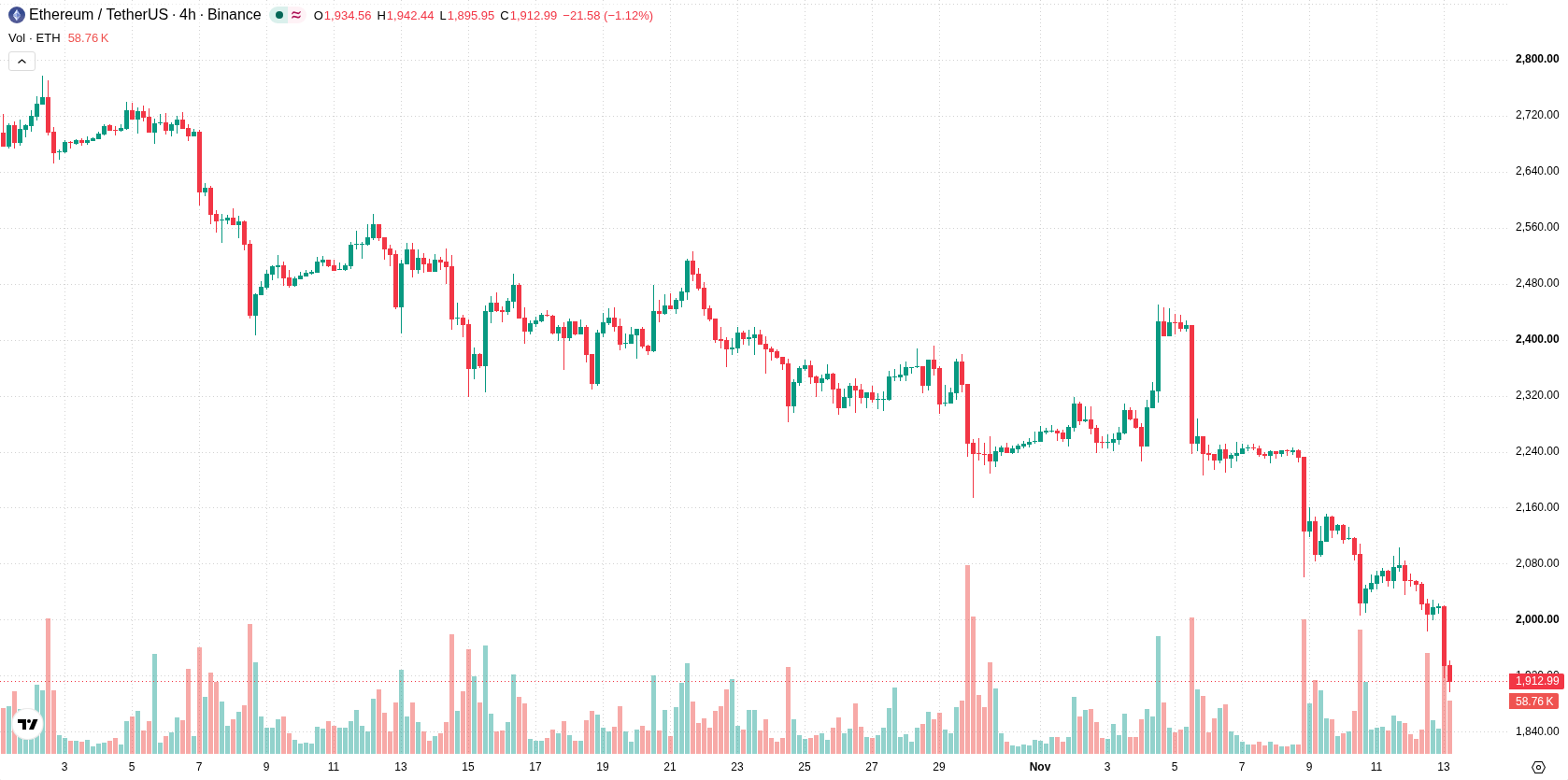
Bearish momentum deepens as ETH trades below key 4H averages
On the 4-hour chart, ETH is positioned below the 50- and 200-period SMAs, highlighting a clear bearish bias as the price consolidates beneath key moving averages.
The MACD and ADX both signal strong selling momentum, indicating that bearish control is pronounced. The Kijun line at $2,108 remains a notable resistance zone for any short-term recovery attempts.
Persistent inflation or Fed tightening could extend selling risks
Further increases in US inflation or hawkish Federal Reserve policy would likely exacerbate price and capital outflow risks for ETH. If ETH remains below the Kijun resistance around $2,108, selling pressure could persist. A move above this level would be required to signal any short-term stabilization. Ongoing focus will remain on US macro releases and Fed communications.
Earlier, analysts noted that elevated U.S. inflation and capital outflows from cryptocurrency funds had been weighing on Ethereum's market performance. The latest data adds urgency to this trend, with renewed inflation surprises and Federal Reserve policy expectations expected to shape ETH's next moves.











-
 Afghanistan
-
 Albania
-
 Algeria
-
 Angola
-
 Argentina
-
 Armenia
-
 Australia
-
 Austria
-
 Azerbaijan
-
 Bahamas
-
 Bahrain
-
 Bangladesh
-
 Belarus
-
 Belgium
-
 Bolivia
-
 Botswana
-
 Brazil
-
 Brunei
-
 Bulgaria
-
 Cambodia
-
 Cameroon
-
 Canada
-
 Chile
-
 China
-
 Colombia
-
 Congo
-
 Costa Rica
-
 Cote d'Ivoire
-
 Croatia
-
 Cuba
-
 Cyprus
-
 Czechia
-
 DR Congo
-
 Denmark
-
 Dominican Republic
-
 Ecuador
-
 Egypt
-
 El Salvador
-
 Estonia
-
 Eswatini
-
 Ethiopia
-
 Finland
-
 France
-
 Georgia
-
 Germany
-
 Ghana
-
 Greece
-
 Haiti
-
 Hong Kong
-
 Hungary
-
 India
-
 Indonesia
-
 Iran, Islamic republic
-
 Iraq
-
 Ireland
-
 Israel
-
 Italy
-
 Jamaica
-
 Japan
-
 Jordan
-
 Kazakhstan
-
 Kenya
-
 Korea
-
 Kuwait
-
 Kyrgyzstan
-
 Laos
-
 Latvia
-
 Lebanon
-
 Lesotho
-
 Libya
-
 Lithuania
-
 Luxembourg
-
 Madagascar
-
 Malaysia
-
 Malta
-
 Mauritius
-
 Mexico
-
 Moldova
-
 Mongolia
-
 Montenegro
-
 Morocco
-
 Mozambique
-
 Myanmar
-
 Namibia
-
 Nepal
-
 Netherlands
-
 New Zealand
-
 Nigeria
-
 North Macedonia
-
 Norway
-
 Oman
-
 Pakistan
-
 Palestine
-
 Panama
-
 Papua New Guinea
-
 Paraguay
-
 Peru
-
 Philippines
-
 Poland
-
 Portugal
-
 Puerto Rico
-
 Qatar
-
 Reunion
-
 Romania
-
 Rwanda
-
 Saudi Arabia
-
 Serbia
-
 Singapore
-
 Slovakia
-
 Slovenia
-
 Somalia
-
 South Africa
-
 Spain
-
 Sri Lanka
-
 Sweden
-
 Switzerland
-
 Syria
-
 Taiwan
-
 Tajikistan
-
 Tanzania
-
 Thailand
-
 Trinidad and Tobago
-
 Tunisia
-
 Turkey
-
 UAE
-
 Uganda
-
 Ukraine
-
 United Kingdom
-
United States
-
 Uruguay
-
 Uzbekistan
-
 Venezuela
-
 Vietnam
-
 Yemen
-
 Zambia
-
 Zimbabwe
- Forex
- Crypto












