

Bitcoin drops as stronger U.S. inflation shapes rate hike concerns and risk sentiment

Bitcoin (BTC) is trading at $68,594, with a daily move to the downside of 6.85% as of November 13, 2026. The main pressure comes from rising U.S. inflation data, which has increased market expectations for additional Federal Reserve rate hikes. Rising yields are making it more costly to hold non-yielding assets, keeping traders focused on U.S. policy signals.
 66132.01
75599.22
Highlights
- Bitcoin dropped below $74,000 after stronger than expected U.S. inflation data increased the likelihood of Federal Reserve rate hikes.
- Higher U.S. rates increase the opportunity cost of holding Bitcoin, which does not yield income, leading to potential digital asset outflows.
- Bitcoin remains under selling pressure with technical signals staying bearish and recovery dependent on a move above resistance near $73,315.
Stronger U.S. inflation fuels rate hike expectations for Bitcoin
According to Investing.com, on November 11, 2026, Bitcoin fell below $74,000 after U.S. inflation data came in stronger than expected, making it more likely that the Federal Reserve will increase interest rates in the months ahead.
The prospect of higher rates raises the opportunity cost of holding Bitcoin, which does not generate income, as investors can receive better returns from interest-bearing assets. This dynamic tends to reduce risk appetite and can lead to outflows from digital assets when monetary policy is perceived as tightening.
With the main risk coming from U.S. policy expectations, Bitcoin’s sensitivity to macroeconomic data remains high, while no significant offsetting events have been reported.
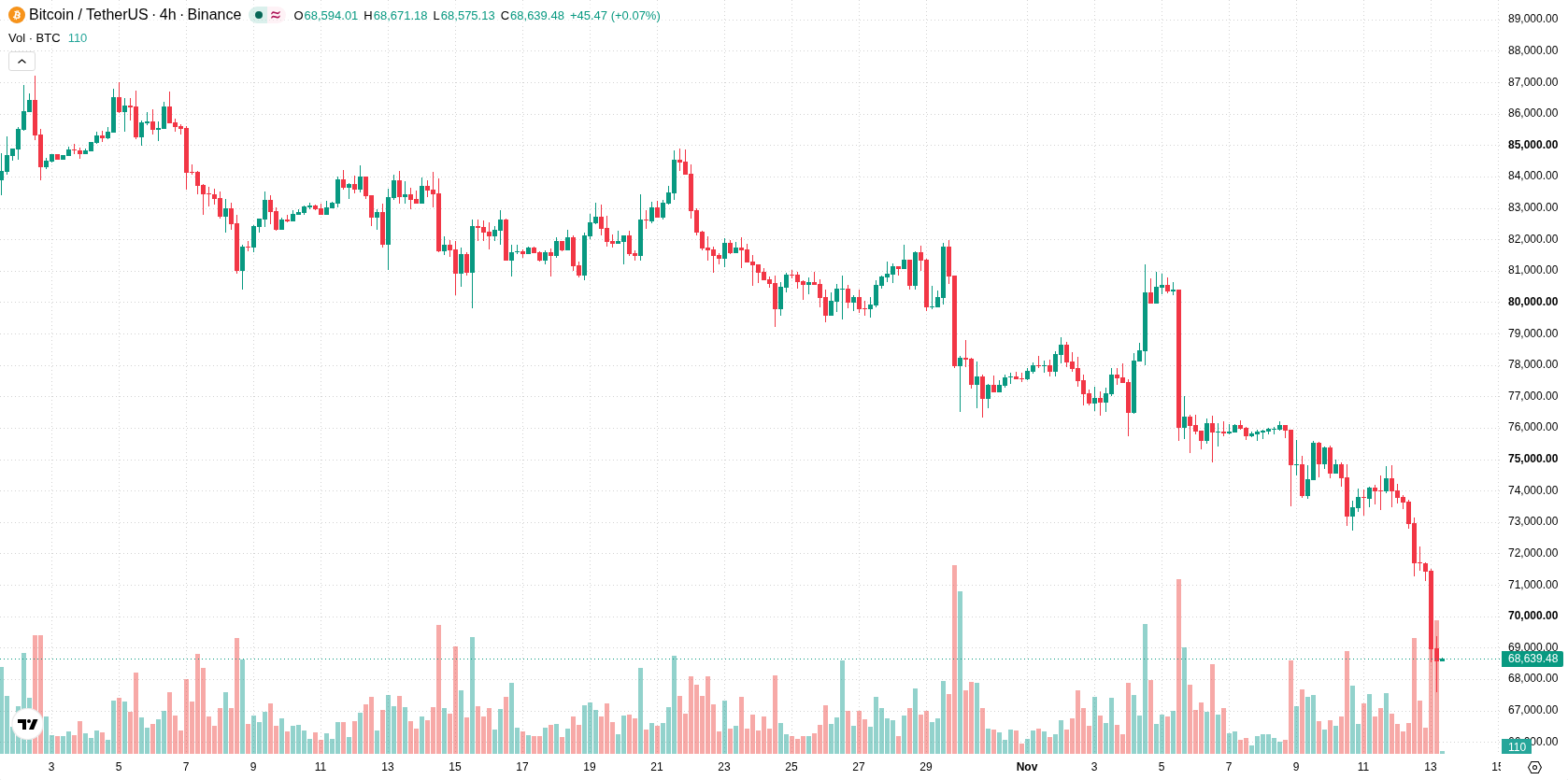
Macro pressure aligns with 4H bearish signals for BTC
On the 4H chart, BTC is positioned below its key 50- and 200-period SMAs, reflecting persistent selling pressure since the inflation news. The Kijun around $73,315 is acting as resistance, capping any attempts at a short-term rebound.
Sustained oversold conditions are indicated by the RSI sitting in that zone, while both MACD and ADX continue to signal bearish momentum. The close clustering of these technicals underscores the severity of the current downside move.
Interest rate path and $73,316 Kijun resistance shape BTC direction
Ongoing U.S. inflation readings and upcoming Federal Reserve decisions are critical external risks for BTC. Recovery would require a sustained move above the Kijun resistance around $73,316. Failing that, Bitcoin remains vulnerable to further rate-driven declines if macroeconomic headwinds persist.
Previously it was reported that Bitcoin and other cryptocurrencies faced sharp selling pressure due to U.S. dollar strength, central bank policy risks, and related macroeconomic uncertainty. The latest developments reinforce this narrative, as ongoing U.S. inflation readings and anticipated Federal Reserve decisions remain decisive factors for Bitcoin's next move.










-
 Afghanistan
-
 Albania
-
 Algeria
-
 Angola
-
 Argentina
-
 Armenia
-
 Australia
-
 Austria
-
 Azerbaijan
-
 Bahamas
-
 Bahrain
-
 Bangladesh
-
 Belarus
-
 Belgium
-
 Bolivia
-
 Botswana
-
 Brazil
-
 Brunei
-
 Bulgaria
-
 Cambodia
-
 Cameroon
-
 Canada
-
 Chile
-
 China
-
 Colombia
-
 Congo
-
 Costa Rica
-
 Cote d'Ivoire
-
 Croatia
-
 Cuba
-
 Cyprus
-
 Czechia
-
 DR Congo
-
 Denmark
-
 Dominican Republic
-
 Ecuador
-
 Egypt
-
 El Salvador
-
 Estonia
-
 Eswatini
-
 Ethiopia
-
 Finland
-
 France
-
 Georgia
-
 Germany
-
 Ghana
-
 Greece
-
 Haiti
-
 Hong Kong
-
 Hungary
-
 India
-
 Indonesia
-
 Iran, Islamic republic
-
 Iraq
-
 Ireland
-
 Israel
-
 Italy
-
 Jamaica
-
 Japan
-
 Jordan
-
 Kazakhstan
-
 Kenya
-
 Korea
-
 Kuwait
-
 Kyrgyzstan
-
 Laos
-
 Latvia
-
 Lebanon
-
 Lesotho
-
 Libya
-
 Lithuania
-
 Luxembourg
-
 Madagascar
-
 Malaysia
-
 Malta
-
 Mauritius
-
 Mexico
-
 Moldova
-
 Mongolia
-
 Montenegro
-
 Morocco
-
 Mozambique
-
 Myanmar
-
 Namibia
-
 Nepal
-
 Netherlands
-
 New Zealand
-
 Nigeria
-
 North Macedonia
-
 Norway
-
 Oman
-
 Pakistan
-
 Palestine
-
 Panama
-
 Papua New Guinea
-
 Paraguay
-
 Peru
-
 Philippines
-
 Poland
-
 Portugal
-
 Puerto Rico
-
 Qatar
-
 Reunion
-
 Romania
-
 Rwanda
-
 Saudi Arabia
-
 Serbia
-
 Singapore
-
 Slovakia
-
 Slovenia
-
 Somalia
-
 South Africa
-
 Spain
-
 Sri Lanka
-
 Sweden
-
 Switzerland
-
 Syria
-
 Taiwan
-
 Tajikistan
-
 Tanzania
-
 Thailand
-
 Trinidad and Tobago
-
 Tunisia
-
 Turkey
-
 UAE
-
 Uganda
-
 Ukraine
-
 United Kingdom
-
United States
-
 Uruguay
-
 Uzbekistan
-
 Venezuela
-
 Vietnam
-
 Yemen
-
 Zambia
-
 Zimbabwe
- Forex
- Crypto












