

Rising US yields keep Bitcoin pressured as opportunity cost rises for holding crypto

Bitcoin (BTC) is trading lower, with recent price action showing a modest pullback following a period below key resistance levels. Rising US Treasury yields have made non-yielding assets like BTC less attractive, prompting traders to monitor shifts in bond markets and risk sentiment closely.
 65696.16
75442.01
Highlights
- Bitcoin fell below $70,000 for the first time since August 2026 as rising US bond yields reduced demand for risk assets.
- Outflows from risk positions accelerated as higher US Treasury yields increased the opportunity cost of holding non-yielding assets like Bitcoin.
- Bearish technical indicators persist with Bitcoin trading below key moving averages and strong downside momentum, with $67,851 as resistance until macro pressures ease.
US bond yields pressure risk assets, dampening BTC demand
According to Bloomberg, on November 13, 2026, Bitcoin dropped below $70,000 for the first time since August as rising US bond yields and heightened risk aversion weighed on demand for riskier assets.
Higher yields in US Treasury markets increase the opportunity cost of holding Bitcoin, which does not generate income, and this has led to outflows from risk-seeking positions.
This move on November 13, 2026, reflected greater caution among investors navigating changing expectations for US rates, rather than any domestic or sector-specific factor for BTC.
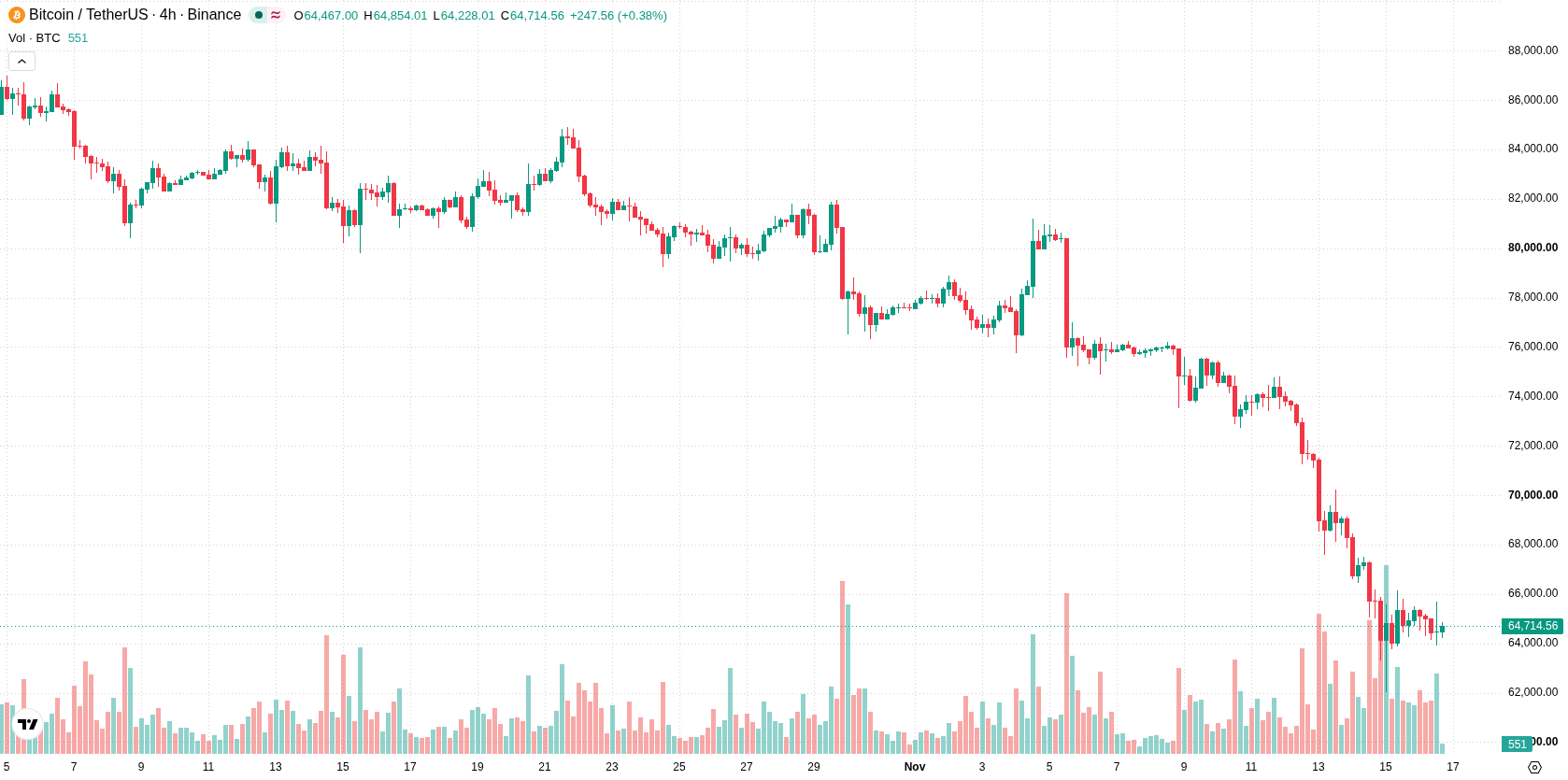
Macro risk keeps BTC below key 4H moving averages
On the 4H chart, BTC remains well below the 4H SMA-50 at $70,669 and the 4H SMA-200 at $77,625, underscoring persistent downward pressure following the macro-driven retreat.
Technical signals reinforce the bearish momentum, with the RSI in oversold territory and both MACD and ADX indicating strong sell conditions. The Kijun at $67,851 acts as a key resistance level for any potential recovery.
Bond yield trajectory remains in focus for BTC direction
BTC price action is likely to remain sensitive to further changes in US bond yields and investor risk appetite. A sustained rebound above the area around $67,851 could mark the first signal of stabilization for BTC. Until then, downside risk persists as long as macro headwinds remain in place.
Previously it was reported that Strategy significantly increased its Bitcoin holdings while also allocating substantial funds to preferred stock buybacks. The current article adds that Bitcoin remains under pressure from rising US Treasury yields, and its price direction will depend on further developments in bond markets and investor risk appetite.






Latest Bitcoin News




-
 Afghanistan
-
 Albania
-
 Algeria
-
 Angola
-
 Argentina
-
 Armenia
-
 Australia
-
 Austria
-
 Azerbaijan
-
 Bahamas
-
 Bahrain
-
 Bangladesh
-
 Belarus
-
 Belgium
-
 Bolivia
-
 Botswana
-
 Brazil
-
 Brunei
-
 Bulgaria
-
 Cambodia
-
 Cameroon
-
 Canada
-
 Chile
-
 China
-
 Colombia
-
 Congo
-
 Costa Rica
-
 Cote d'Ivoire
-
 Croatia
-
 Cuba
-
 Cyprus
-
 Czechia
-
 DR Congo
-
 Denmark
-
 Dominican Republic
-
 Ecuador
-
 Egypt
-
 El Salvador
-
 Estonia
-
 Eswatini
-
 Ethiopia
-
 Finland
-
 France
-
 Georgia
-
 Germany
-
 Ghana
-
 Greece
-
 Haiti
-
 Hong Kong
-
 Hungary
-
 India
-
 Indonesia
-
 Iran, Islamic republic
-
 Iraq
-
 Ireland
-
 Israel
-
 Italy
-
 Jamaica
-
 Japan
-
 Jordan
-
 Kazakhstan
-
 Kenya
-
 Korea
-
 Kuwait
-
 Kyrgyzstan
-
 Laos
-
 Latvia
-
 Lebanon
-
 Lesotho
-
 Libya
-
 Lithuania
-
 Luxembourg
-
 Madagascar
-
 Malaysia
-
 Malta
-
 Mauritius
-
 Mexico
-
 Moldova
-
 Mongolia
-
 Montenegro
-
 Morocco
-
 Mozambique
-
 Myanmar
-
 Namibia
-
 Nepal
-
 Netherlands
-
 New Zealand
-
 Nigeria
-
 North Macedonia
-
 Norway
-
 Oman
-
 Pakistan
-
 Palestine
-
 Panama
-
 Papua New Guinea
-
 Paraguay
-
 Peru
-
 Philippines
-
 Poland
-
 Portugal
-
 Puerto Rico
-
 Qatar
-
 Reunion
-
 Romania
-
 Rwanda
-
 Saudi Arabia
-
 Serbia
-
 Singapore
-
 Slovakia
-
 Slovenia
-
 Somalia
-
 South Africa
-
 Spain
-
 Sri Lanka
-
 Sweden
-
 Switzerland
-
 Syria
-
 Taiwan
-
 Tajikistan
-
 Tanzania
-
 Thailand
-
 Trinidad and Tobago
-
 Tunisia
-
 Turkey
-
 UAE
-
 Uganda
-
 Ukraine
-
 United Kingdom
-
United States
-
 Uruguay
-
 Uzbekistan
-
 Venezuela
-
 Vietnam
-
 Yemen
-
 Zambia
-
 Zimbabwe
- Forex
- Crypto












