The tweet was deleted by the author.
But we saved everything 🙂.


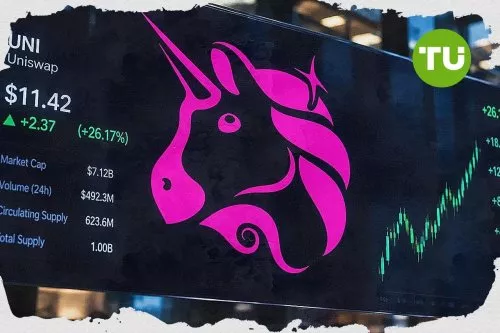
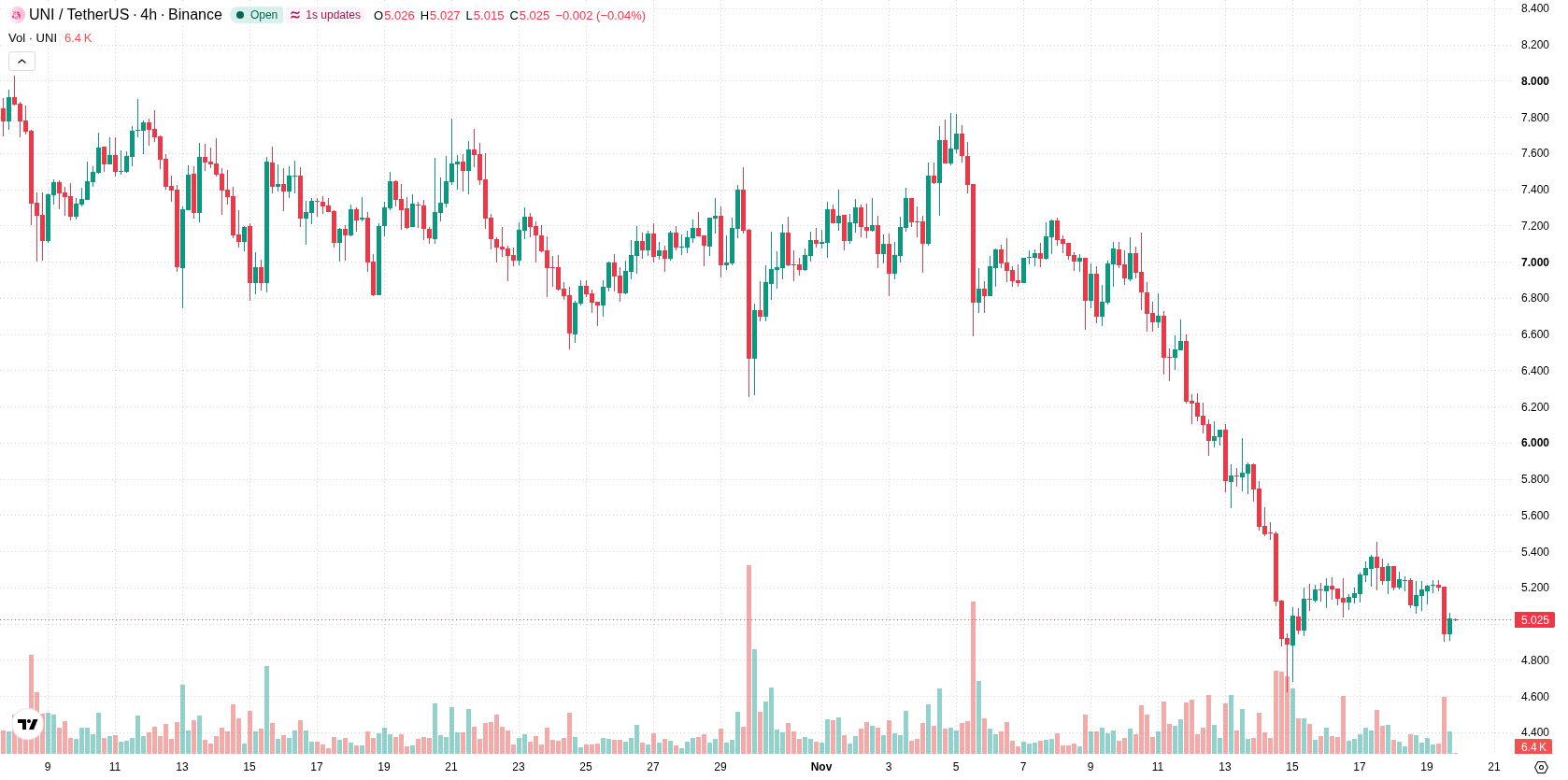
Uniswap (UNI) is trading at $5.02, down from the previous close and marking a decline both in absolute terms and percent, with session lows near $4.90 and a restricted intraday range topping out at $5.24. The price is pressured by persistent bearish technical momentum and downward moves in short- and medium-term averages, which outweigh any positive sentiment from recent product adoption or ecosystem news.
 4.711
5.3120
Hayden Adams highlighted that tokenized ANT has surpassed $10 million in trading volume on Uniswap within just a few hours, signaling robust demand and strong user engagement, which could improve protocol liquidity and reinforce community sentiment. However, despite this encouraging adoption signal, the market is focusing more on technical resistance and prevailing seller momentum, keeping price action subdued. Meanwhile, UNI’s integration with the Elysium blockchain has driven over $300 million in trading volume and is backed by a notable governance proposal to expand protocol fees and resume UNI token burns. The total value locked on Uniswap remains healthy at $3.35 billion, reflecting ongoing use of its core DeFi services.
View post on X Loading...
UNI trades well below its MA-20 ($6.42) and MA-50 ($7.15), just above MA-200 ($4.99), indicating short- and medium-term bearish pressure with dynamic support at the MA-200 and resistance at the Ichimoku Kijun ($6.22). The nearest support stands at $4.88, while resistance is at $5.18. MACD and several oscillators confirm continued downside momentum, with a forecasted 5-day trading range of $4.88 to $5.18. The tweet's fundamental optimism has not yet been reflected in price action, signaling the need for caution in the near term.
Previously it was reported that Uniswap was experiencing positive momentum and improved liquidity on the back of protocol updates and technical advances. This article provides an updated perspective, with traders advised to monitor for significant shifts in price action that could define the next short-term trend.



 Afghanistan
 Albania
 Algeria
 Angola
 Argentina
 Armenia
 Australia
 Austria
 Azerbaijan
 Bahamas
 Bahrain
 Bangladesh
 Belarus
 Belgium
 Bolivia
 Botswana
 Brazil
 Brunei
 Bulgaria
 Cambodia
 Cameroon
 Canada
 Chile
 China
 Colombia
 Congo
 Costa Rica
 Cote d'Ivoire
 Croatia
 Cuba
 Cyprus
 Czechia
 DR Congo
 Denmark
 Dominican Republic
 Ecuador
 Egypt
 El Salvador
 Estonia
 Eswatini
 Ethiopia
 Finland
 France
 Georgia
 Germany
 Ghana
 Greece
 Haiti
 Hong Kong
 Hungary
 India
 Indonesia
 Iran, Islamic republic
 Iraq
 Ireland
 Israel
 Italy
 Jamaica
 Japan
 Jordan
 Kazakhstan
 Kenya
 Korea
 Kuwait
 Kyrgyzstan
 Laos
 Latvia
 Lebanon
 Lesotho
 Libya
 Lithuania
 Luxembourg
 Madagascar
 Malaysia
 Malta
 Mauritius
 Mexico
 Moldova
 Mongolia
 Montenegro
 Morocco
 Mozambique
 Myanmar
 Namibia
 Nepal
 Netherlands
 New Zealand
 Nigeria
 North Macedonia
 Norway
 Oman
 Pakistan
 Palestine
 Panama
 Papua New Guinea
 Paraguay
 Peru
 Philippines
 Poland
 Portugal
 Puerto Rico
 Qatar
 Reunion
 Romania
 Rwanda
 Saudi Arabia
 Serbia
 Singapore
 Slovakia
 Slovenia
 Somalia
 South Africa
 Spain
 Sri Lanka
 Sweden
 Switzerland
 Syria
 Taiwan
 Tajikistan
 Tanzania
 Thailand
 Trinidad and Tobago
 Tunisia
 Turkey
 UAE
 Uganda
 Ukraine
 United Kingdom
United States
 Uruguay
 Uzbekistan
 Venezuela
 Vietnam
 Yemen
 Zambia
 Zimbabwe