

US Dollar vs Indian Rupee edges higher as foreign investment inflows and RBI support buoy rupee

US Dollar vs Indian Rupee (USD/INR) is climbing as robust foreign investment inflows and targeted Reserve Bank of India interventions buoy the rupee, propelling an intraday rebound. The advance looks limited, with the pair remaining below the 20-, 50-, and 200-day moving averages and technical signals pointing to persistent downward pressure.
 93.0227
93.1809
Highlights
- The rupee rose to an eight-month high in November, supported by record foreign equity inflows of $14.7 billion.
- Recent Reserve Bank of India tightening, including a repo rate increase to 5.5%, bolstered currency stability against rising oil prices and U.S. tariff risks.
- USD/INR remains under persistent downward pressure with indicators in oversold territory, projecting a range of ₹92.4415 to ₹93.5237 and a 75% probability of a downward move.
Foreign equity surge and RBI tightening drive rupee to eight-month high
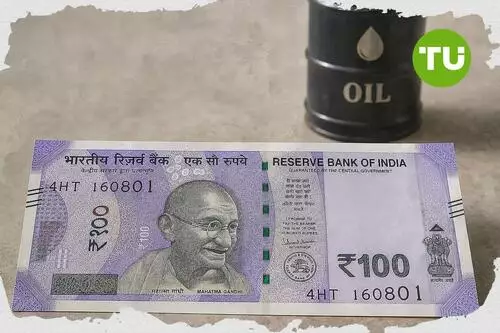
The rupee has staged a sharp recovery to an eight-month high in November, underpinned by record-setting foreign equity inflows of about $14.7 billion and Reserve Bank of India actions aimed at curbing market speculation. Recent RBI policy tightening, including an October repo rate increase to 5.50%, has supported currency stability in the face of rising crude oil prices and U.S. tariff risks. These macroeconomic dynamics, along with capital flows and external trade concerns, have been pivotal in shaping the current trajectory of the US Dollar vs Indian Rupee.
Momentum weakens as pair nears resistance and oversold signals emerge
USD/INR is trading below the 20-, 50-, and 200-day moving averages at ₹93.5173, ₹94.6413, and ₹95.0549 respectively, highlighting downward momentum across short, medium, and long-term periods. Price action is approaching near-term resistance at ₹93.0227 and support at ₹92.7256, with the Ichimoku Kijun at ₹93.7603 reinforcing a bearish outlook through medium to long-term alignment. Momentum indicators remain weak: the MACD and ADX maintain a sell bias, and intraday signals like the Bull/Bear Power and Awesome Oscillator further confirm selling dominance. The Relative Strength Index (RSI) at 27.5049, Stochastic RSI at 19.7205, and Commodity Channel Index (CCI) at -134.1942 all sit in oversold territory, suggesting conditions may be stretched and that selling exhaustion could be near, even as the pair trades near session highs following a 0.34% upside gap.
In a recent review, analysts highlighted that bullish momentum in USD/INR was tempered by technical resistance and overbought conditions, suggesting a potential for near-term consolidation. The current article signals a shift, with sustained downward momentum now dominating and traders advised to monitor for a breakdown below the ₹92.4415 support level as a cue for further downside risk.









-
 Afghanistan
-
 Albania
-
 Algeria
-
 Angola
-
 Argentina
-
 Armenia
-
 Australia
-
 Austria
-
 Azerbaijan
-
 Bahamas
-
 Bahrain
-
 Bangladesh
-
 Belarus
-
 Belgium
-
 Bolivia
-
 Botswana
-
 Brazil
-
 Brunei
-
 Bulgaria
-
 Cambodia
-
 Cameroon
-
 Canada
-
 Chile
-
 China
-
 Colombia
-
 Congo
-
 Costa Rica
-
 Cote d'Ivoire
-
 Croatia
-
 Cuba
-
 Cyprus
-
 Czechia
-
 DR Congo
-
 Denmark
-
 Dominican Republic
-
 Ecuador
-
 Egypt
-
 El Salvador
-
 Estonia
-
 Eswatini
-
 Ethiopia
-
 Finland
-
 France
-
 Georgia
-
 Germany
-
 Ghana
-
 Greece
-
 Haiti
-
 Hong Kong
-
 Hungary
-
 India
-
 Indonesia
-
 Iran, Islamic republic
-
 Iraq
-
 Ireland
-
 Israel
-
 Italy
-
 Jamaica
-
 Japan
-
 Jordan
-
 Kazakhstan
-
 Kenya
-
 Korea
-
 Kuwait
-
 Kyrgyzstan
-
 Laos
-
 Latvia
-
 Lebanon
-
 Lesotho
-
 Libya
-
 Lithuania
-
 Luxembourg
-
 Madagascar
-
 Malaysia
-
 Malta
-
 Mauritius
-
 Mexico
-
 Moldova
-
 Mongolia
-
 Montenegro
-
 Morocco
-
 Mozambique
-
 Myanmar
-
 Namibia
-
 Nepal
-
 Netherlands
-
 New Zealand
-
 Nigeria
-
 North Macedonia
-
 Norway
-
 Oman
-
 Pakistan
-
 Palestine
-
 Panama
-
 Papua New Guinea
-
 Paraguay
-
 Peru
-
 Philippines
-
 Poland
-
 Portugal
-
 Puerto Rico
-
 Qatar
-
 Reunion
-
 Romania
-
 Rwanda
-
 Saudi Arabia
-
 Serbia
-
 Singapore
-
 Slovakia
-
 Slovenia
-
 Somalia
-
 South Africa
-
 Spain
-
 Sri Lanka
-
 Sweden
-
 Switzerland
-
 Syria
-
 Taiwan
-
 Tajikistan
-
 Tanzania
-
 Thailand
-
 Trinidad and Tobago
-
 Tunisia
-
 Turkey
-
 UAE
-
 Uganda
-
 Ukraine
-
 United Kingdom
-
United States
-
 Uruguay
-
 Uzbekistan
-
 Venezuela
-
 Vietnam
-
 Yemen
-
 Zambia
-
 Zimbabwe
- Forex
- Crypto












