
The tweet was deleted by the author.
But we saved everything 🙂.
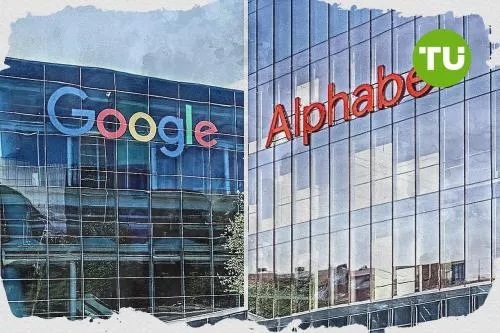
Alphabet released its quarterly report, and it came in well above expectations, especially in AI. The company’s shares jumped immediately as the market realized that massive spending on data centers, chips, and models is starting to turn into real money. But can Google become a leader in the global AI race?
Alphabet, Google’s parent company, reported first-quarter 2026 revenue of $109.9 billion, beating forecasts of $107 billion. Net income jumped 81% year over year to $62.6 billion. Following the report, GOOGL shares rose more than 6–7% in after-hours trading and continued to climb.
The main driver was Google Cloud, where most of the company’s AI products are concentrated. Revenue in the segment surged 63% to about $20 billion. Management openly admitted that enterprise AI solutions became the primary source of demand for the first time. The backlog nearly doubled to over $460 billion — future revenue already locked in through contracts.
Demand is so strong that Google can’t fully keep up. According to Alphabet CEO Sundar Pichai, the company is “compute constrained,” meaning it could generate even more revenue if it had enough data centers and chips, CNBC reports.
Just a few months ago, the market reacted negatively to Alphabet’s spending: shares fell more than 7%. At the time, the company planned to invest $175–185 billion in infrastructure, including servers, data centers, and proprietary chips. Now the range has been raised to $180–190 billion, but the reaction has changed: cloud is growing, AI is generating revenue, and investors see that spending is turning into results.
Back in the early 2020s, Google’s focus was tied to a very different area. The company experimented with blockchain via Google Cloud, ran nodes for various networks, and partnered with crypto projects like Coinbase and Chainlink.
At the same time, Google remained cautious about cryptocurrencies as a payment tool. It didn’t launch its own token, didn’t integrate crypto directly into its consumer products, and didn’t build a dedicated ecosystem around it. Even as it expanded ties with Web3 companies, this remained a service business — cloud, data, infrastructure, and developer tools.
But by early 2026, the company had largely shifted away from crypto. In March, Google Quantum AI warned that future quantum computers could break the cryptography used by most blockchains. According to its estimates, such attacks would require far fewer resources than previously thought — less than 500,000 physical qubits and only minutes of computation.
Google effectively outlined its position: the crypto industry will need to overhaul its security, move to post-quantum cryptography, and address vulnerable wallets. This doesn’t look like a market the company is willing to bet on long term. Against this backdrop, AI looked far more practical. Unlike crypto, it integrates directly into existing products — search, advertising, cloud, email, and browsers.
Alphabet is not alone in the AI race. Meta, Amazon, and Microsoft also reported their results. All are investing heavily in AI and building infrastructure, but the market reaction shows that investors are starting to distinguish between real results and promises, Bloomberg reports.
Meta, for example, raised its capital expenditure forecast to $145 billion, but its shares dropped more than 6% after the report. The key issue is the lack of clear returns: the company doesn’t have a cloud business, and its AI products have yet to show comparable engagement or monetization. Even management admits it lacks a precise roadmap.
Amazon and Microsoft look more stable, but without a breakout. AWS grew 28%, in line with expectations. Investors reacted cautiously: solid performance, but no major upside surprise. Against this backdrop, Google stood out — not only increasing spending but also delivering tangible results.
AI is already strengthening Google’s core products. In search, AI-generated answers are increasing usage, while in advertising, algorithms are improving targeting and campaign efficiency.
In cloud, the shift is even clearer: companies are no longer buying just servers — they’re buying full AI solutions, including model training, data processing, and infrastructure. That’s why enterprise demand is driving growth.
Google also controls the entire stack. It has its own TPU chips, data centers, Gemini models, and cloud platform. Now it’s starting to sell those chips to third parties, entering a market previously dominated by Nvidia.
This is what sets AI apart from crypto in Google’s story. Crypto remained an external market — with regulatory risks, uncertainty, and infrastructure experiments. AI, on the other hand, became a technology Google can embed across nearly all of its products. That’s why the market isn’t reacting to hype, but to a clear business model.

 Afghanistan
 Albania
 Algeria
 Angola
 Argentina
 Armenia
 Australia
 Austria
 Azerbaijan
 Bahamas
 Bahrain
 Bangladesh
 Belarus
 Belgium
 Bolivia
 Botswana
 Brazil
 Brunei
 Bulgaria
 Cambodia
 Cameroon
 Canada
 Chile
Chile
 China
China
 Colombia
 Congo
Congo
 Costa Rica
 Cote d'Ivoire
 Croatia
 Cuba
Cuba
 Cyprus
 Czechia
 DR Congo
 Denmark
 Dominican Republic
 Ecuador
 Egypt
Egypt
 El Salvador
 Estonia
 Eswatini
 Ethiopia
 Finland
 France
 Georgia
 Germany
 Ghana
Ghana
 Greece
 Haiti
Haiti
 Hong Kong
 Hungary
 India
India
 Indonesia
 Iran, Islamic republic
 Iraq
Iraq
 Ireland
 Israel
 Italy
Italy
 Jamaica
 Japan
Japan
 Jordan
 Kazakhstan
 Kenya
Kenya
 Korea
Korea
 Kuwait
 Kyrgyzstan
 Laos
Laos
 Latvia
 Lebanon
 Lesotho
 Libya
Libya
 Lithuania
 Luxembourg
 Madagascar
 Malaysia
 Malta
Malta
 Mauritius
 Mexico
 Moldova
 Mongolia
 Montenegro
 Morocco
 Mozambique
 Myanmar
 Namibia
 Nepal
Nepal
 Netherlands
 New Zealand
 Nigeria
 North Macedonia
 Norway
 Oman
Oman
 Pakistan
 Palestine
 Panama
 Papua New Guinea
 Paraguay
 Peru
Peru
 Philippines
 Poland
 Portugal
 Puerto Rico
 Qatar
Qatar
 Reunion
 Romania
 Rwanda
 Saudi Arabia
 Serbia
 Singapore
 Slovakia
 Slovenia
 Somalia
 South Africa
 Spain
Spain
 Sri Lanka
 Sweden
 Switzerland
 Syria
Syria
 Taiwan
 Tajikistan
 Tanzania
 Thailand
 Trinidad and Tobago
 Tunisia
 Turkey
 UAE
UAE
 Uganda
 Ukraine
 United Kingdom
United States
United Kingdom
United States
 Uruguay
 Uzbekistan
 Venezuela
 Vietnam
 Yemen
Yemen
 Zambia
 Zimbabwe