The tweet was deleted by the author.
But we saved everything 🙂.


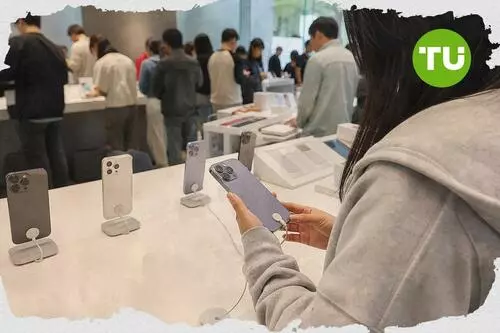
Apple unveiled its new iPhone lineup, with its first foldable smartphone emerging as the biggest surprise. The new device quickly caught the attention of the crypto industry, even though Apple itself did not say a word about digital assets. The company has been moving closer to cryptocurrencies for years, but each time stops just short of direct integration.
Yesterday, millions of viewers around the world watched the broadcast from Cupertino, where Apple unveiled its new lineup of devices. Most of the attention was focused on the iPhone Duo, the company’s first foldable smartphone. It will start at $1,999, with sales beginning on October 23.
View post on X Loading...
When folded, the iPhone Duo has a 5.4-inch display, which expands to 7.6 inches when opened. The smartphone runs on the A20 Pro chip, supports Apple Pencil, and allows users to run two apps or two windows of the same app at the same time.
Alongside the Duo, Apple introduced the iPhone 18 Pro and Pro Max. They feature the same A20 Pro chip, upgraded cameras, and improved AI capabilities. Prices start at $1,199 and $1,299, respectively.
Crypto companies reacted to the iPhone Duo almost immediately. Gemini said its services would be compatible with Apple’s new smartphone. However, the company has not announced any separate integration with Apple.
View post on X Loading...
Coinbase took a more playful approach. The exchange posted an image of the iPhone Duo with a huge monthly Bitcoin candle displayed across the unfolded screen, adding the caption: “Finally, a phone that fits last month’s candle.”
View post on X Loading...
Bitcoin Magazine also highlighted how the price of an iPhone in Bitcoin has changed over the years. According to the publication, in the early 2010s an Apple smartphone could cost dozens of BTC, while today the price is measured in hundredths of a coin.
View post on X Loading...
Although Apple still does not use cryptocurrencies in its core products, the company has been monitoring the market for years. Back in 2019, Apple Pay Vice President Jennifer Bailey said Apple was interested in digital assets and saw long-term potential in them.
That same year, Tim Cook ruled out the idea of Apple launching its own cryptocurrency. In his view, issuing money should remain the responsibility of governments, while private companies should not create their own currencies.
View post on X Loading...
Apple’s interest resurfaced in 2021. The company was looking for a business development manager for its Wallet, Payments and Commerce division, and listed experience with alternative payments, including cryptocurrencies, among the preferred qualifications.
Cook later revealed that he personally owns cryptocurrencies and considers them part of a diversified investment portfolio. At the same time, Apple had no plans to add digital assets to its balance sheet or accept them as payment for its devices, although Cook said the company was exploring other possible uses.
Apple has already opened part of the iPhone’s infrastructure to new payment scenarios. With the release of iOS 18.1, third-party developers gained access to NFC and the Secure Element, a protected component used to store payment data. Such transactions can take place directly inside third-party apps, separately from Apple Pay and Apple Wallet.
The move immediately attracted attention from crypto companies. Circle CEO Jeremy Allaire said at the time that contactless USDC payments could soon be implemented on iPhone. The process is straightforward: a payment terminal sends the smartphone a blockchain wallet address and the amount, the user confirms the transaction with Face ID, and the app sends USDC to the merchant. Circle stressed, however, that it had no direct partnership with Apple or Apple Pay.
View post on X Loading...
This means Apple does not necessarily need to add Bitcoin or USDC to Wallet for crypto payments to appear on iPhone. Third-party wallets and payment services can do it themselves if they gain access to the necessary iOS features.
Apple still does not make cryptocurrencies part of its core products, but it is gradually removing technical barriers for third-party services. Access to NFC and the Secure Element allows crypto wallets and payment apps to integrate more deeply with iPhone than they could a few years ago.
The development of crypto payments within Apple’s ecosystem now depends largely on developers and user demand. If third-party services can make paying with digital assets as simple as a standard contactless transaction, iPhone could become an important gateway for broader cryptocurrency adoption, even without a separate initiative from Apple.



 Afghanistan
 Albania
 Algeria
 Angola
 Argentina
 Armenia
 Australia
 Austria
 Azerbaijan
 Bahamas
 Bahrain
 Bangladesh
 Belarus
 Belgium
 Bolivia
 Botswana
 Brazil
 Brunei
 Bulgaria
 Cambodia
 Cameroon
 Canada
 Chile
 China
 Colombia
 Congo
 Costa Rica
 Cote d'Ivoire
 Croatia
 Cuba
 Cyprus
 Czechia
 DR Congo
 Denmark
 Dominican Republic
 Ecuador
 Egypt
 El Salvador
 Estonia
 Eswatini
 Ethiopia
 Finland
 France
 Georgia
 Germany
 Ghana
 Greece
 Haiti
 Hong Kong
 Hungary
 India
 Indonesia
 Iran, Islamic republic
 Iraq
 Ireland
 Israel
 Italy
 Jamaica
 Japan
 Jordan
 Kazakhstan
 Kenya
 Korea
 Kuwait
 Kyrgyzstan
 Laos
 Latvia
 Lebanon
 Lesotho
 Libya
 Lithuania
 Luxembourg
 Madagascar
 Malaysia
 Malta
 Mauritius
 Mexico
 Moldova
 Mongolia
 Montenegro
 Morocco
 Mozambique
 Myanmar
 Namibia
 Nepal
 Netherlands
 New Zealand
 Nigeria
 North Macedonia
 Norway
 Oman
 Pakistan
 Palestine
 Panama
 Papua New Guinea
 Paraguay
 Peru
 Philippines
 Poland
 Portugal
 Puerto Rico
 Qatar
 Reunion
 Romania
 Rwanda
 Saudi Arabia
 Serbia
 Singapore
 Slovakia
 Slovenia
 Somalia
 South Africa
 Spain
 Sri Lanka
 Sweden
 Switzerland
 Syria
 Taiwan
 Tajikistan
 Tanzania
 Thailand
 Trinidad and Tobago
 Tunisia
 Turkey
 UAE
 Uganda
 Ukraine
 United Kingdom
United States
 Uruguay
 Uzbekistan
 Venezuela
 Vietnam
 Yemen
 Zambia
 Zimbabwe