The tweet was deleted by the author.
But we saved everything 🙂.

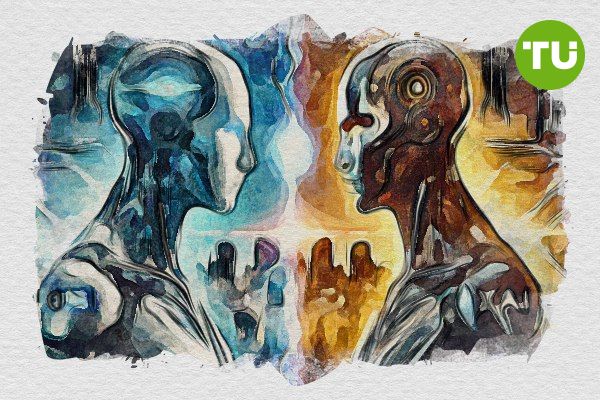
Sam Altman and Elon Musk are two Silicon Valley giants whose visions for the future of artificial intelligence have diverged so drastically that their conflict now resembles a personal vendetta.
In 2012, Jeff Ralston, a partner at Y Combinator, introduced Altman and Musk. Both entrepreneurs were passionate about the potential of artificial intelligence and dreamed of creating a safe system that would benefit humanity. In 2015, Altman proposed the idea of a «Manhattan Project» for AI. This led to the founding of OpenAI—a nonprofit organization that promised an open and transparent approach to AI development.
Initially, Musk and Altman worked together. OpenAI quickly gained momentum, attracting talented researchers and securing financial support. However, by 2017, it became clear that developing powerful AI required enormous computing resources.
According to emails published in an OpenAI blog post, both Altman and Musk agreed that the company would need to transition to a commercial model to secure funding for its next stage. However, they had fundamentally different views on how to achieve this.
Musk proposed taking control of OpenAI, investing billions, and merging the startup with Tesla, but his offer was rejected. Frustrated, he left the company in 2018, withdrew funding, and claimed that OpenAI had abandoned its ideals.
After Musk's departure, OpenAI changed its structure, becoming a commercial organization. This allowed it to attract multi-billion-dollar investments, including a strategic partnership with Microsoft. Altman justified this move as essential for growth and technological advancement, while Musk saw it as a betrayal of OpenAI’s original mission.
At the end of 2022, OpenAI released ChatGPT, sparking a revolution in AI. Musk had mixed reactions—initially praising the technology but later launching harsh criticism against OpenAI, accusing it of imposing censorship and programming AI with ideological biases. In 2023, he founded xAI and introduced his chatbot, Grok, which was marketed as an «unrestricted alternative.»
View post on X Loading...
Since then, their public clashes have become regular occurrences. Altman and Musk have frequently taken jabs at each other on social media, but the rivalry peaked in February 2025 when Musk attempted to acquire OpenAI for $97.4 billion. Altman responded with sarcasm, suggesting he could buy Twitter for $9.74 billion. Unaccustomed to rejection, Musk called him a «scammer» and accused him of manipulating OpenAI’s business model.
View post on X Loading...
In March 2024, Musk sued OpenAI, accusing the company of violating its founding agreement to develop AI for the benefit of humanity and abandoning its open-source principles. Altman and his team dismissed the allegations, arguing that commercialization was necessary for continued technological progress. According to a federal judge, at least part of the case is likely to go to trial in February 2025.
The situation became even more complex when Altman announced Stargate—a large-scale initiative to build powerful data centers for advanced AI models. The project received backing from the U.S. government and Silicon Valley’s top investors.
Musk remained skeptical, suggesting that OpenAI lacked the funding for such an ambitious project. In response, Altman invited him to visit the first Stargate site, which is already under construction.
View post on X Loading...
The conflict between Altman and Musk is not just a personal feud but a battle between two visions for the future of AI. OpenAI continues to expand its influence through its partnership with Microsoft, while Musk is striving to create a competing system with maximum open-source accessibility. Their rivalry fuels a broader global debate over who should control artificial intelligence.
This technological war is far from over. If OpenAI maintains its dominance, Musk may resort to more aggressive measures, including lawsuits and political pressure. No matter what paths Altman and Musk choose, their competition has already reshaped the future of AI—and this is just the beginning.


 Afghanistan
 Albania
 Algeria
 Angola
 Argentina
 Armenia
 Australia
 Austria
 Azerbaijan
 Bahamas
 Bahrain
 Bangladesh
 Belarus
 Belgium
 Bolivia
 Botswana
 Brazil
 Brunei
 Bulgaria
 Cambodia
 Cameroon
 Canada
 Chile
Chile
 China
China
 Colombia
 Congo
Congo
 Costa Rica
 Cote d'Ivoire
 Croatia
 Cuba
Cuba
 Cyprus
 Czechia
 DR Congo
 Denmark
 Dominican Republic
 Ecuador
 Egypt
Egypt
 El Salvador
 Estonia
 Eswatini
 Ethiopia
 Finland
 France
 Georgia
 Germany
 Ghana
Ghana
 Greece
 Haiti
Haiti
 Hong Kong
 Hungary
 India
India
 Indonesia
 Iran, Islamic republic
 Iraq
Iraq
 Ireland
 Israel
 Italy
Italy
 Jamaica
 Japan
Japan
 Jordan
 Kazakhstan
 Kenya
Kenya
 Korea
Korea
 Kuwait
 Kyrgyzstan
 Laos
Laos
 Latvia
 Lebanon
 Lesotho
 Libya
Libya
 Lithuania
 Luxembourg
 Madagascar
 Malaysia
 Malta
Malta
 Mauritius
 Mexico
 Moldova
 Mongolia
 Montenegro
 Morocco
 Mozambique
 Myanmar
 Namibia
 Nepal
Nepal
 Netherlands
 New Zealand
 Nigeria
 North Macedonia
 Norway
 Oman
Oman
 Pakistan
 Palestine
 Panama
 Papua New Guinea
 Paraguay
 Peru
Peru
 Philippines
 Poland
 Portugal
 Puerto Rico
 Qatar
Qatar
 Reunion
 Romania
 Rwanda
 Saudi Arabia
 Serbia
 Singapore
 Slovakia
 Slovenia
 Somalia
 South Africa
 Spain
Spain
 Sri Lanka
 Sweden
 Switzerland
 Syria
Syria
 Taiwan
 Tajikistan
 Tanzania
 Thailand
 Trinidad and Tobago
 Tunisia
 Turkey
 UAE
UAE
 Uganda
 Ukraine
 United Kingdom
United States
United Kingdom
United States
 Uruguay
 Uzbekistan
 Venezuela
 Vietnam
 Yemen
Yemen
 Zambia
 Zimbabwe