
Platinum price tests $1,880 as retreat deepens despite oil reversal
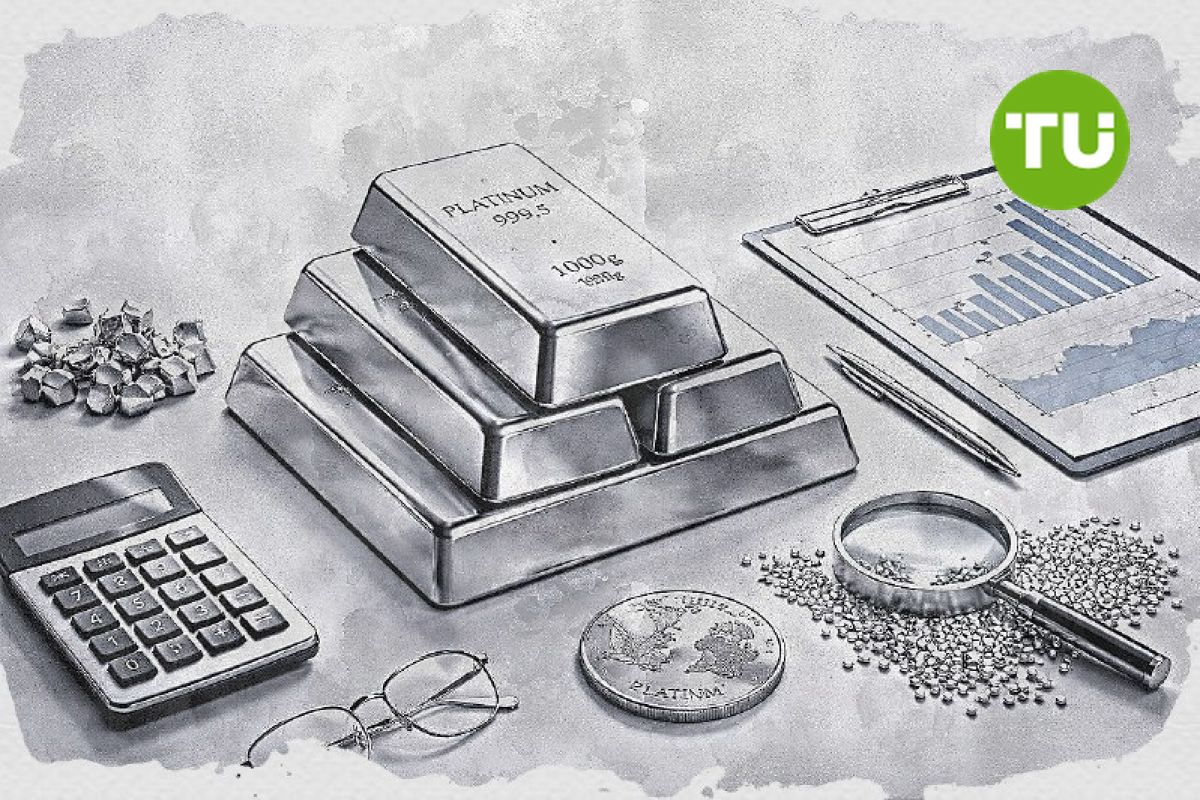
Platinum extended its slide on Monday, March 23, with spot prices trading near $1,880 after dropping through $1,900 earlier in the day, as a sharp pullback in oil failed to deliver the kind of relief that might normally steady metals. The move left platinum looking vulnerable in the near term, with investors still more focused on firm U.S. yields and the aftereffects of last week’s inflation scare than on bargain hunting.
Highlights
- Platinum traded near $1,880 after falling below $1,900 during Monday’s session.
- Brent crude slid back toward $100, but U.S. 10 year yields stayed elevated near 4.39%.
- The next chart zones in focus are $1,850 on the downside and $1,900 to $1,925 on rebounds.
The break lower has changed the tone of the XPT chart more than the daily percentage move alone suggests. Platinum is no longer just backing away from a crowded upside trade; it is now testing whether the market has enough conviction to hold anywhere below $1,900 after losing momentum so abruptly.
What stands out technically is how quickly the recent support shelf gave way once the metal started leaning lower. A rebound from here is still possible, but it would need to recover $1,900 first and then work back toward the low $1,920s before the structure begins to look less fragile.
On the other side, If sellers keep pressing and the market fails to stabilize in the high $1,800 region, traders are likely to start measuring downside risk against the $1,850 area rather than assuming the latest drop is close to exhaustion.

Platinum price dynamics (February-March 2026). Source: TradingView.
The oil shock fades but not the damage
The macro background seems a bit less hostile than it looked at the end of last week, at least on one front. Brent crude pulled back sharply after the latest geopolitical escalation cooled from previous days, but the reversal came after energy markets had already done enough damage to keep inflation nerves alive across commodities and rates.
That matters because platinum is trading in a market that has stopped giving nonyielding assets much room to breathe when Treasury yields stay high. Even with oil easing, the U.S. rates picture remained restrictive enough to keep metals under pressure, especially those without the defensive bid that sometimes cushions gold.
At the same time, the broader fundamental case for platinum has not disappeared. The metal is still tied to a market that many participants view as structurally tight, but for now that story has been pushed into the background by liquidation, position trimming and a wider repricing of inflation-sensitive assets.
Two paths from here
A steadier outcome would require the market to see more than just one sharp drop in oil. Platinum would likely need a calmer energy backdrop and some retreat in yields before buyers can rebuild confidence and push price back through $1,900 with enough follow-through to matter.
The heavier scenario is that Monday’s decline turns into another leg of the same reset, with rebounds staying brief and support getting tested again. In that case, the market may spend the next few sessions proving where fresh demand actually sits rather than assuming it will automatically appear after a steep fall.
Platinum often reacts to several forces at once, trading partly like a precious metal and partly like an industrial one. That overlap can make the price unusually sensitive when inflation fears, growth concerns and rate expectations all shift at the same time.






-
 Afghanistan
-
 Albania
-
 Algeria
-
 Angola
-
 Argentina
-
 Armenia
-
 Australia
-
 Austria
-
 Azerbaijan
-
 Bahamas
-
 Bahrain
-
 Bangladesh
-
 Belarus
-
 Belgium
-
 Bolivia
-
 Botswana
-
 Brazil
-
 Brunei
-
 Bulgaria
-
 Cambodia
-
 Cameroon
-
 Canada
-
 Chile
Chile
-
 China
China
-
 Colombia
-
 Congo
Congo
-
 Costa Rica
-
 Cote d'Ivoire
-
 Croatia
-
 Cuba
Cuba
-
 Cyprus
-
 Czechia
-
 DR Congo
-
 Denmark
-
 Dominican Republic
-
 Ecuador
-
 Egypt
Egypt
-
 El Salvador
-
 Estonia
-
 Eswatini
-
 Ethiopia
-
 Finland
-
 France
-
 Georgia
-
 Germany
-
 Ghana
Ghana
-
 Greece
-
 Haiti
Haiti
-
 Hong Kong
-
 Hungary
-
 India
India
-
 Indonesia
-
 Iran, Islamic republic
-
 Iraq
Iraq
-
 Ireland
-
 Israel
-
 Italy
Italy
-
 Jamaica
-
 Japan
Japan
-
 Jordan
-
 Kazakhstan
-
 Kenya
Kenya
-
 Korea
Korea
-
 Kuwait
-
 Kyrgyzstan
-
 Laos
Laos
-
 Latvia
-
 Lebanon
-
 Lesotho
-
 Libya
Libya
-
 Lithuania
-
 Luxembourg
-
 Madagascar
-
 Malaysia
-
 Malta
Malta
-
 Mauritius
-
 Mexico
-
 Moldova
-
 Mongolia
-
 Montenegro
-
 Morocco
-
 Mozambique
-
 Myanmar
-
 Namibia
-
 Nepal
Nepal
-
 Netherlands
-
 New Zealand
-
 Nigeria
-
 North Macedonia
-
 Norway
-
 Oman
Oman
-
 Pakistan
-
 Palestine
-
 Panama
-
 Papua New Guinea
-
 Paraguay
-
 Peru
Peru
-
 Philippines
-
 Poland
-
 Portugal
-
 Puerto Rico
-
 Qatar
Qatar
-
 Reunion
-
 Romania
-
 Rwanda
-
 Saudi Arabia
-
 Serbia
-
 Singapore
-
 Slovakia
-
 Slovenia
-
 Somalia
-
 South Africa
-
 Spain
Spain
-
 Sri Lanka
-
 Sweden
-
 Switzerland
-
 Syria
Syria
-
 Taiwan
-
 Tajikistan
-
 Tanzania
-
 Thailand
-
 Trinidad and Tobago
-
 Tunisia
-
 Turkey
-
 UAE
UAE
-
 Uganda
-
 Ukraine
-
 United Kingdom
-
United States
-
 Uruguay
-
 Uzbekistan
-
 Venezuela
-
 Vietnam
-
 Yemen
Yemen
-
 Zambia
-
 Zimbabwe
- Forex
- Crypto











