

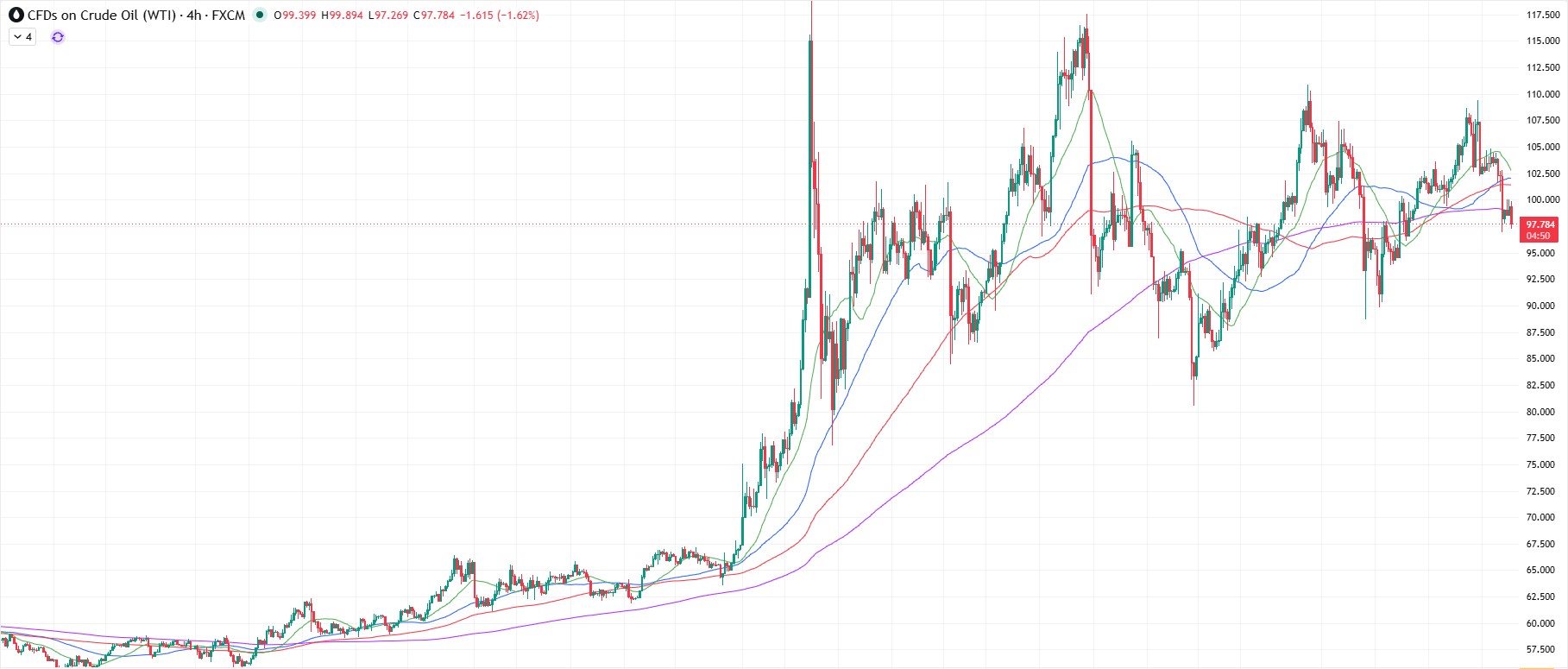
WTI (USCrude) is trading around the $97.5 per barrel level, with the recent decline driven by renewed hopes for the restoration of Middle Eastern oil supplies following optimistic statements from politicians. However, until an official agreement is announced by both the United States and Iran, it remains premature to speak about a reversal of the broader bullish trend.
U.S. inventories continue to tighten
Commercial crude oil inventories in the United States have declined for the fourth consecutive week. For the week ending May 8, stockpiles fell by 4.306 million barrels to 452.9 million barrels. Current inventories are now 0.3% below the five-year average, highlighting continued tightness in the market. Stocks at the key Cushing, Oklahoma delivery hub for WTI contracts dropped by 1.7 million barrels to 29.1 million barrels.
The Strategic Petroleum Reserve (SPR) also continued to decline, falling by 5.2 million barrels during the week to 384.1 million barrels, which is 6.6% below year-ago levels. Meanwhile, the EIA raised its U.S. oil production forecast for 2026 to 14.1 million barrels per day and increased its demand outlook by 100,000 barrels per day. The summer driving season and rising gasoline consumption are also adding pressure to distillate inventories.
Strait of Hormuz: 12 weeks of disruption and growing supply risks
Iran has effectively blocked the Strait of Hormuz for the 12th consecutive week. Roughly 20 million barrels of oil per day — about 20% of global seaborne oil trade — normally pass through this strategic route. Since the restrictions were introduced, only two tankers per day have been crossing the strait compared to the usual 60, while more than 10 oil tankers have reportedly been struck by IRGC missiles. Iraqi oil exports through Hormuz collapsed ninefold in April, dropping from 93 million to 10 million barrels and contributing to fuel shortages.
A U.S.-led coalition has launched a mission aimed at reopening the strait alongside ongoing diplomatic negotiations. President Trump stated that talks with Iran are in their final stages and that the conflict could end “very quickly,” while also warning that military strikes could resume within “two to three days” if negotiations fail. Satellite data showing three supertankers crossing the strait boosted market optimism. At the same time, Saudi Aramco warned that if flows remain restricted for several more weeks, full market normalization may not occur before 2027.
Near-term outlook
Oil market movements remain highly dependent on headlines from the Middle East as well as the overall supply-demand balance. As long as hopes for a diplomatic agreement persist, pressure on WTI prices is likely to remain, with the next bearish target potentially located near the $95 level.
At the same time, any escalation in tensions — as previously discussed in the article U.S. crude under selling pressure as ceasefire between the U.S. and Iran continues — could quickly push WTI prices back above the $100 per barrel mark.


Latest WTI News







-
 Afghanistan
-
 Albania
-
 Algeria
-
 Angola
-
 Argentina
-
 Armenia
-
 Australia
-
 Austria
-
 Azerbaijan
-
 Bahamas
-
 Bahrain
-
 Bangladesh
-
 Belarus
-
 Belgium
-
 Bolivia
-
 Botswana
-
 Brazil
-
 Brunei
-
 Bulgaria
-
 Cambodia
-
 Cameroon
-
 Canada
-
 Chile
Chile
-
 China
China
-
 Colombia
-
 Congo
Congo
-
 Costa Rica
-
 Cote d'Ivoire
-
 Croatia
-
 Cuba
Cuba
-
 Cyprus
-
 Czechia
-
 DR Congo
-
 Denmark
-
 Dominican Republic
-
 Ecuador
-
 Egypt
Egypt
-
 El Salvador
-
 Estonia
-
 Eswatini
-
 Ethiopia
-
 Finland
-
 France
-
 Georgia
-
 Germany
-
 Ghana
Ghana
-
 Greece
-
 Haiti
Haiti
-
 Hong Kong
-
 Hungary
-
 India
India
-
 Indonesia
-
 Iran, Islamic republic
-
 Iraq
Iraq
-
 Ireland
-
 Israel
-
 Italy
Italy
-
 Jamaica
-
 Japan
Japan
-
 Jordan
-
 Kazakhstan
-
 Kenya
Kenya
-
 Korea
Korea
-
 Kuwait
-
 Kyrgyzstan
-
 Laos
Laos
-
 Latvia
-
 Lebanon
-
 Lesotho
-
 Libya
Libya
-
 Lithuania
-
 Luxembourg
-
 Madagascar
-
 Malaysia
-
 Malta
Malta
-
 Mauritius
-
 Mexico
-
 Moldova
-
 Mongolia
-
 Montenegro
-
 Morocco
-
 Mozambique
-
 Myanmar
-
 Namibia
-
 Nepal
Nepal
-
 Netherlands
-
 New Zealand
-
 Nigeria
-
 North Macedonia
-
 Norway
-
 Oman
Oman
-
 Pakistan
-
 Palestine
-
 Panama
-
 Papua New Guinea
-
 Paraguay
-
 Peru
Peru
-
 Philippines
-
 Poland
-
 Portugal
-
 Puerto Rico
-
 Qatar
Qatar
-
 Reunion
-
 Romania
-
 Rwanda
-
 Saudi Arabia
-
 Serbia
-
 Singapore
-
 Slovakia
-
 Slovenia
-
 Somalia
-
 South Africa
-
 Spain
Spain
-
 Sri Lanka
-
 Sweden
-
 Switzerland
-
 Syria
Syria
-
 Taiwan
-
 Tajikistan
-
 Tanzania
-
 Thailand
-
 Trinidad and Tobago
-
 Tunisia
-
 Turkey
-
 UAE
UAE
-
 Uganda
-
 Ukraine
-
 United Kingdom
-
United States
-
 Uruguay
-
 Uzbekistan
-
 Venezuela
-
 Vietnam
-
 Yemen
Yemen
-
 Zambia
-
 Zimbabwe
- Forex
- Crypto











