
U.S. gas exports gain ground in India as Gulf supplies falter
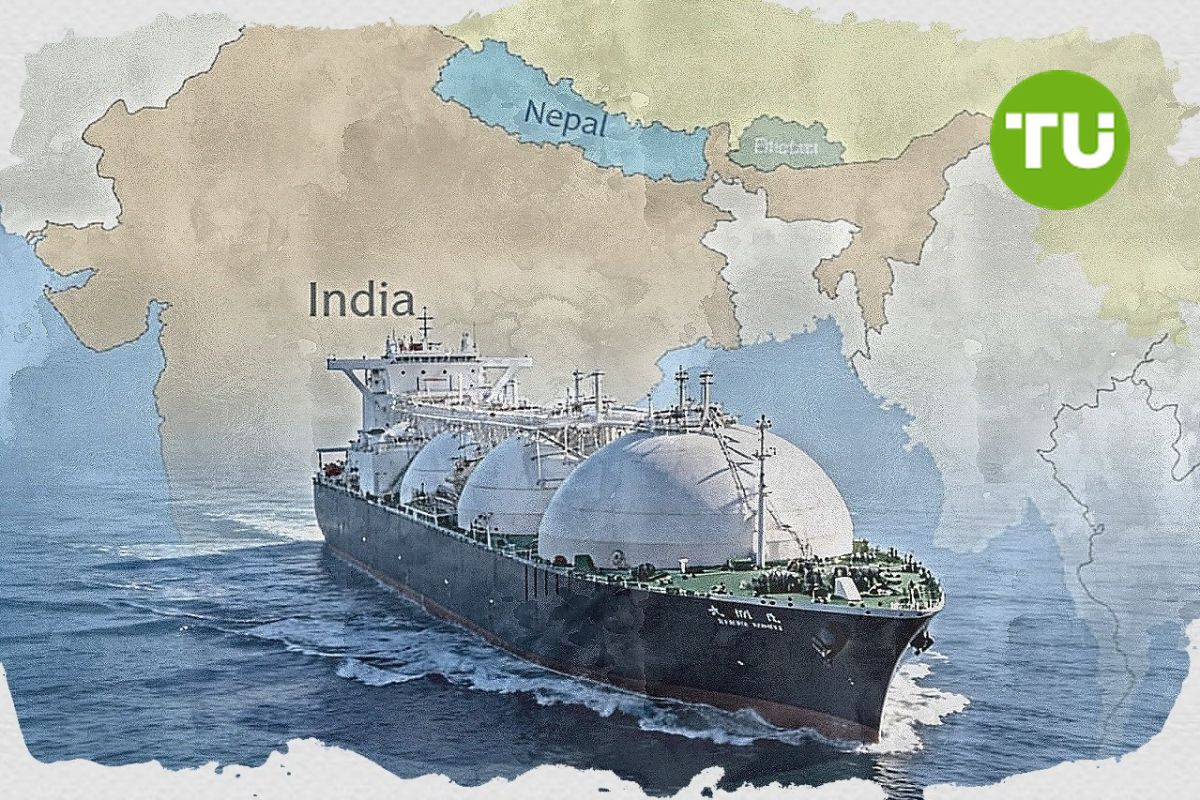
The United States has become India’s largest supplier of LNG and LPG as the war around Iran disrupts shipments from the Gulf and forces New Delhi to redraw its energy map. The shift gives Washington a larger role in India’s gas market, but it also raises costs for an economy already exposed to higher fuel prices and a weaker currency.
Highlights
- The U.S. became India’s top LNG and LPG supplier in May.
- U.S. LPG shipments reached 630,000 tonnes, above all Gulf suppliers combined.
- Hormuz disruptions pushed India away from traditional Gulf supply routes.
According to CNBC, India depends heavily on imported energy, and the Strait of Hormuz has become the weakest point in that system. Before the conflict, West Asian suppliers dominated India’s LPG imports, while Qatar, the UAE, and Oman remained central to LNG supply. Since the U.S. and Israel first struck Iran on Feb. 28, traffic through the strait has been disrupted, pushing India toward longer and more expensive supply routes.
U.S. cargoes fill the Gulf gap
The U.S. supplied 630,000 tonnes of LPG to India in May, compared with 380,000 tonnes from all Gulf countries combined. U.S. LNG exports to India reached 900,000 tonnes in May, accounting for more than 40% of India’s total requirement and tripling from April. In addition, the U.S. accounted for about 55% of India’s LPG imports in May, allowing it to overtake Gulf suppliers that had previously dominated the market.
For Washington, the shift fits a broader energy trade strategy. U.S. producers have abundant shale output and expanding export capacity, while India needs to reduce its exposure to a single maritime chokepoint. But U.S. cargoes usually face higher freight costs than Gulf shipments, making the switch a supply security decision as much as a price decision.
LNG costs move higher
The pressure is already visible in the broader LNG market. ORF analysis said spot LNG prices in Asia jumped after the conflict began, with the Platts JKM benchmark rising to about $25 per million British thermal units on March 3, before averaging above $18 per million British thermal units in late May. It also noted that longer U.S. voyages and high LNG carrier rates, above $200,000 a day in the Atlantic Basin, were eroding gas’s cost advantage over other fuels.
That matters because India is highly price sensitive. LNG feeds fertilizer plants, city gas networks, industrial users, and power demand, while LPG is used mainly as household cooking fuel. Any sustained increase in import costs can move quickly into subsidies, company margins, or consumer prices.
Energy security becomes more expensive
The U.S. supply surge gives India an immediate buffer, but it does not fully solve the structural problem. India is the world’s fourth-largest LNG importer and second-largest LPG importer, and much of that supply still depends on shipping routes exposed to geopolitical risk.
If the Hormuz disruption persists, India may buy more American gas even at a premium. That could strengthen U.S.-India energy ties, but it may also widen India’s import bill and add pressure on the rupee.
We also reported natural gas declines amid elevated inventories and weak LNG demand.





Latest Natural Gas News








-
 Afghanistan
-
 Albania
-
 Algeria
-
 Angola
-
 Argentina
-
 Armenia
-
 Australia
-
 Austria
-
 Azerbaijan
-
 Bahamas
-
 Bahrain
-
 Bangladesh
-
 Belarus
-
 Belgium
-
 Bolivia
-
 Botswana
-
 Brazil
-
 Brunei
-
 Bulgaria
-
 Cambodia
-
 Cameroon
-
 Canada
-
 Chile
Chile
-
 China
China
-
 Colombia
-
 Congo
Congo
-
 Costa Rica
-
 Cote d'Ivoire
-
 Croatia
-
 Cuba
Cuba
-
 Cyprus
-
 Czechia
-
 DR Congo
-
 Denmark
-
 Dominican Republic
-
 Ecuador
-
 Egypt
Egypt
-
 El Salvador
-
 Estonia
-
 Eswatini
-
 Ethiopia
-
 Finland
-
 France
-
 Georgia
-
 Germany
-
 Ghana
Ghana
-
 Greece
-
 Haiti
Haiti
-
 Hong Kong
-
 Hungary
-
 India
India
-
 Indonesia
-
 Iran, Islamic republic
-
 Iraq
Iraq
-
 Ireland
-
 Israel
-
 Italy
Italy
-
 Jamaica
-
 Japan
Japan
-
 Jordan
-
 Kazakhstan
-
 Kenya
Kenya
-
 Korea
Korea
-
 Kuwait
-
 Kyrgyzstan
-
 Laos
Laos
-
 Latvia
-
 Lebanon
-
 Lesotho
-
 Libya
Libya
-
 Lithuania
-
 Luxembourg
-
 Madagascar
-
 Malaysia
-
 Malta
Malta
-
 Mauritius
-
 Mexico
-
 Moldova
-
 Mongolia
-
 Montenegro
-
 Morocco
-
 Mozambique
-
 Myanmar
-
 Namibia
-
 Nepal
Nepal
-
 Netherlands
-
 New Zealand
-
 Nigeria
-
 North Macedonia
-
 Norway
-
 Oman
Oman
-
 Pakistan
-
 Palestine
-
 Panama
-
 Papua New Guinea
-
 Paraguay
-
 Peru
Peru
-
 Philippines
-
 Poland
-
 Portugal
-
 Puerto Rico
-
 Qatar
Qatar
-
 Reunion
-
 Romania
-
 Rwanda
-
 Saudi Arabia
-
 Serbia
-
 Singapore
-
 Slovakia
-
 Slovenia
-
 Somalia
-
 South Africa
-
 Spain
Spain
-
 Sri Lanka
-
 Sweden
-
 Switzerland
-
 Syria
Syria
-
 Taiwan
-
 Tajikistan
-
 Tanzania
-
 Thailand
-
 Trinidad and Tobago
-
 Tunisia
-
 Turkey
-
 UAE
UAE
-
 Uganda
-
 Ukraine
-
 United Kingdom
-
United States
-
 Uruguay
-
 Uzbekistan
-
 Venezuela
-
 Vietnam
-
 Yemen
Yemen
-
 Zambia
-
 Zimbabwe
- Forex
- Crypto











