


WTI crude oil prices remain under pressure and have fallen to their lowest levels in recent months following signs of significant progress in negotiations between the United States and Iran. The market is actively unwinding the geopolitical risk premium that had previously supported prices amid concerns over potential supply disruptions in the Middle East.
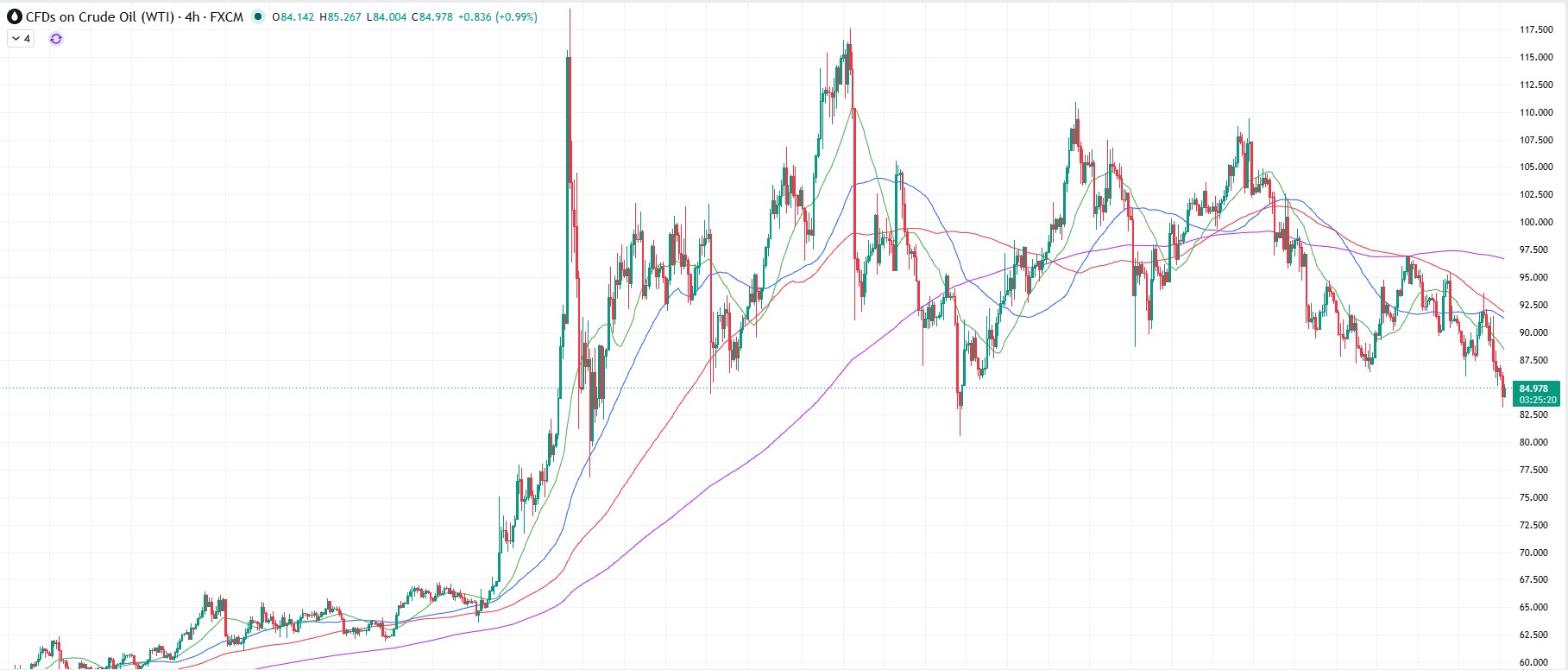
Additional downward pressure came from reports of a possible agreement that could include easing sanctions on Iran’s oil sector and a gradual normalization of shipping activity through the Strait of Hormuz.
Market prices in additional oil supply
The main driver behind the sell-off is the expectation of increased global oil supply. Investors are assessing the likelihood of additional Iranian crude returning to the market if an agreement is reached between Washington and Tehran. Against this backdrop, WTI has declined toward the $83.5–85 per barrel range, while Brent has fallen below $88 per barrel. The decline also reflects reduced concerns about potential disruptions to shipments through the Strait of Hormuz, a key route for a significant share of global oil exports.
What is limiting further downside
Despite the sharp correction, the market remains cautious. The negotiation process is still complex, and the final terms of any agreement between the United States and Iran have yet to be finalized. Any signs of a breakdown in talks or renewed tensions could quickly restore part of the geopolitical premium to oil prices. In addition, market participants continue to monitor producer policies and global inventory trends, both of which remain important factors affecting the balance between supply and demand.
Current market outlook
In the short term, WTI's direction will largely depend on further developments in the U.S.-Iran negotiations. For now, the market views diplomatic progress as a signal of reduced supply risks, which continues to weigh on prices. If both sides move toward implementing concrete agreements, the potential for further downside will remain. Otherwise, volatility could rise sharply once again.
Near-term prospects
A break below the key support level at $86.5 has worsened the outlook for WTI and suggests further downside toward the $80.5–80.0 area. Buying interest may emerge around those levels; however, any rallies amid easing tensions surrounding Iran could be viewed as selling opportunities. Only a significant escalation in the Middle East, as discussed in my article WTI declines despite escalation around Iran, is likely to bring the bulls back into the market.





Latest WTI News



-
 Afghanistan
-
 Albania
-
 Algeria
-
 Angola
-
 Argentina
-
 Armenia
-
 Australia
-
 Austria
-
 Azerbaijan
-
 Bahamas
-
 Bahrain
-
 Bangladesh
-
 Belarus
-
 Belgium
-
 Bolivia
-
 Botswana
-
 Brazil
-
 Brunei
-
 Bulgaria
-
 Cambodia
-
 Cameroon
-
 Canada
-
 Chile
Chile
-
 China
China
-
 Colombia
-
 Congo
Congo
-
 Costa Rica
-
 Cote d'Ivoire
-
 Croatia
-
 Cuba
Cuba
-
 Cyprus
-
 Czechia
-
 DR Congo
-
 Denmark
-
 Dominican Republic
-
 Ecuador
-
 Egypt
Egypt
-
 El Salvador
-
 Estonia
-
 Eswatini
-
 Ethiopia
-
 Finland
-
 France
-
 Georgia
-
 Germany
-
 Ghana
Ghana
-
 Greece
-
 Haiti
Haiti
-
 Hong Kong
-
 Hungary
-
 India
India
-
 Indonesia
-
 Iran, Islamic republic
-
 Iraq
Iraq
-
 Ireland
-
 Israel
-
 Italy
Italy
-
 Jamaica
-
 Japan
Japan
-
 Jordan
-
 Kazakhstan
-
 Kenya
Kenya
-
 Korea
Korea
-
 Kuwait
-
 Kyrgyzstan
-
 Laos
Laos
-
 Latvia
-
 Lebanon
-
 Lesotho
-
 Libya
Libya
-
 Lithuania
-
 Luxembourg
-
 Madagascar
-
 Malaysia
-
 Malta
Malta
-
 Mauritius
-
 Mexico
-
 Moldova
-
 Mongolia
-
 Montenegro
-
 Morocco
-
 Mozambique
-
 Myanmar
-
 Namibia
-
 Nepal
Nepal
-
 Netherlands
-
 New Zealand
-
 Nigeria
-
 North Macedonia
-
 Norway
-
 Oman
Oman
-
 Pakistan
-
 Palestine
-
 Panama
-
 Papua New Guinea
-
 Paraguay
-
 Peru
Peru
-
 Philippines
-
 Poland
-
 Portugal
-
 Puerto Rico
-
 Qatar
Qatar
-
 Reunion
-
 Romania
-
 Rwanda
-
 Saudi Arabia
-
 Serbia
-
 Singapore
-
 Slovakia
-
 Slovenia
-
 Somalia
-
 South Africa
-
 Spain
Spain
-
 Sri Lanka
-
 Sweden
-
 Switzerland
-
 Syria
Syria
-
 Taiwan
-
 Tajikistan
-
 Tanzania
-
 Thailand
-
 Trinidad and Tobago
-
 Tunisia
-
 Turkey
-
 UAE
UAE
-
 Uganda
-
 Ukraine
-
 United Kingdom
-
United States
-
 Uruguay
-
 Uzbekistan
-
 Venezuela
-
 Vietnam
-
 Yemen
Yemen
-
 Zambia
-
 Zimbabwe
- Forex
- Crypto












