
Unilever balances AI ambitions and weak sales
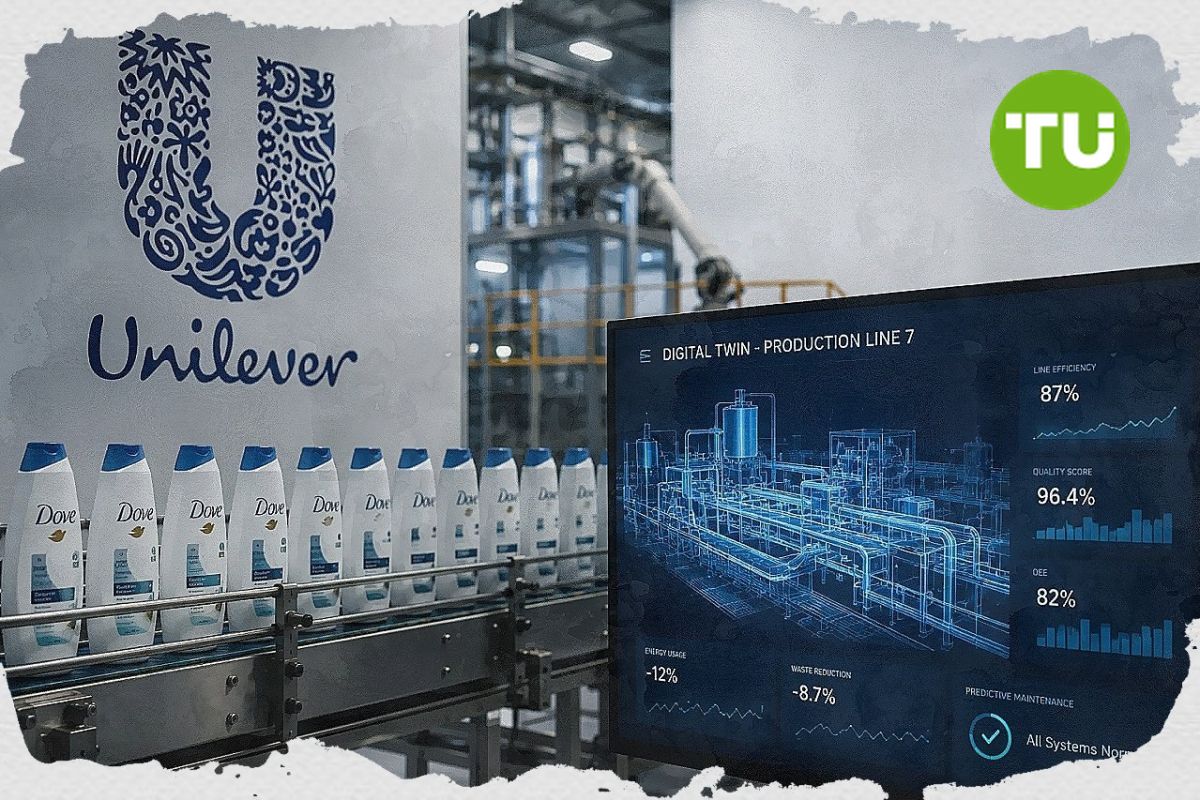
Despite its growing AI initiatives, investors remain focused on Unilever's operational challenges.
Unilever continues to accelerate its technological transformation by expanding the use of digital twins across its manufacturing facilities. The company aims to optimize production processes, improve quality control, and respond more quickly to changes in consumer demand.
For a consumer goods company, this is an important step. Unlike many AI-related stories in the technology sector, artificial intelligence at Unilever is expected to deliver tangible benefits through lower costs, more efficient supply chains, and improved operating margins rather than speculative hype.
However, the market remains cautious. Investors want to see whether digitalization can offset weak sales performance and improve financial results as early as the company's next earnings report, which is expected at the end of July.
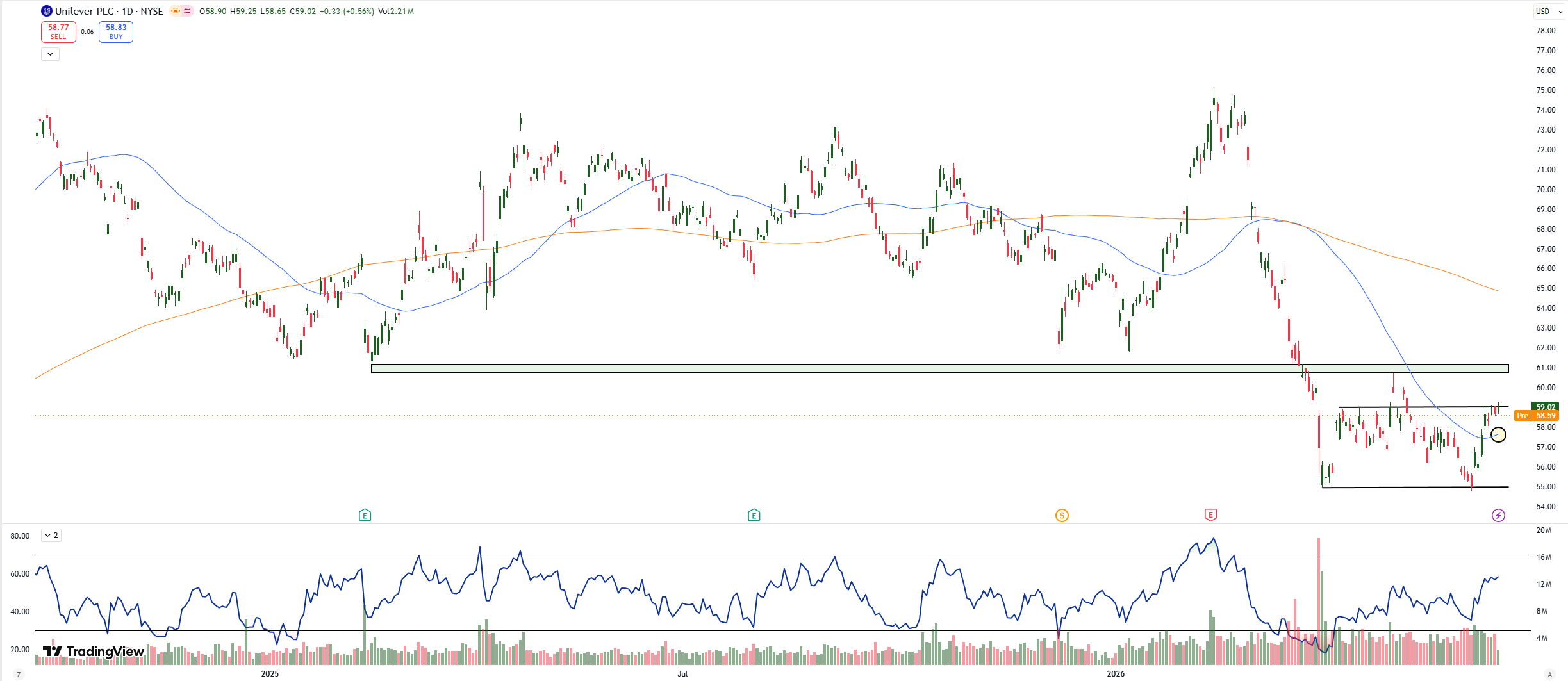
Unilever remains trapped in a consolidation range
After a sharp decline of approximately 27% from its all-time high reached in February 2026, UL shares entered a consolidation phase.
The stock has been trading within the $55–$60 range since April. On June 16, Unilever approached the local resistance level at $59, but buyers lacked sufficient momentum to break through it.
As a result, the probability of a move toward the 50-day simple moving average (SMA) has increased significantly. The near-term price target is $57.63.
If the stock breaks above $59 and successfully establishes itself above that level, the next resistance zone is expected between $60.70 and $61.20.
Debt and declining sales weigh on sentiment
Over the past 12 months, the company's revenue has declined by 13.8%, while quarterly sales have fallen by 26%. Weak sales performance remains one of the primary reasons why Unilever shares have dropped more than 20% since February 2026.
Another risk factor is the company's debt burden. Unilever's Debt-to-Equity ratio stands at 1.78, which is relatively high for the consumer goods sector and may limit the company's flexibility when implementing new strategic initiatives.
At the same time, the company's underlying fundamentals remain strong. Return on Equity (ROE) stands at 32.7%, net profit margin is 12.1%, and the dividend yield exceeds 3.7%.
These metrics continue to support long-term investor interest, but they do not eliminate concerns about the company's ability to return to sustainable sales growth.





Latest Unilever News










-
 Afghanistan
-
 Albania
-
 Algeria
-
 Angola
-
 Argentina
-
 Armenia
-
 Australia
-
 Austria
-
 Azerbaijan
-
 Bahamas
-
 Bahrain
-
 Bangladesh
-
 Belarus
-
 Belgium
-
 Bolivia
-
 Botswana
-
 Brazil
-
 Brunei
-
 Bulgaria
-
 Cambodia
-
 Cameroon
-
 Canada
-
 Chile
Chile
-
 China
China
-
 Colombia
-
 Congo
Congo
-
 Costa Rica
-
 Cote d'Ivoire
-
 Croatia
-
 Cuba
Cuba
-
 Cyprus
-
 Czechia
-
 DR Congo
-
 Denmark
-
 Dominican Republic
-
 Ecuador
-
 Egypt
Egypt
-
 El Salvador
-
 Estonia
-
 Eswatini
-
 Ethiopia
-
 Finland
-
 France
-
 Georgia
-
 Germany
-
 Ghana
Ghana
-
 Greece
-
 Haiti
Haiti
-
 Hong Kong
-
 Hungary
-
 India
India
-
 Indonesia
-
 Iran, Islamic republic
-
 Iraq
Iraq
-
 Ireland
-
 Israel
-
 Italy
Italy
-
 Jamaica
-
 Japan
Japan
-
 Jordan
-
 Kazakhstan
-
 Kenya
Kenya
-
 Korea
Korea
-
 Kuwait
-
 Kyrgyzstan
-
 Laos
Laos
-
 Latvia
-
 Lebanon
-
 Lesotho
-
 Libya
Libya
-
 Lithuania
-
 Luxembourg
-
 Madagascar
-
 Malaysia
-
 Malta
Malta
-
 Mauritius
-
 Mexico
-
 Moldova
-
 Mongolia
-
 Montenegro
-
 Morocco
-
 Mozambique
-
 Myanmar
-
 Namibia
-
 Nepal
Nepal
-
 Netherlands
-
 New Zealand
-
 Nigeria
-
 North Macedonia
-
 Norway
-
 Oman
Oman
-
 Pakistan
-
 Palestine
-
 Panama
-
 Papua New Guinea
-
 Paraguay
-
 Peru
Peru
-
 Philippines
-
 Poland
-
 Portugal
-
 Puerto Rico
-
 Qatar
Qatar
-
 Reunion
-
 Romania
-
 Rwanda
-
 Saudi Arabia
-
 Serbia
-
 Singapore
-
 Slovakia
-
 Slovenia
-
 Somalia
-
 South Africa
-
 Spain
Spain
-
 Sri Lanka
-
 Sweden
-
 Switzerland
-
 Syria
Syria
-
 Taiwan
-
 Tajikistan
-
 Tanzania
-
 Thailand
-
 Trinidad and Tobago
-
 Tunisia
-
 Turkey
-
 UAE
UAE
-
 Uganda
-
 Ukraine
-
 United Kingdom
-
United States
-
 Uruguay
-
 Uzbekistan
-
 Venezuela
-
 Vietnam
-
 Yemen
Yemen
-
 Zambia
-
 Zimbabwe
- Forex
- Crypto











