
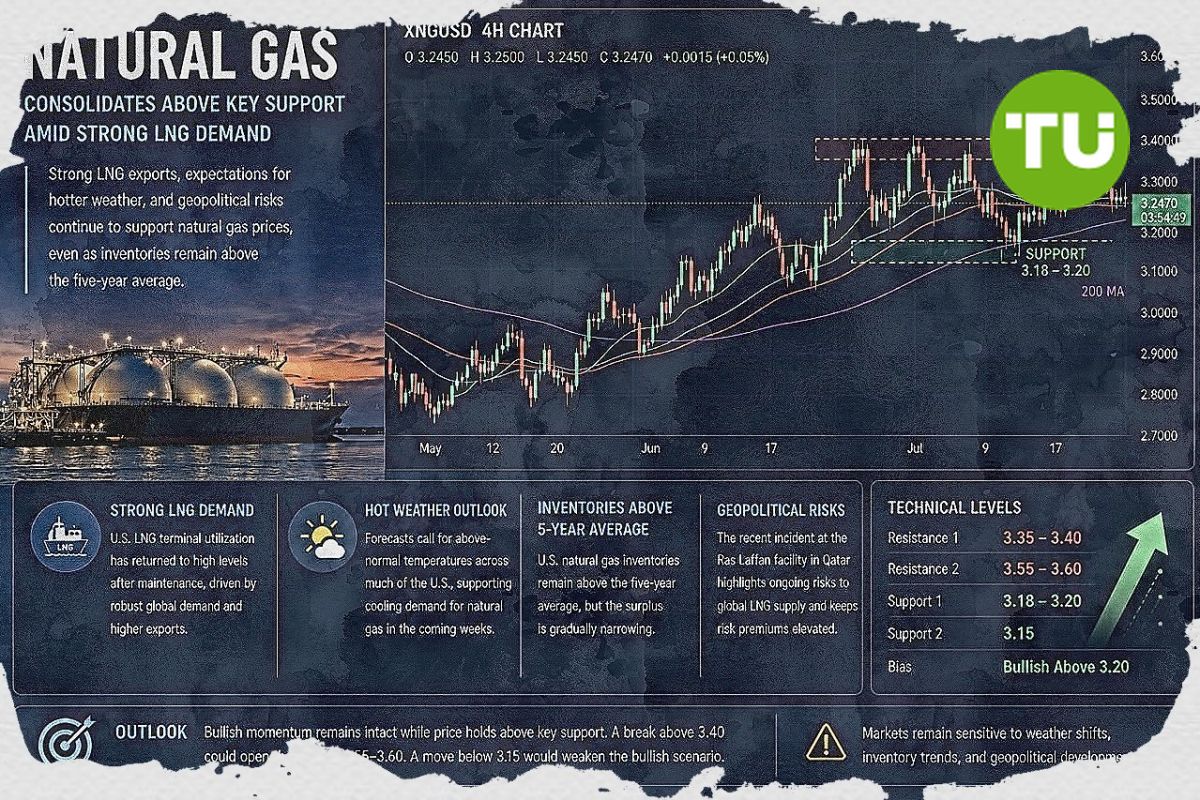
The natural gas market continues to find support from a combination of strong LNG export demand and expectations for hotter weather across the United States. Utilization rates at U.S. LNG export terminals have returned to elevated levels following the completion of seasonal maintenance, reducing the amount of gas available for storage injections.
At the same time, the latest EIA data showed a smaller storage build compared with previous weeks, reinforcing expectations that the current supply surplus could gradually narrow during the second half of the summer.
Inventories remain comfortable, but the surplus is shrinking
Despite improving sentiment, the market has not yet entered a deficit environment. U.S. natural gas inventories remain above the five-year average, while the EIA still expects production growth from key basins, including the Permian and Haynesville. However, demand growth driven by LNG exports continues to outpace the expansion in supply, suggesting that excess inventories could decline significantly by autumn. This remains one of the key factors preventing a deeper correction in prices.
Geopolitical risks return to the spotlight
An additional catalyst emerged following an incident at Qatar's Ras Laffan gas complex, one of the world's largest LNG export hubs. While the full extent of the impact is still being assessed, the event served as a reminder of the global gas market's sensitivity to supply disruptions. Following the news, European natural gas futures moved higher, while risk premiums across the LNG sector increased modestly.
Technical outlook
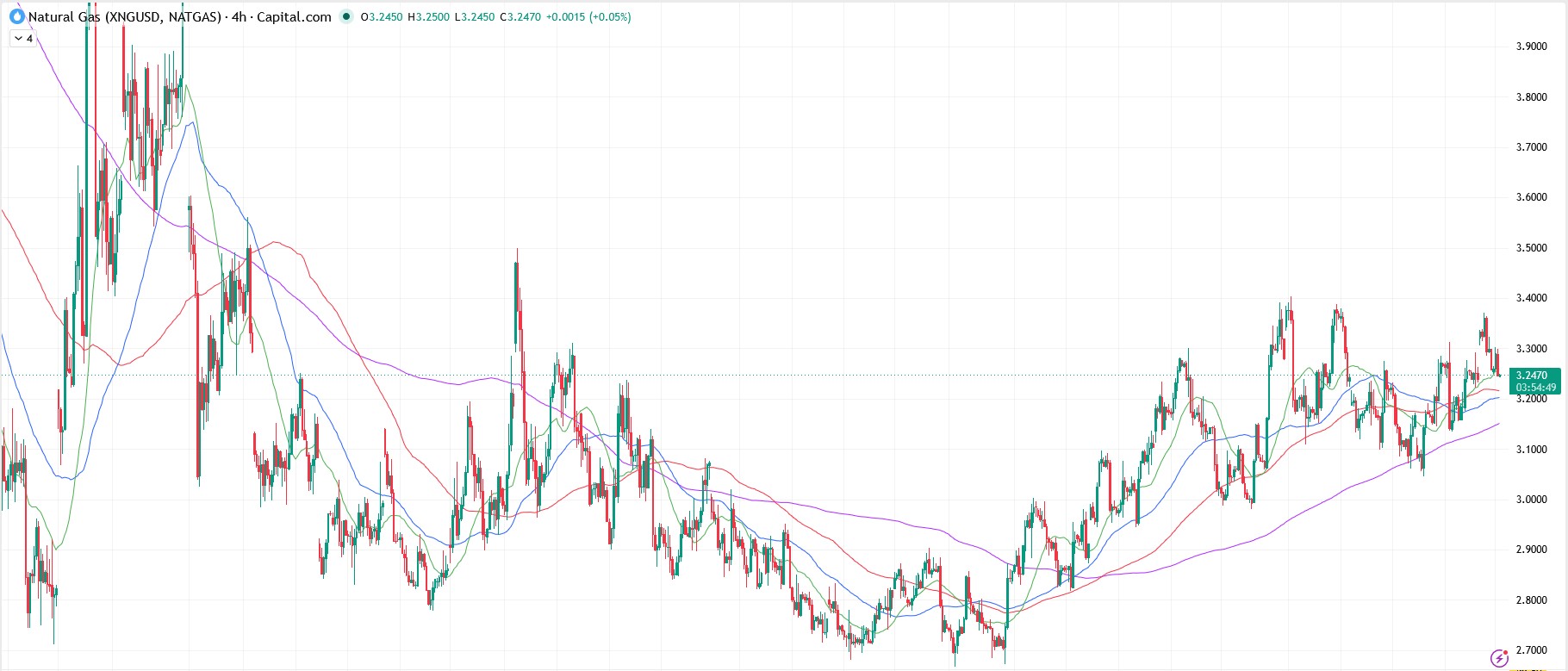
From a technical perspective, XNGUSD continues to trade above its long-term 200-period moving average, which remains tilted higher. Since the May low, the market has established a sequence of higher lows and higher highs, confirming a medium-term bullish trend. The key support zone is located around 3.18–3.20, where short-term moving averages converge with previous breakout levels. As long as prices remain above this area, the advantage stays with buyers. Initial resistance is seen in the 3.35–3.40 range, with a decisive breakout potentially opening the door toward 3.55–3.60. A move below 3.15 would be the first signal that the current bullish scenario is losing momentum.
Nevertheless, despite the market's constructive tone, the risk of renewed downside pressure remains. As discussed previously in Natural gas tests key resistance amid renewed bullish momentum, the current advance still faces several fundamental and technical challenges that could trigger another corrective phase if bullish catalysts begin to fade.


Latest Natural Gas News






-
 Afghanistan
-
 Albania
-
 Algeria
-
 Angola
-
 Argentina
-
 Armenia
-
 Australia
-
 Austria
-
 Azerbaijan
-
 Bahamas
-
 Bahrain
-
 Bangladesh
-
 Belarus
-
 Belgium
-
 Bolivia
-
 Botswana
-
 Brazil
-
 Brunei
-
 Bulgaria
-
 Cambodia
-
 Cameroon
-
 Canada
-
 Chile
Chile
-
 China
China
-
 Colombia
-
 Congo
Congo
-
 Costa Rica
-
 Cote d'Ivoire
-
 Croatia
-
 Cuba
Cuba
-
 Cyprus
-
 Czechia
-
 DR Congo
-
 Denmark
-
 Dominican Republic
-
 Ecuador
-
 Egypt
Egypt
-
 El Salvador
-
 Estonia
-
 Eswatini
-
 Ethiopia
-
 Finland
-
 France
-
 Georgia
-
 Germany
-
 Ghana
Ghana
-
 Greece
-
 Haiti
Haiti
-
 Hong Kong
-
 Hungary
-
 India
India
-
 Indonesia
-
 Iran, Islamic republic
-
 Iraq
Iraq
-
 Ireland
-
 Israel
-
 Italy
Italy
-
 Jamaica
-
 Japan
Japan
-
 Jordan
-
 Kazakhstan
-
 Kenya
Kenya
-
 Korea
Korea
-
 Kuwait
-
 Kyrgyzstan
-
 Laos
Laos
-
 Latvia
-
 Lebanon
-
 Lesotho
-
 Libya
Libya
-
 Lithuania
-
 Luxembourg
-
 Madagascar
-
 Malaysia
-
 Malta
Malta
-
 Mauritius
-
 Mexico
-
 Moldova
-
 Mongolia
-
 Montenegro
-
 Morocco
-
 Mozambique
-
 Myanmar
-
 Namibia
-
 Nepal
Nepal
-
 Netherlands
-
 New Zealand
-
 Nigeria
-
 North Macedonia
-
 Norway
-
 Oman
Oman
-
 Pakistan
-
 Palestine
-
 Panama
-
 Papua New Guinea
-
 Paraguay
-
 Peru
Peru
-
 Philippines
-
 Poland
-
 Portugal
-
 Puerto Rico
-
 Qatar
Qatar
-
 Reunion
-
 Romania
-
 Rwanda
-
 Saudi Arabia
-
 Serbia
-
 Singapore
-
 Slovakia
-
 Slovenia
-
 Somalia
-
 South Africa
-
 Spain
Spain
-
 Sri Lanka
-
 Sweden
-
 Switzerland
-
 Syria
Syria
-
 Taiwan
-
 Tajikistan
-
 Tanzania
-
 Thailand
-
 Trinidad and Tobago
-
 Tunisia
-
 Turkey
-
 UAE
UAE
-
 Uganda
-
 Ukraine
-
 United Kingdom
-
United States
-
 Uruguay
-
 Uzbekistan
-
 Venezuela
-
 Vietnam
-
 Yemen
Yemen
-
 Zambia
-
 Zimbabwe
- Forex
- Crypto











