
Quantum computing puts IBM back in focus

IBM shares continue to recover after falling more than 25%, supported by strengthening positions in two key strategic areas: quantum computing and AI infrastructure.
One of the main growth drivers for IBM remains its quantum computing business. On June 22, Donald Trump signed new executive orders aimed at accelerating the development of quantum computing and protecting critical infrastructure from future quantum-related threats. IBM is widely considered one of the primary beneficiaries of this initiative due to its leadership position in the industry.
In addition, IBM announced a partnership with OpenAI designed to help enterprises defend against increasingly sophisticated cyber threats by integrating advanced AI technologies into cybersecurity workflows.
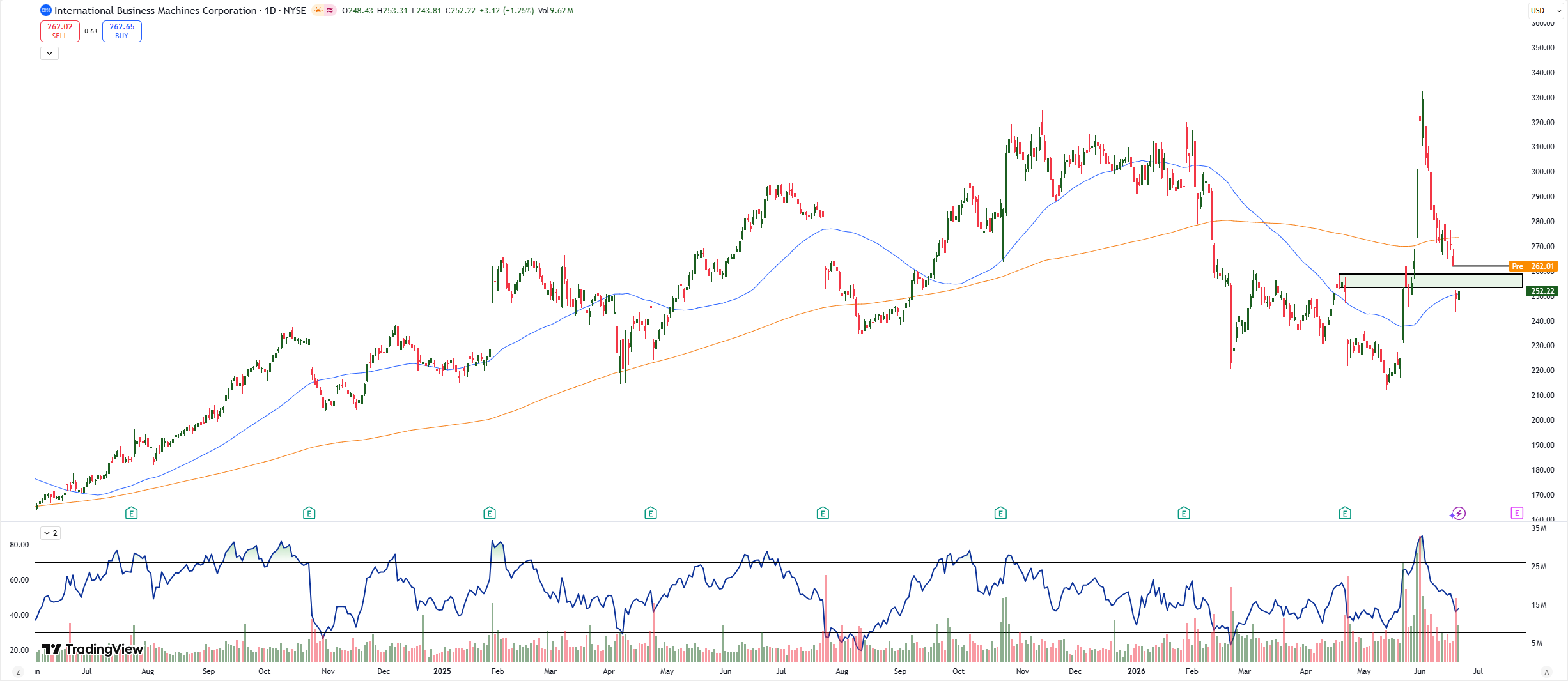
IBM faces a crucial test near gap resistance
After declining more than 25% since June 2, IBM shares have staged a modest recovery and are now testing resistance at $262.30. This level coincides with the gap-down zone that formed on June 17.
If the stock opens above this level, there is a high probability that IBM will test its 200-day simple moving average (SMA) near $273.50 over the coming trading sessions.
However, if the stock fails to break above $262.30, IBM could pull back toward the nearest support zone between $253 and $258.
IBM shares are currently exhibiting elevated volatility, making risk management particularly important. The stock's Average True Range (ATR) has exceeded 12 points over the past two weeks, reinforcing the need for wider stop-loss levels.
Market concentration becomes a growing concern
Despite the positive developments surrounding quantum computing and AI infrastructure, IBM remains part of the broader technology ecosystem that has benefited significantly from the AI boom in recent years.
Not long ago, UBS advised investors to reduce risk exposure within the technology sector. According to the bank, the semiconductor industry has developed an overly binary "winners versus losers" narrative around artificial intelligence, leaving little room for more balanced outcomes.
While IBM is not a semiconductor manufacturer, the company remains an indirect beneficiary of rising spending on AI infrastructure. As a result, any slowdown in investment across data centers, enterprise AI, or cloud computing could negatively affect investor sentiment across the sector.


Latest IBM News







-
 Afghanistan
-
 Albania
-
 Algeria
-
 Angola
-
 Argentina
-
 Armenia
-
 Australia
-
 Austria
-
 Azerbaijan
-
 Bahamas
-
 Bahrain
-
 Bangladesh
-
 Belarus
-
 Belgium
-
 Bolivia
-
 Botswana
-
 Brazil
-
 Brunei
-
 Bulgaria
-
 Cambodia
-
 Cameroon
-
 Canada
-
 Chile
Chile
-
 China
China
-
 Colombia
-
 Congo
Congo
-
 Costa Rica
-
 Cote d'Ivoire
-
 Croatia
-
 Cuba
Cuba
-
 Cyprus
-
 Czechia
-
 DR Congo
-
 Denmark
-
 Dominican Republic
-
 Ecuador
-
 Egypt
Egypt
-
 El Salvador
-
 Estonia
-
 Eswatini
-
 Ethiopia
-
 Finland
-
 France
-
 Georgia
-
 Germany
-
 Ghana
Ghana
-
 Greece
-
 Haiti
Haiti
-
 Hong Kong
-
 Hungary
-
 India
India
-
 Indonesia
-
 Iran, Islamic republic
-
 Iraq
Iraq
-
 Ireland
-
 Israel
-
 Italy
Italy
-
 Jamaica
-
 Japan
Japan
-
 Jordan
-
 Kazakhstan
-
 Kenya
Kenya
-
 Korea
Korea
-
 Kuwait
-
 Kyrgyzstan
-
 Laos
Laos
-
 Latvia
-
 Lebanon
-
 Lesotho
-
 Libya
Libya
-
 Lithuania
-
 Luxembourg
-
 Madagascar
-
 Malaysia
-
 Malta
Malta
-
 Mauritius
-
 Mexico
-
 Moldova
-
 Mongolia
-
 Montenegro
-
 Morocco
-
 Mozambique
-
 Myanmar
-
 Namibia
-
 Nepal
Nepal
-
 Netherlands
-
 New Zealand
-
 Nigeria
-
 North Macedonia
-
 Norway
-
 Oman
Oman
-
 Pakistan
-
 Palestine
-
 Panama
-
 Papua New Guinea
-
 Paraguay
-
 Peru
Peru
-
 Philippines
-
 Poland
-
 Portugal
-
 Puerto Rico
-
 Qatar
Qatar
-
 Reunion
-
 Romania
-
 Rwanda
-
 Saudi Arabia
-
 Serbia
-
 Singapore
-
 Slovakia
-
 Slovenia
-
 Somalia
-
 South Africa
-
 Spain
Spain
-
 Sri Lanka
-
 Sweden
-
 Switzerland
-
 Syria
Syria
-
 Taiwan
-
 Tajikistan
-
 Tanzania
-
 Thailand
-
 Trinidad and Tobago
-
 Tunisia
-
 Turkey
-
 UAE
UAE
-
 Uganda
-
 Ukraine
-
 United Kingdom
-
United States
-
 Uruguay
-
 Uzbekistan
-
 Venezuela
-
 Vietnam
-
 Yemen
Yemen
-
 Zambia
-
 Zimbabwe
- Forex
- Crypto











