The tweet was deleted by the author.
But we saved everything 🙂.

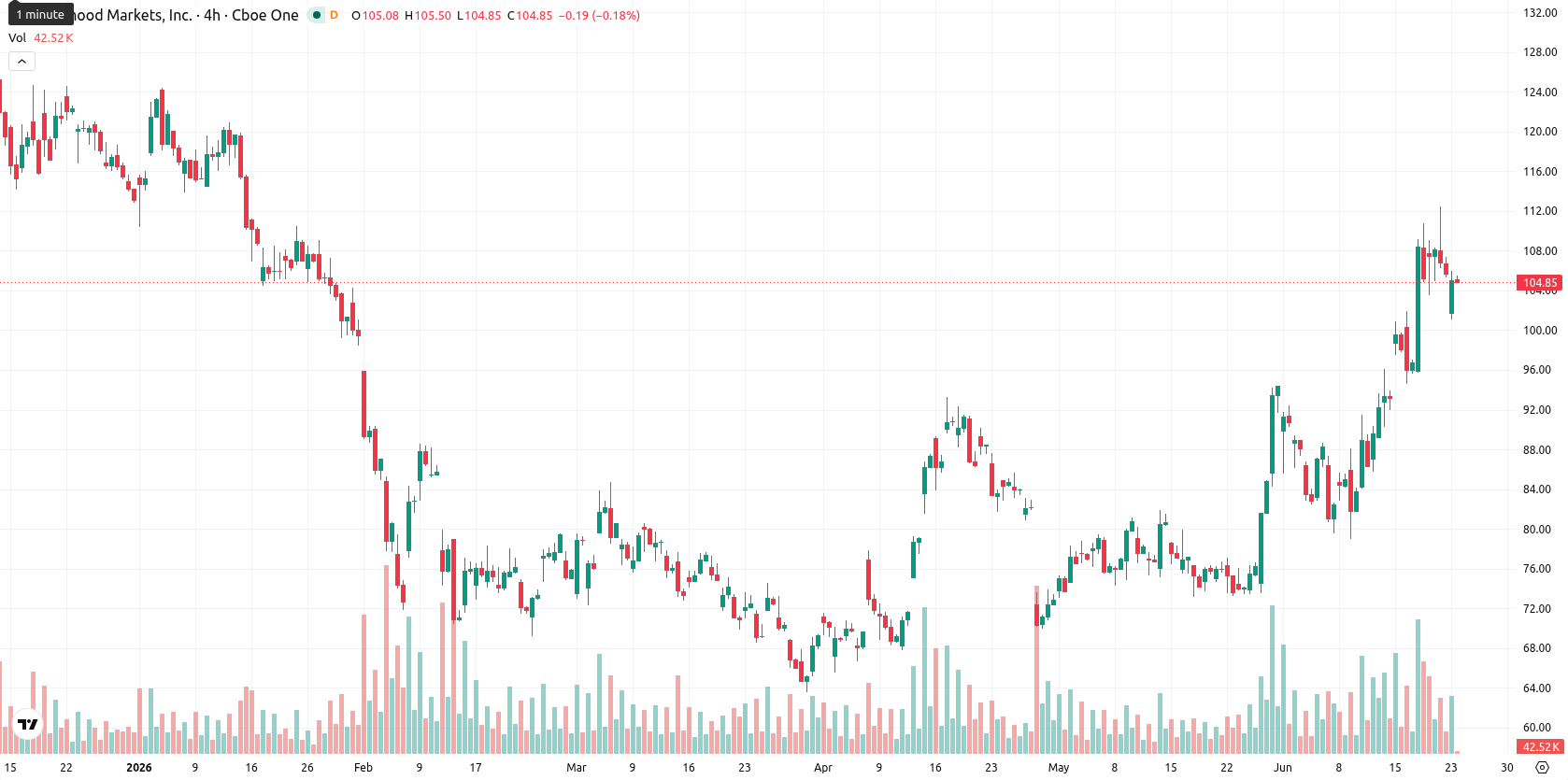
Robinhood Markets Inc (HOOD) is currently trading at $105.03, reflecting a daily drop of $0.68 or 0.64% from the previous close. Intraday, the price moved in a $101.68–$105.87 range, showing a moderate rebound from early selling pressure for a final loss of 0.64%. The decline is primarily driven by technical profit-taking after recent gains and short-term volatility around news of a convertible note offering, with fundamental factors outweighing the positive sentiment around product enhancements highlighted by Robinhood’s recent tweet.
 113.60
118.35
113.60
118.35
Robinhood announced the launch of multi-leg rolling for options spreads on its platform, making it easier for users to adjust entire positions with a guided action. This product upgrade aims to boost client engagement and increase trading volume, positively influencing revenue and market sentiment. However, despite the platform enhancements, the market reaction centered on Robinhood’s $2.0 billion convertible note offering, as investors focused more on potential dilution and use of proceeds for buybacks and corporate growth rather than product features.
The price of $105.03 stands above the MA-20 ($89.51), MA-50 ($83.51), and MA-200 ($102.82), confirming a bullish long-term trend. Immediate support lies at $92.79, with resistance just above $105.00. The RSI at 67.68 and other oscillators indicate strong buying but warn of short-term overbought conditions. The 5-day forecast range is $100.00–$115.00, but as the tweet’s positive signal has not yet translated into upward price momentum, near-term forecasts should be treated with some caution.
Previously it was reported that SoFi acquired AI startup Composer to expand access to automated trading strategies for retail investors, intensifying competition among brokerage platforms. As Robinhood introduces AI-driven trading accounts, the prevailing scenario is that brokerages are rapidly integrating advanced AI capabilities, making it essential for traders to watch how these innovations could shift user engagement and market dynamics in the coming quarters.

 Afghanistan
 Albania
 Algeria
 Angola
 Argentina
 Armenia
 Australia
 Austria
 Azerbaijan
 Bahamas
 Bahrain
 Bangladesh
 Belarus
 Belgium
 Bolivia
 Botswana
 Brazil
 Brunei
 Bulgaria
 Cambodia
 Cameroon
 Canada
 Chile
Chile
 China
China
 Colombia
 Congo
Congo
 Costa Rica
 Cote d'Ivoire
 Croatia
 Cuba
Cuba
 Cyprus
 Czechia
 DR Congo
 Denmark
 Dominican Republic
 Ecuador
 Egypt
Egypt
 El Salvador
 Estonia
 Eswatini
 Ethiopia
 Finland
 France
 Georgia
 Germany
 Ghana
Ghana
 Greece
 Haiti
Haiti
 Hong Kong
 Hungary
 India
India
 Indonesia
 Iran, Islamic republic
 Iraq
Iraq
 Ireland
 Israel
 Italy
Italy
 Jamaica
 Japan
Japan
 Jordan
 Kazakhstan
 Kenya
Kenya
 Korea
Korea
 Kuwait
 Kyrgyzstan
 Laos
Laos
 Latvia
 Lebanon
 Lesotho
 Libya
Libya
 Lithuania
 Luxembourg
 Madagascar
 Malaysia
 Malta
Malta
 Mauritius
 Mexico
 Moldova
 Mongolia
 Montenegro
 Morocco
 Mozambique
 Myanmar
 Namibia
 Nepal
Nepal
 Netherlands
 New Zealand
 Nigeria
 North Macedonia
 Norway
 Oman
Oman
 Pakistan
 Palestine
 Panama
 Papua New Guinea
 Paraguay
 Peru
Peru
 Philippines
 Poland
 Portugal
 Puerto Rico
 Qatar
Qatar
 Reunion
 Romania
 Rwanda
 Saudi Arabia
 Serbia
 Singapore
 Slovakia
 Slovenia
 Somalia
 South Africa
 Spain
Spain
 Sri Lanka
 Sweden
 Switzerland
 Syria
Syria
 Taiwan
 Tajikistan
 Tanzania
 Thailand
 Trinidad and Tobago
 Tunisia
 Turkey
 UAE
UAE
 Uganda
 Ukraine
 United Kingdom
United States
United Kingdom
United States
 Uruguay
 Uzbekistan
 Venezuela
 Vietnam
 Yemen
Yemen
 Zambia
 Zimbabwe