

U.S. markets face pressure as Treasury yields climb and corporate, policy risks build

Investors head into Thursday with equity futures lower after a sharp selloff tied to rising Treasury yields and renewed expectations of another Federal Reserve rate increase this year. The broader market backdrop also includes a U.S.-China summit, a court order on White House press access, McDonald’s new advertising push and a Social Security bill aimed at workers in labor-intensive jobs.
Highlights
- The 10-year U.S. Treasury yield posts its biggest one-day gain in nearly 18 months, hitting a 19-year high and pressuring equity indexes lower.
- U.S. and China extend their trade truce to Jan. 10 as President Xi Jinping meets President Donald Trump, with trade, AI, and Iran on the agenda.
- McDonald's shares drop nearly 5% after management reports ongoing inflationary pressure and signals a slow rebound in customer traffic despite new advertising initiatives.
Yield surge and policy signals shape the trading day
As reported by CNBC, the main pressure on markets comes from a renewed climb in Treasury yields after stronger S&P Global flash readings on manufacturing and services added to concerns that inflation remains persistent enough to justify tighter monetary policy.The 10-year U.S. Treasury yield posts its biggest one-day gain in almost 18 months and reaches levels not seen in 19 years, while the 30-year yield rises to its highest since 2004 and the 2-year note touches its highest level since 2023. Comments from Federal Reserve officials reinforce that view, with Governor Michael Barr saying further policy adjustments will likely be needed and New York Fed President John Williams saying another rate hike may be appropriate by year end.
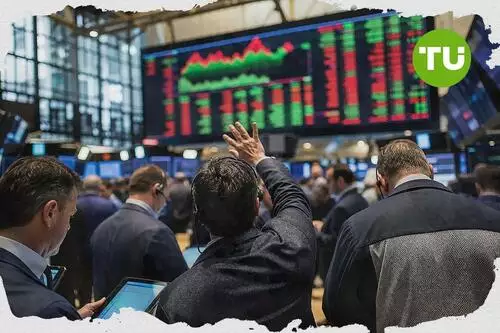
Higher yields weigh on major indexes, with the S&P 500 recording its worst session in more than a month and the Nasdaq Composite falling more than 1%. The rise in borrowing costs also threatens consumers and businesses beyond Wall Street, as more expensive credit feeds through mortgages, loans and other financing activity.
Corporate moves and Washington developments add to uncertainty
Outside the rates story, investors are also watching geopolitics and corporate strategy. Chinese President Xi Jinping arrives in Maryland ahead of a summit with President Donald Trump, where trade, artificial intelligence and the Iran war are expected to be on the agenda, while Treasury Secretary Scott Bessent says the U.S. and China have agreed to extend their trade truce to Jan. 10.In media and legal developments, a federal judge orders the White House to temporarily restore access to journalists from CNN, MS NOW and Politico, finding the ban on the outlets is likely unconstitutional. The temporary restraining order remains in effect for 14 days, although the outlets report some journalists are not immediately able to regain access on Thursday morning.
On the corporate front, Lowe’s says it is launching a drone delivery service with DoorDash and Alphabet’s Wing, and McDonald’s unveils plans for its own media network to sell third-party advertising. McDonald’s is already showing ads on digital drive-thru boards at company-owned U.S. restaurants, but its shares fall nearly 5% after management signals traffic is not expected to rebound soon and inflationary pressure remains a challenge.
Policy attention also extends to retirement security. A bill introduced by Representative Haley Stevens would allow eligible workers in labor-intensive fields such as construction, nursing and manufacturing to claim full Social Security benefits from age 60, as surveys show long-term viability of the program remains a top concern for many clients of financial planners.
We previously reported on the surge in long-dated U.S. borrowing costs, with the 30-year Treasury yield climbing to its highest level since 2004 as investors reassessed persistent inflation and the risk of additional Federal Reserve rate hikes. That move was part of a broader global bond selloff driven by resilient growth, fiscal-debt concerns, and higher energy prices, pushing borrowing costs higher across major markets.






Latest Alphabet Inc Class C News




-
 Afghanistan
-
 Albania
-
 Algeria
-
 Angola
-
 Argentina
-
 Armenia
-
 Australia
-
 Austria
-
 Azerbaijan
-
 Bahamas
-
 Bahrain
-
 Bangladesh
-
 Belarus
-
 Belgium
-
 Bolivia
-
 Botswana
-
 Brazil
-
 Brunei
-
 Bulgaria
-
 Cambodia
-
 Cameroon
-
 Canada
-
 Chile
-
 China
-
 Colombia
-
 Congo
-
 Costa Rica
-
 Cote d'Ivoire
-
 Croatia
-
 Cuba
-
 Cyprus
-
 Czechia
-
 DR Congo
-
 Denmark
-
 Dominican Republic
-
 Ecuador
-
 Egypt
-
 El Salvador
-
 Estonia
-
 Eswatini
-
 Ethiopia
-
 Finland
-
 France
-
 Georgia
-
 Germany
-
 Ghana
-
 Greece
-
 Haiti
-
 Hong Kong
-
 Hungary
-
 India
-
 Indonesia
-
 Iran, Islamic republic
-
 Iraq
-
 Ireland
-
 Israel
-
 Italy
-
 Jamaica
-
 Japan
-
 Jordan
-
 Kazakhstan
-
 Kenya
-
 Korea
-
 Kuwait
-
 Kyrgyzstan
-
 Laos
-
 Latvia
-
 Lebanon
-
 Lesotho
-
 Libya
-
 Lithuania
-
 Luxembourg
-
 Madagascar
-
 Malaysia
-
 Malta
-
 Mauritius
-
 Mexico
-
 Moldova
-
 Mongolia
-
 Montenegro
-
 Morocco
-
 Mozambique
-
 Myanmar
-
 Namibia
-
 Nepal
-
 Netherlands
-
 New Zealand
-
 Nigeria
-
 North Macedonia
-
 Norway
-
 Oman
-
 Pakistan
-
 Palestine
-
 Panama
-
 Papua New Guinea
-
 Paraguay
-
 Peru
-
 Philippines
-
 Poland
-
 Portugal
-
 Puerto Rico
-
 Qatar
-
 Reunion
-
 Romania
-
 Rwanda
-
 Saudi Arabia
-
 Serbia
-
 Singapore
-
 Slovakia
-
 Slovenia
-
 Somalia
-
 South Africa
-
 Spain
-
 Sri Lanka
-
 Sweden
-
 Switzerland
-
 Syria
-
 Taiwan
-
 Tajikistan
-
 Tanzania
-
 Thailand
-
 Trinidad and Tobago
-
 Tunisia
-
 Turkey
-
 UAE
-
 Uganda
-
 Ukraine
-
 United Kingdom
-
United States
-
 Uruguay
-
 Uzbekistan
-
 Venezuela
-
 Vietnam
-
 Yemen
-
 Zambia
-
 Zimbabwe
- Forex
- Crypto












