

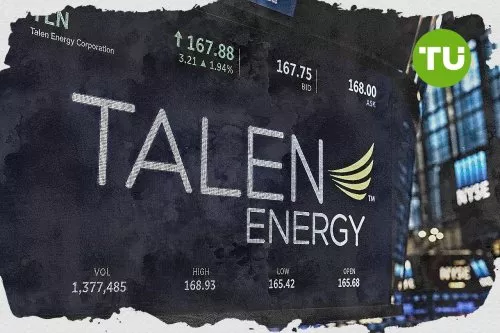
Talen Energy cut to B+ as share buyback funding keeps leverage elevated

Talen Energy faces a lower credit rating after using future PJM capacity revenue to help finance an expanded share repurchase program. The move keeps leverage above Fitch's earlier expectations for longer, even as the rating agency maintains a Stable Outlook on expectations that debt metrics ease after a 2026 peak.
Highlights
- Talen Energy's Long-Term Issuer Default Rating was downgraded to B+ from BB- after selling $1.5 billion PJM capacity credits and directing proceeds to share buybacks.
- Fitch expects Talen's leverage to remain above 3.5x longer due to the $3 billion buyback program, delaying deleveraging and negatively impacting the credit profile.
- Talen's EBITDA leverage is forecast to average 4.0x over 2026-2029, exceeding Vistra and lagging NRG, which benefits from a more robust deleveraging plan.
Rating action tied to capacity revenue monetization
As reported by Fitch Ratings, Talen Energy Supply's Long-Term Issuer Default Rating is downgraded to B+ from BB-, while its senior unsecured notes are cut to B+ with a Recovery Rating of RR4 from BB-/RR4. Fitch also affirms the senior secured revolving credit facility and term loans at BB+/RR1, with a Stable Outlook.The downgrade reflects Talen's monetization of PJM capacity revenue for June 2027 through May 2029, a step that Fitch says keeps leverage above 3.5x for longer than it had previously anticipated. Talen sells $1.5 billion of capacity credits to Citigroup Energy Inc., and Fitch treats that transaction as debt.
Proceeds are set to fund accelerated share repurchases as part of a broader increase in the company's buyback program to $3 billion, rather than reduce debt. Fitch says that choice delays deleveraging and weighs on the company's credit profile.
Leverage outlook and sector positioning
Talen's Stable Outlook reflects Fitch's expectation that leverage declines from a 2026 peak and stays within the 5.0x negative sensitivity for the B+ rating. That view is supported by strong demand, contracted cash flows, nuclear production tax credits and what Fitch describes as adequate liquidity.Talen's 15.7 GW generation portfolio includes about 10 GW of gas, 2.2 GW of nuclear and 3.5 GW of coal-capable capacity. Fitch says the Cornerstone acquisition adds scale but not geographic diversity, leaving Talen smaller and less diversified than peers.
Capacity margins, previously about 30% of gross margins, are expected to decline toward 17% to 18% as prices normalize. Because the monetization removes most of that revenue for two years, Fitch says Talen becomes more reliant on merchant energy margin.
Fitch forecasts Talen's EBITDA leverage averaging 4.0x over 2026 to 2029, compared with about 3.0x for Vistra and 4.3x for NRG in 2026. Fitch says NRG is the closer comparison because both companies exceed prior expectations in 2026, but NRG is expected to return below 3.5x by 2028 through debt paydown and EBITDA growth, while Talen lacks a committed deleveraging plan outside scheduled amortization.
In our earlier article on Fitch’s first-time investment-grade ratings for Helmerich & Payne, we explained that the BBB Issuer Default and senior unsecured ratings with a Stable Outlook were supported by the company’s scale in super-spec land rigs and expanded international reach following the KCA Deutag acquisition. We also noted that while the deal increased exposure to more volatile Middle East activity, Fitch expected leverage to peak and then decline as cash flow and planned debt repayment support deleveraging.






Latest Talen Energy Corporation News



-
 Afghanistan
-
 Albania
-
 Algeria
-
 Angola
-
 Argentina
-
 Armenia
-
 Australia
-
 Austria
-
 Azerbaijan
-
 Bahamas
-
 Bahrain
-
 Bangladesh
-
 Belarus
-
 Belgium
-
 Bolivia
-
 Botswana
-
 Brazil
-
 Brunei
-
 Bulgaria
-
 Cambodia
-
 Cameroon
-
 Canada
-
 Chile
-
 China
-
 Colombia
-
 Congo
-
 Costa Rica
-
 Cote d'Ivoire
-
 Croatia
-
 Cuba
-
 Cyprus
-
 Czechia
-
 DR Congo
-
 Denmark
-
 Dominican Republic
-
 Ecuador
-
 Egypt
-
 El Salvador
-
 Estonia
-
 Eswatini
-
 Ethiopia
-
 Finland
-
 France
-
 Georgia
-
 Germany
-
 Ghana
-
 Greece
-
 Haiti
-
 Hong Kong
-
 Hungary
-
 India
-
 Indonesia
-
 Iran, Islamic republic
-
 Iraq
-
 Ireland
-
 Israel
-
 Italy
-
 Jamaica
-
 Japan
-
 Jordan
-
 Kazakhstan
-
 Kenya
-
 Korea
-
 Kuwait
-
 Kyrgyzstan
-
 Laos
-
 Latvia
-
 Lebanon
-
 Lesotho
-
 Libya
-
 Lithuania
-
 Luxembourg
-
 Madagascar
-
 Malaysia
-
 Malta
-
 Mauritius
-
 Mexico
-
 Moldova
-
 Mongolia
-
 Montenegro
-
 Morocco
-
 Mozambique
-
 Myanmar
-
 Namibia
-
 Nepal
-
 Netherlands
-
 New Zealand
-
 Nigeria
-
 North Macedonia
-
 Norway
-
 Oman
-
 Pakistan
-
 Palestine
-
 Panama
-
 Papua New Guinea
-
 Paraguay
-
 Peru
-
 Philippines
-
 Poland
-
 Portugal
-
 Puerto Rico
-
 Qatar
-
 Reunion
-
 Romania
-
 Rwanda
-
 Saudi Arabia
-
 Serbia
-
 Singapore
-
 Slovakia
-
 Slovenia
-
 Somalia
-
 South Africa
-
 Spain
-
 Sri Lanka
-
 Sweden
-
 Switzerland
-
 Syria
-
 Taiwan
-
 Tajikistan
-
 Tanzania
-
 Thailand
-
 Trinidad and Tobago
-
 Tunisia
-
 Turkey
-
 UAE
-
 Uganda
-
 Ukraine
-
 United Kingdom
-
United States
-
 Uruguay
-
 Uzbekistan
-
 Venezuela
-
 Vietnam
-
 Yemen
-
 Zambia
-
 Zimbabwe
- Forex
- Crypto












