

Boeing defense contract win faces near-term risks for shares

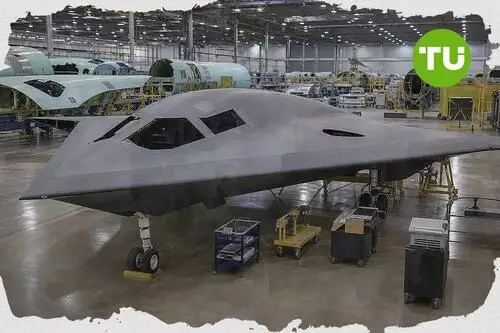
Boeing secures a more than $20 billion U.S. Navy contract for its sixth-generation F/A-XX Strike Fighter, strengthening a defense business that accounts for about a third of the company’s revenue. The award offers a strategic boost for the planemaker, but investor caution persists as labor, certification and software issues continue to cloud the near-term outlook.
Highlights
- Boeing secures a Pentagon contract to build the Navy’s F/A-XX Strike Fighter, valued at over $20 billion, with deliveries to begin in the 2030s.
- The win reinforces Boeing’s dominant position in U.S. sixth-generation combat aircraft, as its defense segment contributed nearly a third of $89.5 billion in 2025 revenue.
- Shares fall over 22% since Aug. 5 as a 737 Max 10 software glitch, union contract uncertainty, higher oil prices, and China market questions weigh on investor sentiment.
Navy award adds to long-term defense pipeline
As reported by CNBC, the Department of Defense says Boeing wins the contract to build the Navy’s F/A-XX Strike Fighter, beating Northrop Grumman in a program valued at more than $20 billion. The aircraft is set to replace the Navy’s F/A-18 Super Hornets, including the Growler variant, with deliveries beginning in the 2030s and operations planned alongside Lockheed Martin’s F-35C, according to the Pentagon.The contract is a notable victory for Boeing because some analysts had viewed Northrop Grumman as the likely winner. Boeing’s defense, space and security unit represented nearly a third of its $89.5 billion in 2025 revenue and is projected by FactSet to contribute a similar share of 2026 sales, reinforcing the importance of major military programs to the company’s broader earnings profile.
Analysts see the result as strategically important for Boeing’s position in combat aircraft. Wolfe Research says the company now holds a monopoly position in the U.S. for sixth-generation fighter aircraft, while Bernstein says winning the two major fighter programs sets up a new era for Boeing’s defense segment.
Labor and 737 Max issues cap investor enthusiasm
Despite the defense win, Jim Cramer says two issues keep him from buying more Boeing shares now. One is a key contract vote by Boeing’s engineering and technical employee union, with election results expected Thursday, and the other is the fallout from a newly disclosed software glitch tied to the 737 Max 10.The Federal Aviation Administration says it is waiting to certify the 737 Max 10 while examining whether the software issue poses a safety concern. Boeing says the glitch could affect certain automated landing procedures, adding to uncertainty around production and regulatory timing.
Boeing shares initially rise on Wednesday before reversing lower, and the stock remains under pressure after a volatile stretch. The shares are down more than 22% from their Aug. 5 close, with sentiment also affected by higher oil prices linked to renewed Middle East tensions, comments from CEO Kelly Ortberg on Sept. 16 that stabilizing 737 Max production is taking longer than expected, and unresolved questions about Boeing’s re-entry into the Chinese market.
Our earlier coverage of Boeing’s white-collar union contract vote explained that the roughly 17,000-member SPEEA workforce was deciding whether to accept a revised pay package or move closer to a strike as soon as Oct. 7. We noted that a walkout could disrupt certification work on the 737 MAX 10 and 777-9, potentially delaying deliveries and complicating the company’s broader recovery plans.






Latest Northrop Grumman Corporation News


-
 Afghanistan
-
 Albania
-
 Algeria
-
 Angola
-
 Argentina
-
 Armenia
-
 Australia
-
 Austria
-
 Azerbaijan
-
 Bahamas
-
 Bahrain
-
 Bangladesh
-
 Belarus
-
 Belgium
-
 Bolivia
-
 Botswana
-
 Brazil
-
 Brunei
-
 Bulgaria
-
 Cambodia
-
 Cameroon
-
 Canada
-
 Chile
-
 China
-
 Colombia
-
 Congo
-
 Costa Rica
-
 Cote d'Ivoire
-
 Croatia
-
 Cuba
-
 Cyprus
-
 Czechia
-
 DR Congo
-
 Denmark
-
 Dominican Republic
-
 Ecuador
-
 Egypt
-
 El Salvador
-
 Estonia
-
 Eswatini
-
 Ethiopia
-
 Finland
-
 France
-
 Georgia
-
 Germany
-
 Ghana
-
 Greece
-
 Haiti
-
 Hong Kong
-
 Hungary
-
 India
-
 Indonesia
-
 Iran, Islamic republic
-
 Iraq
-
 Ireland
-
 Israel
-
 Italy
-
 Jamaica
-
 Japan
-
 Jordan
-
 Kazakhstan
-
 Kenya
-
 Korea
-
 Kuwait
-
 Kyrgyzstan
-
 Laos
-
 Latvia
-
 Lebanon
-
 Lesotho
-
 Libya
-
 Lithuania
-
 Luxembourg
-
 Madagascar
-
 Malaysia
-
 Malta
-
 Mauritius
-
 Mexico
-
 Moldova
-
 Mongolia
-
 Montenegro
-
 Morocco
-
 Mozambique
-
 Myanmar
-
 Namibia
-
 Nepal
-
 Netherlands
-
 New Zealand
-
 Nigeria
-
 North Macedonia
-
 Norway
-
 Oman
-
 Pakistan
-
 Palestine
-
 Panama
-
 Papua New Guinea
-
 Paraguay
-
 Peru
-
 Philippines
-
 Poland
-
 Portugal
-
 Puerto Rico
-
 Qatar
-
 Reunion
-
 Romania
-
 Rwanda
-
 Saudi Arabia
-
 Serbia
-
 Singapore
-
 Slovakia
-
 Slovenia
-
 Somalia
-
 South Africa
-
 Spain
-
 Sri Lanka
-
 Sweden
-
 Switzerland
-
 Syria
-
 Taiwan
-
 Tajikistan
-
 Tanzania
-
 Thailand
-
 Trinidad and Tobago
-
 Tunisia
-
 Turkey
-
 UAE
-
 Uganda
-
 Ukraine
-
 United Kingdom
-
United States
-
 Uruguay
-
 Uzbekistan
-
 Venezuela
-
 Vietnam
-
 Yemen
-
 Zambia
-
 Zimbabwe
- Forex
- Crypto












