
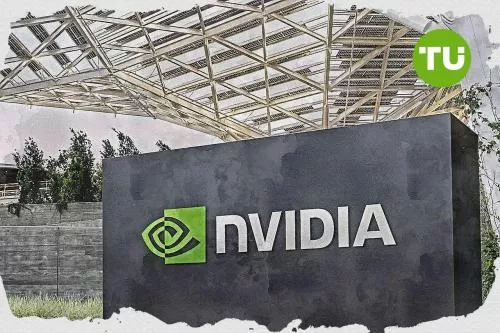
Nvidia stock holds at $202 as Trump bans top-tier chip exports to China

As of November 3, Nvidia stock is trading at $202.63, down 0.1% in the past 24 hours. Momentum has cooled after a recent rally, with the stock hovering above short-term support and likely to consolidate.
Highlights
- Nvidia shares fell to $202.63 after Donald Trump said the U.S. will block sales of its most advanced AI chips to China.
- While lower-tier chip sales may continue, the ban on Blackwell exports limits high-margin growth potential in the region.
- The company still benefits from strong global AI demand but now faces heightened geopolitical risk.
On the technical front, Nvidia has been in a well-defined uptrend since mid-2025, supported by strong earnings and the company’s dominant position in AI chipmaking. The 50-day simple moving average is estimated to be in the $200–205 range, offering a cushion of support. The 200-day moving average sits well below, near the $170–180 zone, indicating the long-term trend remains bullish despite near-term volatility.
Resistance is developing in the $220–230 range, where the stock stalled in late October, unable to break higher despite strong earnings. This resistance zone coincides with investor hesitation around future growth, particularly as Nvidia's price has already priced in aggressive AI-driven revenue expectations. Support lies firmly around $190–195, a region that held during the September dip and has since seen strong institutional buying interest.

Nvidia stock price dynamics (September 2025 - November 2025). Source: TradingView
Volume has tapered slightly post-earnings, suggesting the immediate bullish sentiment may be waning. RSI (Relative Strength Index) levels have dropped from overbought territory to the neutral 50–60 range, signaling a potential for sideways trading in the short term. In summary, Nvidia’s chart structure remains positive, but momentum is weakening. Price action between $190 and $230 is likely over the coming weeks, with the $200 level serving as a key battleground for bulls and bears.
Trump curbs Nvidia's China chip sales
In a high-profile interview with CBS’ 60 Minutes, President Donald Trump clarified his stance on U.S. chip exports to China, stating that Nvidia will be barred from selling its most advanced AI chips, including the Blackwell series, to Beijing. While the company will still be allowed to conduct business with China, Trump emphasized that top-tier GPU technology will be reserved exclusively for domestic use. This marks a strategic shift in U.S. semiconductor policy, aligning more closely with national security priorities while still allowing selective commercial engagement.
The comments come shortly after Washington and Beijing agreed to a one-year trade deal under which China will ease its rare earth export restrictions and increase purchases of U.S. agricultural goods in exchange for a reduction in American tariffs. Trump praised the agreement and his personal rapport with Chinese leadership, stating, “It’s better to get along with China than not.” His dual message—tough on strategic tech, soft on broader trade—suggests a nuanced approach that balances economic incentives with containment of technological competition.
For Nvidia, the message is mixed. The company retains access to the Chinese market for mid-tier products but loses the opportunity to export its highest-margin AI chips. Given that Nvidia’s Blackwell architecture is key to next-generation AI training systems, the restriction could limit upside in key Asian markets. However, the broader thaw in trade relations may ease investor fears of a full decoupling and open up alternative revenue streams in China for lower-tier GPUs, data infrastructure, or software-based AI tools. The net effect may be neutral to mildly negative in the short term, with longer-term impact hinging on how Nvidia adapts its product segmentation.
Base and bull scenarios point to limited upside potential
In the base case scenario, if geopolitical tensions remain stable and Nvidia delivers on its strong guidance, the stock is expected to trade between $200 and $225 over the next 1–2 months, with any positive update on U.S. hyperscaler demand or early Blackwell adoption potentially triggering a breakout toward $230, assuming AI infrastructure spending remains resilient and no new regulatory shocks emerge.
In the bull case, if U.S. policy eases toward China or Nvidia introduces a workaround for H20 export restrictions, the stock could break past resistance and climb toward $250–260. This upside could be further supported by stronger-than-expected sales in gaming GPUs or new AI-related automotive deals, adding momentum to Nvidia’s broader growth narrative.
Nvidia and Hyundai Motor Group have partnered with South Korea’s government to build a national AI ecosystem powered by Nvidia’s Blackwell GPUs. The initiative includes AI centers and data infrastructure, with an initial rollout of 50,000 units to support industrial and mobility applications.








-
 Afghanistan
-
 Albania
-
 Algeria
-
 Angola
-
 Argentina
-
 Armenia
-
 Australia
-
 Austria
-
 Azerbaijan
-
 Bahamas
-
 Bahrain
-
 Bangladesh
-
 Belarus
-
 Belgium
-
 Bolivia
-
 Botswana
-
 Brazil
-
 Brunei
-
 Bulgaria
-
 Cambodia
-
 Cameroon
-
 Canada
-
 Chile
Chile
-
 China
China
-
 Colombia
-
 Congo
Congo
-
 Costa Rica
-
 Cote d'Ivoire
-
 Croatia
-
 Cuba
Cuba
-
 Cyprus
-
 Czechia
-
 DR Congo
-
 Denmark
-
 Dominican Republic
-
 Ecuador
-
 Egypt
Egypt
-
 El Salvador
-
 Estonia
-
 Eswatini
-
 Ethiopia
-
 Finland
-
 France
-
 Georgia
-
 Germany
-
 Ghana
Ghana
-
 Greece
-
 Haiti
Haiti
-
 Hong Kong
-
 Hungary
-
 India
India
-
 Indonesia
-
 Iran, Islamic republic
-
 Iraq
Iraq
-
 Ireland
-
 Israel
-
 Italy
Italy
-
 Jamaica
-
 Japan
Japan
-
 Jordan
-
 Kazakhstan
-
 Kenya
Kenya
-
 Korea
Korea
-
 Kuwait
-
 Kyrgyzstan
-
 Laos
Laos
-
 Latvia
-
 Lebanon
-
 Lesotho
-
 Libya
Libya
-
 Lithuania
-
 Luxembourg
-
 Madagascar
-
 Malaysia
-
 Malta
Malta
-
 Mauritius
-
 Mexico
-
 Moldova
-
 Mongolia
-
 Montenegro
-
 Morocco
-
 Mozambique
-
 Myanmar
-
 Namibia
-
 Nepal
Nepal
-
 Netherlands
-
 New Zealand
-
 Nigeria
-
 North Macedonia
-
 Norway
-
 Oman
Oman
-
 Pakistan
-
 Palestine
-
 Panama
-
 Papua New Guinea
-
 Paraguay
-
 Peru
Peru
-
 Philippines
-
 Poland
-
 Portugal
-
 Puerto Rico
-
 Qatar
Qatar
-
 Reunion
-
 Romania
-
 Rwanda
-
 Saudi Arabia
-
 Serbia
-
 Singapore
-
 Slovakia
-
 Slovenia
-
 Somalia
-
 South Africa
-
 Spain
Spain
-
 Sri Lanka
-
 Sweden
-
 Switzerland
-
 Syria
Syria
-
 Taiwan
-
 Tajikistan
-
 Tanzania
-
 Thailand
-
 Trinidad and Tobago
-
 Tunisia
-
 Turkey
-
 UAE
UAE
-
 Uganda
-
 Ukraine
-
 United Kingdom
-
United States
-
 Uruguay
-
 Uzbekistan
-
 Venezuela
-
 Vietnam
-
 Yemen
Yemen
-
 Zambia
-
 Zimbabwe
- Forex
- Crypto











