

EBRD-managed Chornobyl fund draws €303 million for confinement restoration

Governments and international institutions are stepping up funding for nuclear safety work at Chornobyl after damage to the site’s New Safe Confinement in February 2025. Pledges made in Paris total €303 million and support restoration planning, temporary repairs and the broader effort to secure a facility seen as critical to Ukraine and Europe.
Highlights
- Fourteen countries and international organisations pledged a combined €303 million to the EBRD-managed International Chornobyl Cooperation Account at the Paris donor conference on November 9.
- Early engineering and procurement work worth up to €30 million is approved for 2026, with full restoration work on the Chornobyl New Safe Confinement to start in early 2028 and complete by end-2030, pending the estimated €500 million budget.
- February 2025 drone strike compromised the Chornobyl confinement’s containment and dismantling functions, intensifying urgency for restoration and broadening donor commitments beyond G7 and EU participants.
Paris pledges back restoration timeline
As reported by EBRD, citing the European Bank for Reconstruction and Development, 14 countries and international organisations pledge a combined €303 million to the International Chornobyl Cooperation Account after a high-level donor conference in Paris on November 9. The fund, managed by the EBRD, is supporting restoration of the New Safe Confinement, the structure that contains the radioactive remains of Reactor Unit 4 and enables dismantling work at the original sarcophagus.The conference is hosted by the French government, the Ukrainian government and the EBRD, with 34 countries and international organisations taking part in person and online. France says support for Chornobyl is a priority during its G7 presidency, and G7 leaders and partners agreed in June to fund and safeguard the facilities at the site.
The current pledges add to existing ICCA resources, while temporary repairs are already under way. Early engineering and procurement work worth up to €30 million, approved by donors in March 2026, is expected to produce a firmer cost estimate by the end of 2027.
The full restoration bill remains uncertain, although Ukraine says about €500 million is needed. Main restoration work is scheduled to begin in early 2028, with completion currently targeted by the end of 2030, while the fund remains open to additional pledges through the first half of 2027.
Broader nuclear safety and Ukraine support
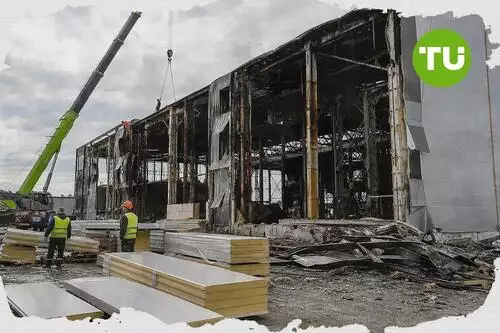
The Paris commitments also underline a wider political message against attacks on nuclear infrastructure and in support of Ukraine. The drone strike on 14 February 2025 compromised the confinement’s two central functions, containment of radioactive material and support for the safe dismantling of damaged structures, raising the risk of longer-term corrosion if restoration is delayed.Major contributions come from the European Union, Canada, Germany, France, the U.S., the UK, Norway, Switzerland, Lithuania, Austria and Estonia, among others. Greece, Moldova and the Netherlands indicate they will announce pledges in the coming months, broadening the donor base beyond the G7 and the European Union.
Ukrainian and EBRD officials say the latest commitments give momentum to move from temporary measures toward restoring the site’s core safety functions. The programme also reflects a longer partnership of nearly two decades between Ukraine, donors and the EBRD on one of the world’s most complex nuclear safety projects.
Earlier, we reported on the Europe macro debate over balancing inflation control, debt burdens and long-term investment needs.






Latest EBRD News


-
 Afghanistan
-
 Albania
-
 Algeria
-
 Angola
-
 Argentina
-
 Armenia
-
 Australia
-
 Austria
-
 Azerbaijan
-
 Bahamas
-
 Bahrain
-
 Bangladesh
-
 Belarus
-
 Belgium
-
 Bolivia
-
 Botswana
-
 Brazil
-
 Brunei
-
 Bulgaria
-
 Cambodia
-
 Cameroon
-
 Canada
-
 Chile
-
 China
-
 Colombia
-
 Congo
-
 Costa Rica
-
 Cote d'Ivoire
-
 Croatia
-
 Cuba
-
 Cyprus
-
 Czechia
-
 DR Congo
-
 Denmark
-
 Dominican Republic
-
 Ecuador
-
 Egypt
-
 El Salvador
-
 Estonia
-
 Eswatini
-
 Ethiopia
-
 Finland
-
 France
-
 Georgia
-
 Germany
-
 Ghana
-
 Greece
-
 Haiti
-
 Hong Kong
-
 Hungary
-
 India
-
 Indonesia
-
 Iran, Islamic republic
-
 Iraq
-
 Ireland
-
 Israel
-
 Italy
-
 Jamaica
-
 Japan
-
 Jordan
-
 Kazakhstan
-
 Kenya
-
 Korea
-
 Kuwait
-
 Kyrgyzstan
-
 Laos
-
 Latvia
-
 Lebanon
-
 Lesotho
-
 Libya
-
 Lithuania
-
 Luxembourg
-
 Madagascar
-
 Malaysia
-
 Malta
-
 Mauritius
-
 Mexico
-
 Moldova
-
 Mongolia
-
 Montenegro
-
 Morocco
-
 Mozambique
-
 Myanmar
-
 Namibia
-
 Nepal
-
 Netherlands
-
 New Zealand
-
 Nigeria
-
 North Macedonia
-
 Norway
-
 Oman
-
 Pakistan
-
 Palestine
-
 Panama
-
 Papua New Guinea
-
 Paraguay
-
 Peru
-
 Philippines
-
 Poland
-
 Portugal
-
 Puerto Rico
-
 Qatar
-
 Reunion
-
 Romania
-
 Rwanda
-
 Saudi Arabia
-
 Serbia
-
 Singapore
-
 Slovakia
-
 Slovenia
-
 Somalia
-
 South Africa
-
 Spain
-
 Sri Lanka
-
 Sweden
-
 Switzerland
-
 Syria
-
 Taiwan
-
 Tajikistan
-
 Tanzania
-
 Thailand
-
 Trinidad and Tobago
-
 Tunisia
-
 Turkey
-
 UAE
-
 Uganda
-
 Ukraine
-
 United Kingdom
-
United States
-
 Uruguay
-
 Uzbekistan
-
 Venezuela
-
 Vietnam
-
 Yemen
-
 Zambia
-
 Zimbabwe
- Forex
- Crypto












