

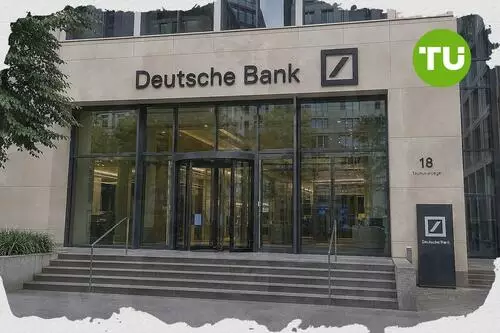
Deutsche Bank legacy risks keep pressure on compliance and strategy

Long-dated decisions in banking continue to shape earnings, risk and reputation years after they are made. That dynamic remains central to Deutsche Bank’s effort to distance itself from scandals tied to past clients and earlier control failures.
Highlights
- Newly leaked whistleblower documents have revived scrutiny of Deutsche Bank’s ties to Russian oligarchs, Jeffrey Epstein, and Colombian drug barons.
- Deutsche Bank’s share price has more than doubled since Christian Sewing became CEO in 2018, but legacy compliance risks still threaten its turnaround.
- The article argues banks must recognize structural challenges in severing long-term relationships when legal, political, or moral contexts change, raising risk management costs.
Historic client ties and renewed scrutiny
As reported by Financial Times, newly leaked whistleblower documents have revived scrutiny of Deutsche Bank’s past relationships with Russian oligarchs, Jeffrey Epstein, Colombian drug barons and other controversial clients.The analysis argues that the issue for the lender is not only the existence of old scandals, but the difficulty of severing the financial and reputational consequences of decisions made years earlier. While Chief Executive Christian Sewing has sought to present Deutsche as a rebuilt institution since taking over in 2018, the bank’s history continues to resurface as fresh material emerges.
The article notes that Deutsche’s share price has more than doubled since Sewing became CEO, suggesting investors had largely accepted the turnaround story. Even so, allegations linked to older compliance weaknesses still threaten to complicate that progress, especially where leaked records suggest problematic conduct may have lasted longer than previously understood.
Broader lessons for banking and risk management
The broader argument is that banks face a structural challenge because profitable relationships and lending decisions are designed to last, even when political, legal or moral conditions change. In that sense, what later appears to be a bad relationship often began as a commercially acceptable one that deteriorated over time rather than being clearly unacceptable from the outset.The commentary also points to Russia as an example of how international finance can become entangled with shifts in geopolitics. Clients who are now widely viewed as symbols of kleptocracy were once tied to a transition that had support from the U.S. State Department and the wider international community, making retrospective judgments less straightforward.
For the banking sector, the implication is that risk management requires not only controls and compliance systems but also the willingness to abandon profitable business when circumstances change. That remains costly in practice, particularly for institutions without the luxury of easily replacing revenue, but the piece argues that executives and policymakers ignore the staying power of past decisions at their own risk.










-
 Afghanistan
-
 Albania
-
 Algeria
-
 Angola
-
 Argentina
-
 Armenia
-
 Australia
-
 Austria
-
 Azerbaijan
-
 Bahamas
-
 Bahrain
-
 Bangladesh
-
 Belarus
-
 Belgium
-
 Bolivia
-
 Botswana
-
 Brazil
-
 Brunei
-
 Bulgaria
-
 Cambodia
-
 Cameroon
-
 Canada
-
 Chile
-
 China
-
 Colombia
-
 Congo
-
 Costa Rica
-
 Cote d'Ivoire
-
 Croatia
-
 Cuba
-
 Cyprus
-
 Czechia
-
 DR Congo
-
 Denmark
-
 Dominican Republic
-
 Ecuador
-
 Egypt
-
 El Salvador
-
 Estonia
-
 Eswatini
-
 Ethiopia
-
 Finland
-
 France
-
 Georgia
-
 Germany
-
 Ghana
-
 Greece
-
 Haiti
-
 Hong Kong
-
 Hungary
-
 India
-
 Indonesia
-
 Iran, Islamic republic
-
 Iraq
-
 Ireland
-
 Israel
-
 Italy
-
 Jamaica
-
 Japan
-
 Jordan
-
 Kazakhstan
-
 Kenya
-
 Korea
-
 Kuwait
-
 Kyrgyzstan
-
 Laos
-
 Latvia
-
 Lebanon
-
 Lesotho
-
 Libya
-
 Lithuania
-
 Luxembourg
-
 Madagascar
-
 Malaysia
-
 Malta
-
 Mauritius
-
 Mexico
-
 Moldova
-
 Mongolia
-
 Montenegro
-
 Morocco
-
 Mozambique
-
 Myanmar
-
 Namibia
-
 Nepal
-
 Netherlands
-
 New Zealand
-
 Nigeria
-
 North Macedonia
-
 Norway
-
 Oman
-
 Pakistan
-
 Palestine
-
 Panama
-
 Papua New Guinea
-
 Paraguay
-
 Peru
-
 Philippines
-
 Poland
-
 Portugal
-
 Puerto Rico
-
 Qatar
-
 Reunion
-
 Romania
-
 Rwanda
-
 Saudi Arabia
-
 Serbia
-
 Singapore
-
 Slovakia
-
 Slovenia
-
 Somalia
-
 South Africa
-
 Spain
-
 Sri Lanka
-
 Sweden
-
 Switzerland
-
 Syria
-
 Taiwan
-
 Tajikistan
-
 Tanzania
-
 Thailand
-
 Trinidad and Tobago
-
 Tunisia
-
 Turkey
-
 UAE
-
 Uganda
-
 Ukraine
-
 United Kingdom
-
United States
-
 Uruguay
-
 Uzbekistan
-
 Venezuela
-
 Vietnam
-
 Yemen
-
 Zambia
-
 Zimbabwe
- Forex
- Crypto












