

SEALSQ stock holds near $2.55 support as price consolidates in established range

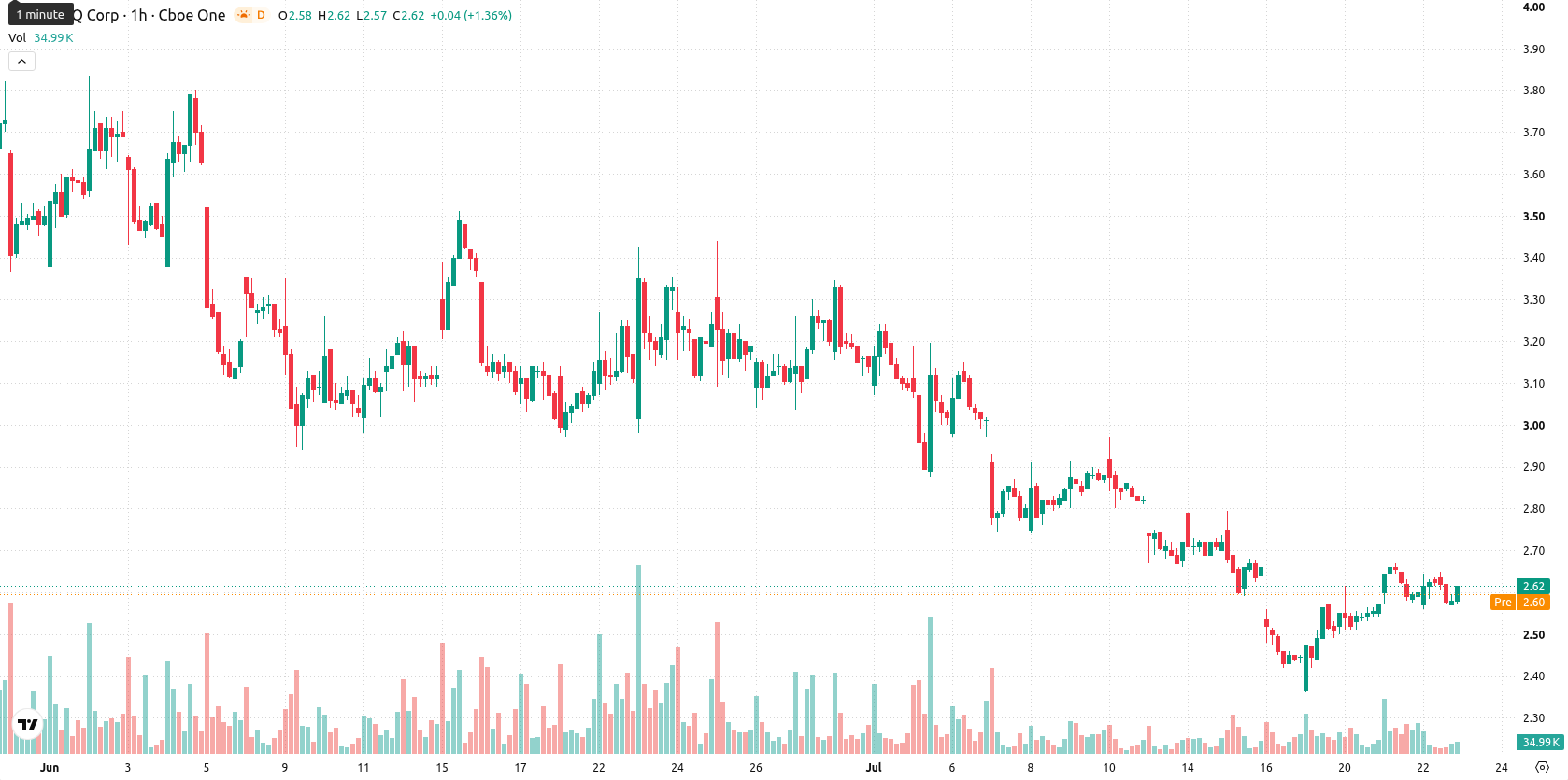
SEALSQ (LAES) stock is trading at $2.6, registering a modest move higher for the session. The price sits above its key short- and medium-term moving averages, while remaining below long-term trend levels.
 1.10
1.26
Highlights
- LAES/USD shows short- and medium-term bullish momentum while the longer-term trend remains bearish.
- Technical indicators are generally positive, with MACD, RSI, and Stoch RSI supporting further upside, though some signals remain neutral.
- The price is expected to consolidate within the $2.46 to $2.74 range in the next 2–3 days unless support or resistance is broken.
Upward momentum holds as short/medium averages outpace hesitant oscillators
On the technical front, LAES is trading above the MA-20 and MA-50, but remains below the MA-200. The Ichimoku Kijun at $2.55 acts as immediate support. Among oscillators, MACD signals a Strong Buy, while ADX and CCI are Neutral. Both RSI and Stochastic RSI signal a Buy or Strong Buy, pointing to upward momentum without overbought conditions. Awesome Oscillator is Neutral; intraday Bull/Bear Power readings suggest buyers dominate the session amid high volatility, though some divergence exists as not all indicators are aligned.
Balanced breakout risk as price consolidates within narrow range
Over the next two to three trading days, the anticipated price range is $2.46 to $2.74, reflecting a typical volatility band relative to current levels. Baseline expectations favor consolidation within this corridor, with an equal 50% probability for a move in either direction. A sustained push above resistance may open a bullish scenario, while a drop below immediate support would tilt risks lower.
Earlier, analysts noted that SEALSQ was exhibiting mixed technical signals and prevailing sideways movement as traders awaited a decisive breakout. The current analysis highlights a more balanced momentum profile, suggesting that close attention should be paid to a potential shift in either direction as volatility persists.






Latest SEALSQ News




-
 Afghanistan
-
 Albania
-
 Algeria
-
 Angola
-
 Argentina
-
 Armenia
-
 Australia
-
 Austria
-
 Azerbaijan
-
 Bahamas
-
 Bahrain
-
 Bangladesh
-
 Belarus
-
 Belgium
-
 Bolivia
-
 Botswana
-
 Brazil
-
 Brunei
-
 Bulgaria
-
 Cambodia
-
 Cameroon
-
 Canada
-
 Chile
-
 China
-
 Colombia
-
 Congo
-
 Costa Rica
-
 Cote d'Ivoire
-
 Croatia
-
 Cuba
-
 Cyprus
-
 Czechia
-
 DR Congo
-
 Denmark
-
 Dominican Republic
-
 Ecuador
-
 Egypt
-
 El Salvador
-
 Estonia
-
 Eswatini
-
 Ethiopia
-
 Finland
-
 France
-
 Georgia
-
 Germany
-
 Ghana
-
 Greece
-
 Haiti
-
 Hong Kong
-
 Hungary
-
 India
-
 Indonesia
-
 Iran, Islamic republic
-
 Iraq
-
 Ireland
-
 Israel
-
 Italy
-
 Jamaica
-
 Japan
-
 Jordan
-
 Kazakhstan
-
 Kenya
-
 Korea
-
 Kuwait
-
 Kyrgyzstan
-
 Laos
-
 Latvia
-
 Lebanon
-
 Lesotho
-
 Libya
-
 Lithuania
-
 Luxembourg
-
 Madagascar
-
 Malaysia
-
 Malta
-
 Mauritius
-
 Mexico
-
 Moldova
-
 Mongolia
-
 Montenegro
-
 Morocco
-
 Mozambique
-
 Myanmar
-
 Namibia
-
 Nepal
-
 Netherlands
-
 New Zealand
-
 Nigeria
-
 North Macedonia
-
 Norway
-
 Oman
-
 Pakistan
-
 Palestine
-
 Panama
-
 Papua New Guinea
-
 Paraguay
-
 Peru
-
 Philippines
-
 Poland
-
 Portugal
-
 Puerto Rico
-
 Qatar
-
 Reunion
-
 Romania
-
 Rwanda
-
 Saudi Arabia
-
 Serbia
-
 Singapore
-
 Slovakia
-
 Slovenia
-
 Somalia
-
 South Africa
-
 Spain
-
 Sri Lanka
-
 Sweden
-
 Switzerland
-
 Syria
-
 Taiwan
-
 Tajikistan
-
 Tanzania
-
 Thailand
-
 Trinidad and Tobago
-
 Tunisia
-
 Turkey
-
 UAE
-
 Uganda
-
 Ukraine
-
 United Kingdom
-
United States
-
 Uruguay
-
 Uzbekistan
-
 Venezuela
-
 Vietnam
-
 Yemen
-
 Zambia
-
 Zimbabwe
- Forex
- Crypto












