

What's behind SEALSQ's latest 3.5% stock pullback?

SEALSQ Corp (LAES) extended its downtrend on a loss of 3.54%, as persistent technical momentum and heavy selling pressure led the decline. The move is supported by SEALSQ trading below all its key moving averages, confirming seller control and reinforcing a bearish structure.
 1.12
1.26
Highlights
- SEALSQ stock is in a multi-timeframe downtrend, trading below key moving averages with sellers controlling momentum.
- The price faces immediate resistance at $2.53 and support at $2.3, with recent action showing 3.54% downside and increased volatility.
- Short-term outlook is for sideways consolidation between $2.28 to $2.63, with a 60% probability of a further downward move.
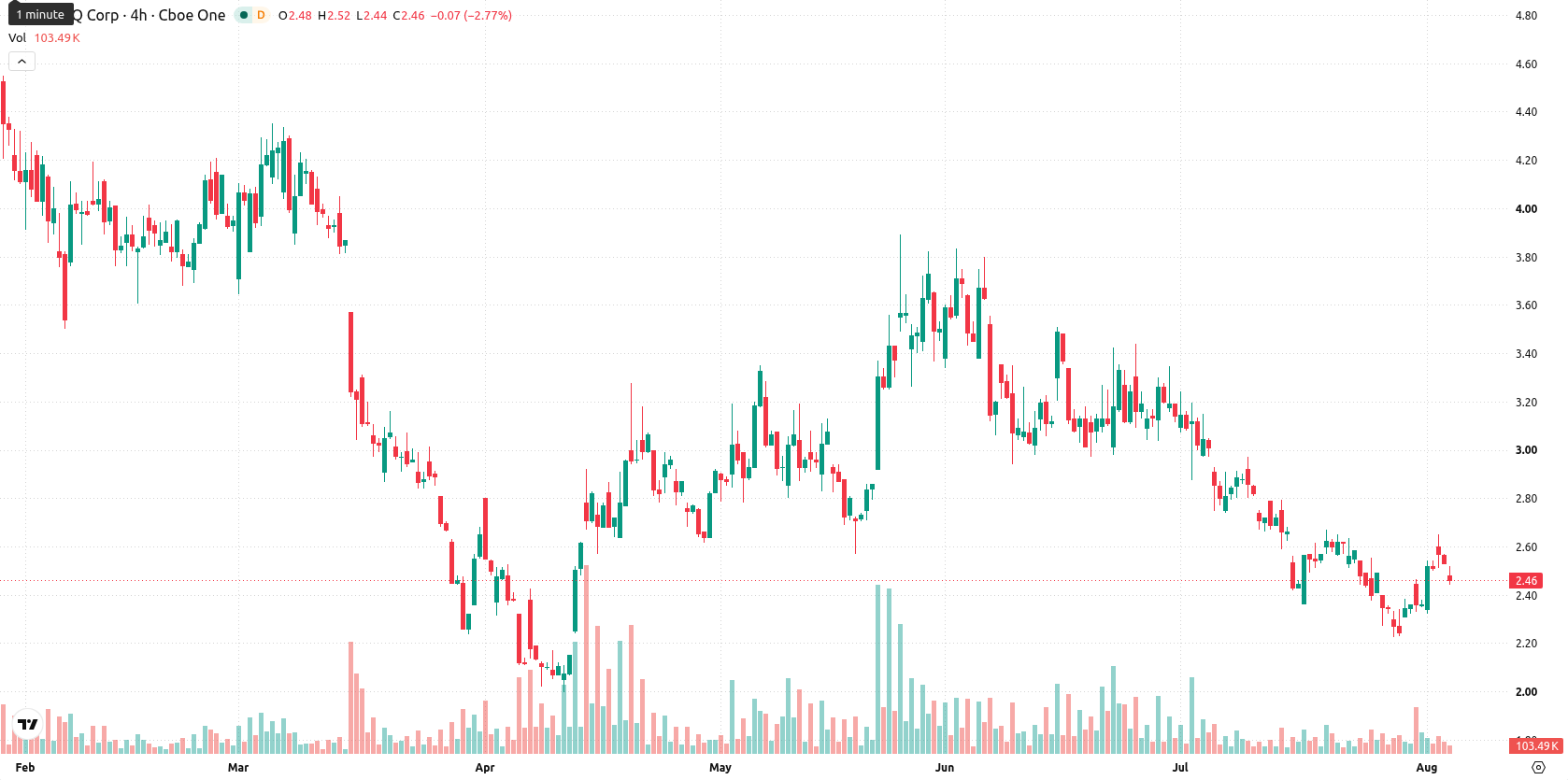
Downside risk intensifies as moving averages align with mixed momentum
SEALSQ remains under pressure, with the current price at $2.45 trading below the 20-day ($2.56), 50-day ($2.98), and 200-day ($3.77) moving averages. This alignment points to a short-, medium-, and long-term downtrend, signaling seller control, with immediate resistance at the near-term ceiling of $2.53 and support at the near-term floor of $2.3. Momentum readings are mixed. The Moving Average Convergence Divergence (MACD) forecasts a strong sell and the Average Directional Index (ADX) reads neutral, with the Relative Strength Index (RSI) at 45.05 leaning to a sell signal. Stochastic RSI shows overbought conditions, while the Commodity Channel Index (CCI) and Awesome Oscillator (AO) remain neutral. Bull/Bear Power (BBP) at 0.15 indicates buyers dominate intraday momentum, though overbought oscillators create a divergence with the overall downside move. The stock is down $0.09 or 3.54% so far, following a downside gap of about 2.76%. Price is near the low of today’s range, with intraday volatility at 3.27%. The overall tone is pressured after the open, in line with most momentum indicators signaling weakness.
Earlier, analysts noted that SEALSQ was showing mixed technical signals, with potential for a bullish reversal hinging on key support levels. The current analysis signals a shift to a more pronounced bearish stance, suggesting that traders should monitor the $2.28 support for signs of further downside risk in the coming sessions.










-
 Afghanistan
-
 Albania
-
 Algeria
-
 Angola
-
 Argentina
-
 Armenia
-
 Australia
-
 Austria
-
 Azerbaijan
-
 Bahamas
-
 Bahrain
-
 Bangladesh
-
 Belarus
-
 Belgium
-
 Bolivia
-
 Botswana
-
 Brazil
-
 Brunei
-
 Bulgaria
-
 Cambodia
-
 Cameroon
-
 Canada
-
 Chile
-
 China
-
 Colombia
-
 Congo
-
 Costa Rica
-
 Cote d'Ivoire
-
 Croatia
-
 Cuba
-
 Cyprus
-
 Czechia
-
 DR Congo
-
 Denmark
-
 Dominican Republic
-
 Ecuador
-
 Egypt
-
 El Salvador
-
 Estonia
-
 Eswatini
-
 Ethiopia
-
 Finland
-
 France
-
 Georgia
-
 Germany
-
 Ghana
-
 Greece
-
 Haiti
-
 Hong Kong
-
 Hungary
-
 India
-
 Indonesia
-
 Iran, Islamic republic
-
 Iraq
-
 Ireland
-
 Israel
-
 Italy
-
 Jamaica
-
 Japan
-
 Jordan
-
 Kazakhstan
-
 Kenya
-
 Korea
-
 Kuwait
-
 Kyrgyzstan
-
 Laos
-
 Latvia
-
 Lebanon
-
 Lesotho
-
 Libya
-
 Lithuania
-
 Luxembourg
-
 Madagascar
-
 Malaysia
-
 Malta
-
 Mauritius
-
 Mexico
-
 Moldova
-
 Mongolia
-
 Montenegro
-
 Morocco
-
 Mozambique
-
 Myanmar
-
 Namibia
-
 Nepal
-
 Netherlands
-
 New Zealand
-
 Nigeria
-
 North Macedonia
-
 Norway
-
 Oman
-
 Pakistan
-
 Palestine
-
 Panama
-
 Papua New Guinea
-
 Paraguay
-
 Peru
-
 Philippines
-
 Poland
-
 Portugal
-
 Puerto Rico
-
 Qatar
-
 Reunion
-
 Romania
-
 Rwanda
-
 Saudi Arabia
-
 Serbia
-
 Singapore
-
 Slovakia
-
 Slovenia
-
 Somalia
-
 South Africa
-
 Spain
-
 Sri Lanka
-
 Sweden
-
 Switzerland
-
 Syria
-
 Taiwan
-
 Tajikistan
-
 Tanzania
-
 Thailand
-
 Trinidad and Tobago
-
 Tunisia
-
 Turkey
-
 UAE
-
 Uganda
-
 Ukraine
-
 United Kingdom
-
United States
-
 Uruguay
-
 Uzbekistan
-
 Venezuela
-
 Vietnam
-
 Yemen
-
 Zambia
-
 Zimbabwe
- Forex
- Crypto












