

Major U.S. retailers deploy Trump tariff refunds to prices or margins

Retailers are taking sharply different approaches to tariff refunds after court-ordered repayments begin lifting second-quarter earnings. The split is shaping how investors read profit strength at Walmart, Home Depot, Target and other chains, while also affecting whether consumers see lower prices.
Highlights
- Home Depot received $730 million in tariff refunds in Q2, using $685 million to reduce cost of goods sold, boosting gross margin by 0.3%.
- Walmart is eligible for about $2.9 billion in tariff refunds, applied largely to reduce prices in Q3, raising U.S. gross profit by 1.6%.
- Lowe's and Target directed tariff refunds—11 cents per share and $1.65 per share respectively—mainly to bolster earnings, not lower prices for consumers.
Second-quarter reporting shows divergent refund strategies
As reported by CNBC, most major retailers sought refunds after the Supreme Court ruled in February that the International Emergency Economic Powers Act did not authorize President Donald Trump to impose the tariffs, with cash starting to flow in during the second quarter.That inflow is complicating earnings analysis because some companies are channeling the windfall into lower prices and cost of goods sold, while others are using it more directly to support margins and earnings per share. Bryan Eshelman, managing director in the retail practice at AlixPartners, says those decisions often reflect a retailer's market positioning, with value-oriented chains more likely to highlight price relief to shoppers.
Eshelman also says the accounting is not straightforward. Refund eligibility depends in part on whether the retailer is the importer of record, and in many cases suppliers or manufacturers, not stores, receive rebates tied to imported goods or raw materials. Internal record-keeping can also make it difficult to match a refund to products that have already been sold.
Home Depot says it received $730 million in tariff refunds in its fiscal second quarter and used roughly $685 million to reduce cost of goods sold, helping lift gross margin by 0.3% from a year earlier. Chief Financial Officer Richard McPhail says that amount represents the vast majority of what the company expects to recover.
Walmart is taking a similar approach. Chief Financial Officer John David Rainey says the company is eligible for about $2.9 billion in tariff refunds, with just under $100 million still outstanding, and says the funds are set to support lower prices for consumers during the current fiscal third quarter. Walmart U.S. gross profit grows 1.6% from that boost.
TJX Cos. also says its $331 million in tariff refunds benefited second-quarter cost of sales. Lowe's, by contrast, says the refunds added 11 cents to second-quarter earnings per share, and Chief Executive Marvin Ellison says the company does not plan to use the tariff repayments to lower prices, preferring to preserve profitability for shareholders.
Pricing effects and future comparisons remain in focus
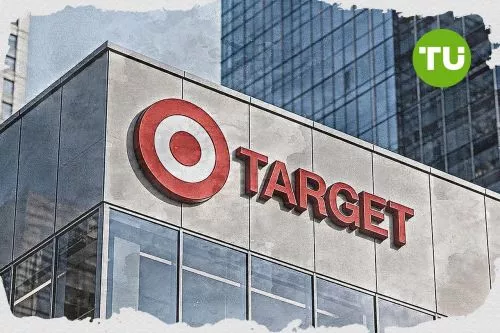
Target does not explicitly state whether its tariff refunds are being used to cut prices, though it says it lowered prices on more than 10,000 items in the second quarter. The retailer says refunds added $752 million to net earnings, or $1.65 per share, and delivered a $994 million pretax benefit to gross margin and operating income.The one-time nature of the refunds is also likely to distort future comparisons. Eshelman says this quarter's windfall creates an easier comparison with last year, but it also raises the bar for next year because current results are inflated by repayments that are not recurring.
That matters as retailers continue to navigate cost inflation, including higher fuel prices, and shifting tariff expectations. Eshelman says consumers are unlikely to be able to measure whether any shelf-price reductions fully match the size of the refunds, because tariff effects are mixed with other cost pressures across supply chains.
Our earlier coverage of the debate over a “K-shaped” U.S. economy explained why policymakers and executives disagree on whether lower- and middle-income consumers are finally catching up, or still lagging under inflation and higher gasoline costs. We also highlighted weak consumer sentiment and elevated credit card balances as signs that many households remain under financial strain—an important backdrop for how any retailer-driven price relief may be felt in practice.








-
 Afghanistan
-
 Albania
-
 Algeria
-
 Angola
-
 Argentina
-
 Armenia
-
 Australia
-
 Austria
-
 Azerbaijan
-
 Bahamas
-
 Bahrain
-
 Bangladesh
-
 Belarus
-
 Belgium
-
 Bolivia
-
 Botswana
-
 Brazil
-
 Brunei
-
 Bulgaria
-
 Cambodia
-
 Cameroon
-
 Canada
-
 Chile
-
 China
-
 Colombia
-
 Congo
-
 Costa Rica
-
 Cote d'Ivoire
-
 Croatia
-
 Cuba
-
 Cyprus
-
 Czechia
-
 DR Congo
-
 Denmark
-
 Dominican Republic
-
 Ecuador
-
 Egypt
-
 El Salvador
-
 Estonia
-
 Eswatini
-
 Ethiopia
-
 Finland
-
 France
-
 Georgia
-
 Germany
-
 Ghana
-
 Greece
-
 Haiti
-
 Hong Kong
-
 Hungary
-
 India
-
 Indonesia
-
 Iran, Islamic republic
-
 Iraq
-
 Ireland
-
 Israel
-
 Italy
-
 Jamaica
-
 Japan
-
 Jordan
-
 Kazakhstan
-
 Kenya
-
 Korea
-
 Kuwait
-
 Kyrgyzstan
-
 Laos
-
 Latvia
-
 Lebanon
-
 Lesotho
-
 Libya
-
 Lithuania
-
 Luxembourg
-
 Madagascar
-
 Malaysia
-
 Malta
-
 Mauritius
-
 Mexico
-
 Moldova
-
 Mongolia
-
 Montenegro
-
 Morocco
-
 Mozambique
-
 Myanmar
-
 Namibia
-
 Nepal
-
 Netherlands
-
 New Zealand
-
 Nigeria
-
 North Macedonia
-
 Norway
-
 Oman
-
 Pakistan
-
 Palestine
-
 Panama
-
 Papua New Guinea
-
 Paraguay
-
 Peru
-
 Philippines
-
 Poland
-
 Portugal
-
 Puerto Rico
-
 Qatar
-
 Reunion
-
 Romania
-
 Rwanda
-
 Saudi Arabia
-
 Serbia
-
 Singapore
-
 Slovakia
-
 Slovenia
-
 Somalia
-
 South Africa
-
 Spain
-
 Sri Lanka
-
 Sweden
-
 Switzerland
-
 Syria
-
 Taiwan
-
 Tajikistan
-
 Tanzania
-
 Thailand
-
 Trinidad and Tobago
-
 Tunisia
-
 Turkey
-
 UAE
-
 Uganda
-
 Ukraine
-
 United Kingdom
-
United States
-
 Uruguay
-
 Uzbekistan
-
 Venezuela
-
 Vietnam
-
 Yemen
-
 Zambia
-
 Zimbabwe
- Forex
- Crypto












