

Why is Ballard Power Systems stock down 3.2% today?

Ballard Power Systems Inc (BLDP) dropped 3.27% as persistent technical selling pressure weighed on the stock. This slide is supported by BLDP trading below all major moving averages, with bearish momentum signals and resistance levels capping any recovery attempts.
 1.57
1.68
Highlights
- Shares of Ballard Power Systems trade below key moving averages, confirming persistent short-, medium-, and long-term bearish pressure.
- Momentum indicators are negative, with MACD and ADX in sell territory and no signs of reversal from sellers' control.
- Short-term price range is expected between $1.98 and $2.2, with an over 80% probability of further downside movement.
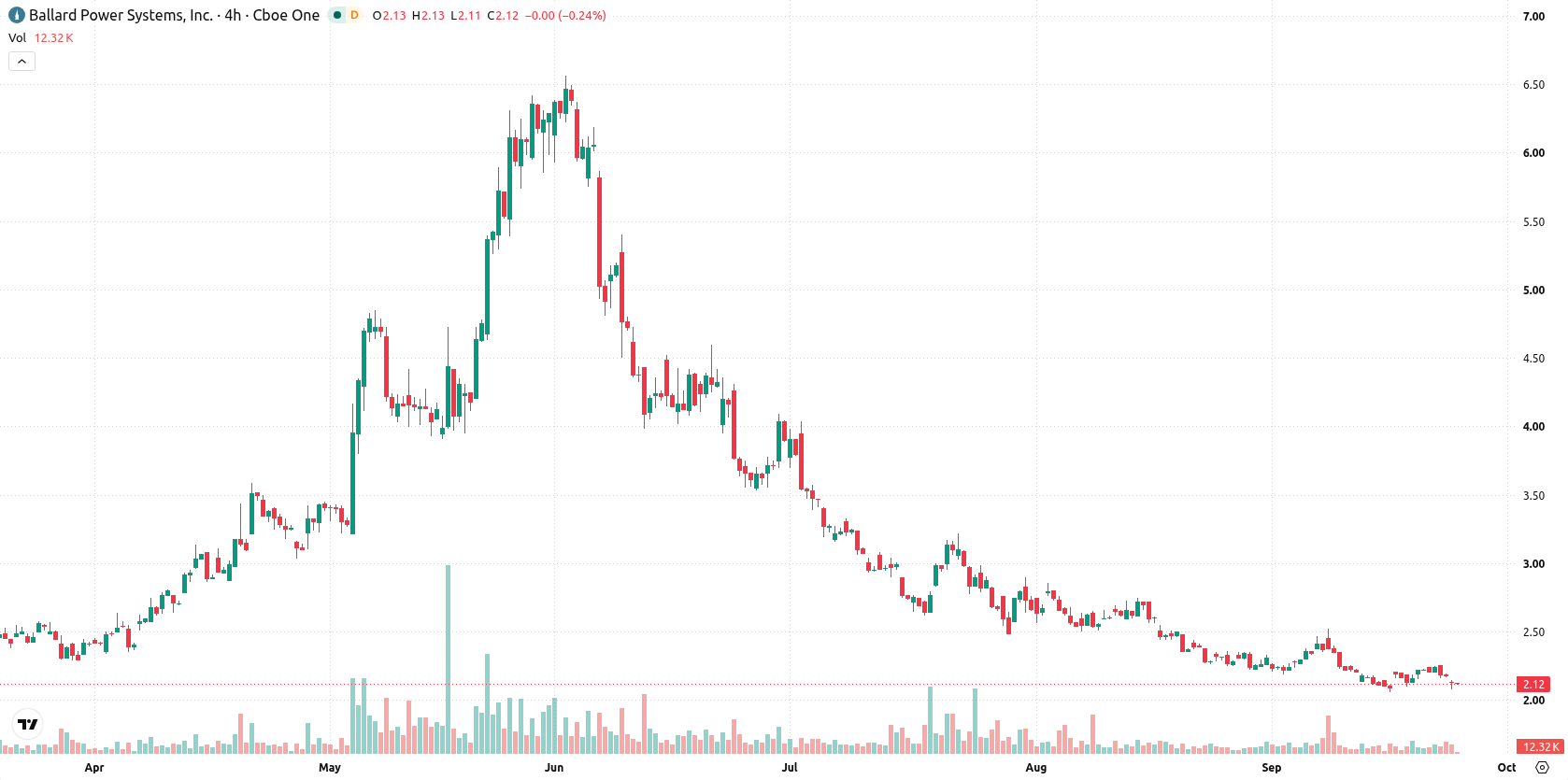
Resistance caps recovery as downward momentum dominates technical landscape
Ballard Power Systems is trading below the 20-day, 50-day, and 200-day moving averages ($2.24, $2.5, and $3 respectively), reflecting persistent downward momentum across short-, medium-, and long-term timeframes. Near-term action is capped by resistance at $2.15 and supported at $2.1, with a bearish trend indicated by the alignment of the MA-50 below the MA-200 and the Ichimoku Kijun acting as additional resistance at $2.31. Momentum signals are negative, with the MACD and ADX both in sell territory, highlighting firm bearish pressure. The RSI at 40.01 and CCI at -44.09 suggest the stock is neither strongly oversold nor overbought, while Stochastic RSI remains elevated at 75.75 and forecasts further selling. Bull/Bear Power (BBP) is marginally positive at 0.04, indicating buyers have a slight edge intraday, but the broader momentum remains bearish. After opening with a downside gap of approximately $0.07 or 3.2%, the stock is now mid-range for the session, down $0.0717 or 3.27%. Intraday volatility stands at 3.37%. Price movement shows ongoing pressure after the open, with negative momentum signals and no confirmed recovery from sellers' control.
Earlier, analysts noted that Ballard Power Systems remained under persistent bearish momentum, with selling pressure dominating the technical outlook. The latest decline further reinforces this negative trend, with market participants now monitoring the $2.1 level as a key downside risk in the event of renewed weakness.






Latest Ballard Power Systems Inc News




-
 Afghanistan
-
 Albania
-
 Algeria
-
 Angola
-
 Argentina
-
 Armenia
-
 Australia
-
 Austria
-
 Azerbaijan
-
 Bahamas
-
 Bahrain
-
 Bangladesh
-
 Belarus
-
 Belgium
-
 Bolivia
-
 Botswana
-
 Brazil
-
 Brunei
-
 Bulgaria
-
 Cambodia
-
 Cameroon
-
 Canada
-
 Chile
-
 China
-
 Colombia
-
 Congo
-
 Costa Rica
-
 Cote d'Ivoire
-
 Croatia
-
 Cuba
-
 Cyprus
-
 Czechia
-
 DR Congo
-
 Denmark
-
 Dominican Republic
-
 Ecuador
-
 Egypt
-
 El Salvador
-
 Estonia
-
 Eswatini
-
 Ethiopia
-
 Finland
-
 France
-
 Georgia
-
 Germany
-
 Ghana
-
 Greece
-
 Haiti
-
 Hong Kong
-
 Hungary
-
 India
-
 Indonesia
-
 Iran, Islamic republic
-
 Iraq
-
 Ireland
-
 Israel
-
 Italy
-
 Jamaica
-
 Japan
-
 Jordan
-
 Kazakhstan
-
 Kenya
-
 Korea
-
 Kuwait
-
 Kyrgyzstan
-
 Laos
-
 Latvia
-
 Lebanon
-
 Lesotho
-
 Libya
-
 Lithuania
-
 Luxembourg
-
 Madagascar
-
 Malaysia
-
 Malta
-
 Mauritius
-
 Mexico
-
 Moldova
-
 Mongolia
-
 Montenegro
-
 Morocco
-
 Mozambique
-
 Myanmar
-
 Namibia
-
 Nepal
-
 Netherlands
-
 New Zealand
-
 Nigeria
-
 North Macedonia
-
 Norway
-
 Oman
-
 Pakistan
-
 Palestine
-
 Panama
-
 Papua New Guinea
-
 Paraguay
-
 Peru
-
 Philippines
-
 Poland
-
 Portugal
-
 Puerto Rico
-
 Qatar
-
 Reunion
-
 Romania
-
 Rwanda
-
 Saudi Arabia
-
 Serbia
-
 Singapore
-
 Slovakia
-
 Slovenia
-
 Somalia
-
 South Africa
-
 Spain
-
 Sri Lanka
-
 Sweden
-
 Switzerland
-
 Syria
-
 Taiwan
-
 Tajikistan
-
 Tanzania
-
 Thailand
-
 Trinidad and Tobago
-
 Tunisia
-
 Turkey
-
 UAE
-
 Uganda
-
 Ukraine
-
 United Kingdom
-
United States
-
 Uruguay
-
 Uzbekistan
-
 Venezuela
-
 Vietnam
-
 Yemen
-
 Zambia
-
 Zimbabwe
- Forex
- Crypto












